


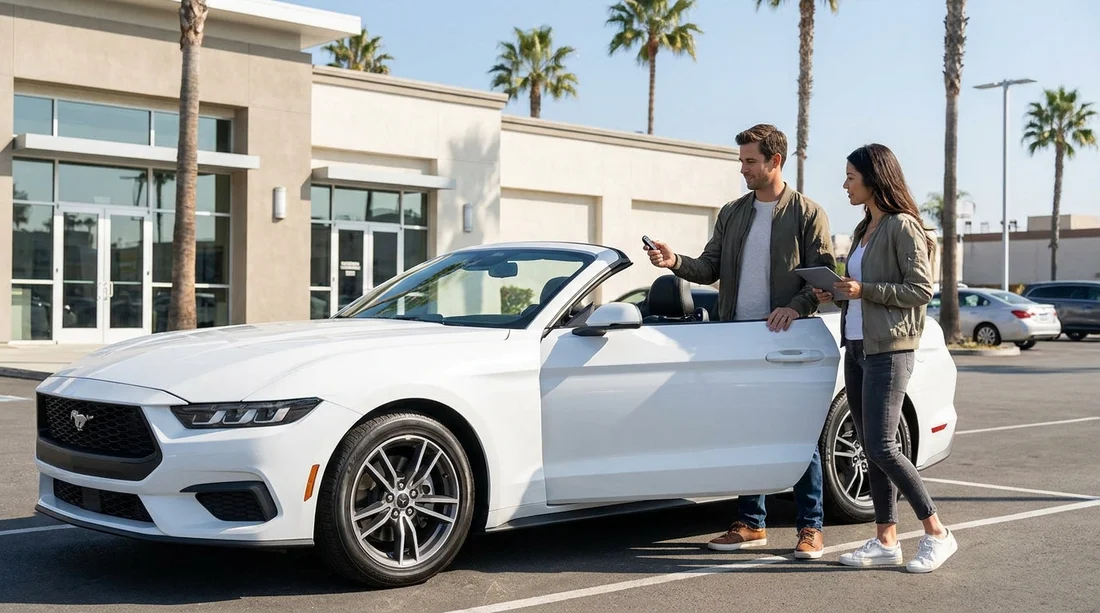
Quick Summary:
- Test keyless start at every door and the boot before leaving.
- Locate the emergency key and learn the hidden key slot.
- Check for low fob battery warnings and document any alerts.
- Confirm spare fob policy, after-hours help, and lockout fees.
Keyless start is meant to make driving easier, but at a busy Los Angeles pick-up location it can also create a frustrating delay of the trip, a car that will not unlock or start because the system thinks the key fob is missing. A few deliberate checks at the counter and at the car can prevent the classic “key not detected” surprise on your first fuel stop or outside your hotel.
This checklist focuses on four things renters regularly miss: emergency key access, battery warnings, spare-key policy, and practical tests you can do before you drive away.
1) Confirm what you have been handed, and label it immediately
First, check whether you have been given one fob or two. Many fleets now issue a single fob to reduce losses. That can be fine, but you need to know the policy before you leave the facility. If you are collecting from LAX, different operators have different handover routines. Hola Car Rentals’ Los Angeles airport pages can help you compare pick-up setups, for example car rental at LAX and car hire at LAX.
Do a quick visual inspection of the fob. Look for cracks, a loose key ring, missing screws, or a damaged rubber button. If the fob looks battered, it is more likely to have an intermittent battery connection. Ask for a different one while you are still at the desk or booth, when swapping is simple and documented.
2) Find the emergency key and physically test it
Most key fobs contain a hidden, mechanical emergency key. It is there for one main reason, if the fob battery dies or the car’s 12V battery is low, you still need a way to unlock the driver’s door. At pick-up, ask a staff member to show you how to release it from the fob body. Then do it yourself once, so you know the exact button or latch.
Next, identify the actual door key cylinder. On many cars it is hidden behind a small plastic cover on the driver’s handle. If you have never removed that cover, it can feel as though you are about to break it. Ask for a demonstration if possible, then re-fit it properly. The aim is confidence, not speed.
Finally, insert the emergency key and turn it to confirm it works. You do not need to lock yourself out. Simply check that it turns and that the cover goes back on cleanly. This one-minute test can save a long wait for roadside assistance if the fob fails when you are away from the airport.
3) Learn the “dead fob” start method before you need it
Even if the emergency key gets you into the cabin, you still need to start the car. Most push-button start vehicles have a backup method that reads the fob via a near-field antenna when the battery is weak. Depending on the make, you may need to hold the fob against the start button, place it in a slot in the centre console, or put it in a marked pocket inside the armrest.
Do not rely on memory. Sit in the driver’s seat while still parked, and look for icons near the start button or inside the console. Check the owner’s manual quick guide, which is often in the glovebox. If you are collecting a specific brand at LAX, Hola’s brand pages can be useful references, such as Hertz at LAX or Enterprise at LAX.
4) Run the “walk away and return” test for key detection
Before leaving the facility, do a simple loop. Unlock the car with the button on the handle or fob. Start the car. Turn it off. Exit with the fob in your pocket. Walk 10 to 15 metres away, then return and try to unlock and start again. Repeat once using a different pocket or bag compartment. If detection seems inconsistent, ask to swap the fob or the car.
This matters in Los Angeles because many stops involve short exits, such as kerbside loading, parking structures, or quick food pick-ups. In those situations, it is easy to leave the fob in a bag that you set down, or to have it shielded by other electronics, which can reduce signal strength.
5) Check for fob battery warnings and low-voltage hints
Modern cars will often display “Key fob battery low” or a similar warning, sometimes only for a second at start-up. Look for any warning lights or messages before you drive off. If you see a low fob battery message, ask for a replacement fob straight away. It is not worth gambling that it will last your trip.
If the operator cannot replace the fob immediately, ask whether they can provide a fresh fob battery or fit one on the spot. Many fobs use a common coin cell, but do not open the fob unless you are explicitly permitted, as some operators treat that as damage. The key point is to document the warning at pick-up. Take a quick photo of the dashboard message if it appears.
6) Understand the spare-key policy and what happens after-hours
With car hire, the most expensive small mistake is a lockout. Clarify whether a second fob exists for your vehicle, and if it can be issued. If not, ask what the recovery process is if the only fob is lost or locked inside. Ask which number you should call after-hours and what fees apply for lockouts, lost fobs, towing, or locksmith dispatch. If you pick up at LAX but stay in Orange County, ask whether you can be supported locally or whether you must return to the original branch. If your trip includes different airports, you may also want to review the pick-up environment at Santa Ana SNA, as facilities can differ in how quickly they can swap keys.
7) Avoid the most common “key not detected” causes on day one
Keep the fob separate from other transmitters. Some bags contain RFID-blocking pockets, and some drivers carry multiple keys. If another keyless fob is near yours, the car can become confused about which signal to follow. Keep only the rental fob close to the car when starting.
Do not leave the fob in the boot. Many cars will not lock if the fob is detected inside, but detection is not perfect, and certain shielding or a low battery can cause a false negative. Make a rule that the fob stays in your pocket, never loose in luggage.
Watch for valet mode or keyless settings. Some vehicles have settings that change behaviour, such as disabling passive entry. If you notice the car only unlocks with the button press, it may be a setting, not a fault. If you prefer passive entry, ask whether the setting can be restored.
FAQ
Do all rental cars in Los Angeles come with keyless start? No. Some cars have a traditional key and ignition barrel, even within similar vehicle classes. At pick-up, confirm whether you have push-button start, passive entry, or both, and test how it works on that specific car.
What should I do if I see a “key fob battery low” message? Tell the desk or exit booth immediately and request a different fob or vehicle. If that is not possible, ask for the operator’s approved process for replacing the fob battery, and document the warning with a photo.
Where is the emergency key slot if the door has no visible keyhole? It is commonly behind a small cover on the driver’s door handle. Release the mechanical key from the fob, remove the cover carefully, then use the key as normal. Ask staff to demonstrate on your vehicle model if you are unsure.
Can I lock the key fob in the boot by accident? It is possible, especially if detection is weak or the fob is shielded in luggage. Keep the fob on your person, and avoid placing it in the boot or under other electronics when loading bags.
If I only get one fob, what happens if it is lost? Policies vary, but replacement can be expensive and may require towing or reprogramming. Confirm the after-hours contact number, likely fees, and whether a spare exists at the branch before you leave the pick-up location.






























































































