


Quick Summary:
- Children aged five and under must use an approved child restraint system.
- Ages zero to three need a carrier, built-in seat, or restraint.
- Four and five-year-olds must use a child seat or booster.
- Prebook the right seat, inspect it, and install it securely.
Travelling in Florida with children often means time on highways and city roads, plus trips between beaches, theme parks, and airports. If you are arranging car hire, the key is understanding Florida’s child restraint requirements and turning them into a practical plan: which seat type is legally required, what is best practice beyond the minimum, and what to request when collecting your vehicle.
Florida’s rules are set out in state law and apply to residents and visitors alike. That includes tourists driving a rental vehicle, whether you are picking up near the airport or in a city location. The driver is generally responsible for ensuring children are properly restrained, so it helps to decide your seating needs before you arrive.
Florida child restraint law, the essentials for visitors
Florida requires children aged five and under to be secured in a child restraint system. Within that, there are specific age brackets.
Age 0 through 3: a child must be in a separate carrier, a built-in child seat, or another child restraint device.
Age 4 through 5: a child must be in a separate carrier, a built-in child seat, or a booster seat.
Age 6 and up: Florida law allows a standard seat belt, but safety guidance typically recommends staying in a booster until the belt fits correctly.
Two details matter for tourists. First, the law focuses on age, but safe choice should also consider height and weight. Secondly, Florida expects the restraint to be properly used and appropriate for the child. A loose harness, an incorrect belt path, or a booster without a shoulder belt can create both safety and compliance issues.
If you are collecting a vehicle after landing, you may find it easier to plan collection at an airport location such as Tampa Airport car rental, where family travellers often request child seats in advance as part of their rental arrangements.
Choosing the right seat by age, height, and weight
Florida’s legal minimum is age-based, but seat choice is safer when you combine the law with the seat manufacturer’s height and weight limits. These are the typical categories you will encounter with car hire child-seat options.
Rear-facing infant seat: Usually suited to babies and smaller toddlers within the stated limits. Best practice is rear-facing for as long as the child remains within the rear-facing limits of the seat.
Convertible child seat: Can be used rear-facing and later forward-facing.
Forward-facing child seat with harness: Typically used after a child outgrows rear-facing limits. The internal harness should be snug, with the chest clip positioned correctly, and the seat should be installed tightly.
Booster seat: Used with the vehicle’s lap and shoulder belt. A booster is designed to position the belt across the child’s strong bones.
For children aged four and five, Florida permits either a child seat or a booster. The best choice depends on the child’s size and maturity. If the child still fits a harnessed seat within its limits, that is often a stable option for travel days when they might fall asleep in the car.
What to prebook for car hire, and what to verify at collection
When organising car hire with children, prebooking the correct restraint type helps reduce the risk of arriving to find limited availability. It also gives you time to think through your family’s exact needs, rather than accepting the closest match at the counter.
Before travel, note: each child’s age, height, and weight. Then decide the seat category that fits those measurements and is appropriate for the journey length.
Approval label: The seat should show it meets applicable federal standards. If any label is missing or the seat looks unusually worn, ask for an alternative.
Condition: Ensure the harness straps are not twisted, buckles latch securely, and the shell has no cracks. Avoid using a seat that seems damaged or incomplete.
Correct type: Confirm you received the seat you expected, for example an infant seat rather than a forward-facing seat.
Fit in your vehicle: Some seats fit better in certain back seats. If you are hiring a larger vehicle for luggage and buggies, a van option can simplify installation and seating space. For example, travellers staying central may compare options like van hire in Downtown Miami to accommodate bigger car seats and extra passengers comfortably.
Installing the seat correctly in a Florida rental car
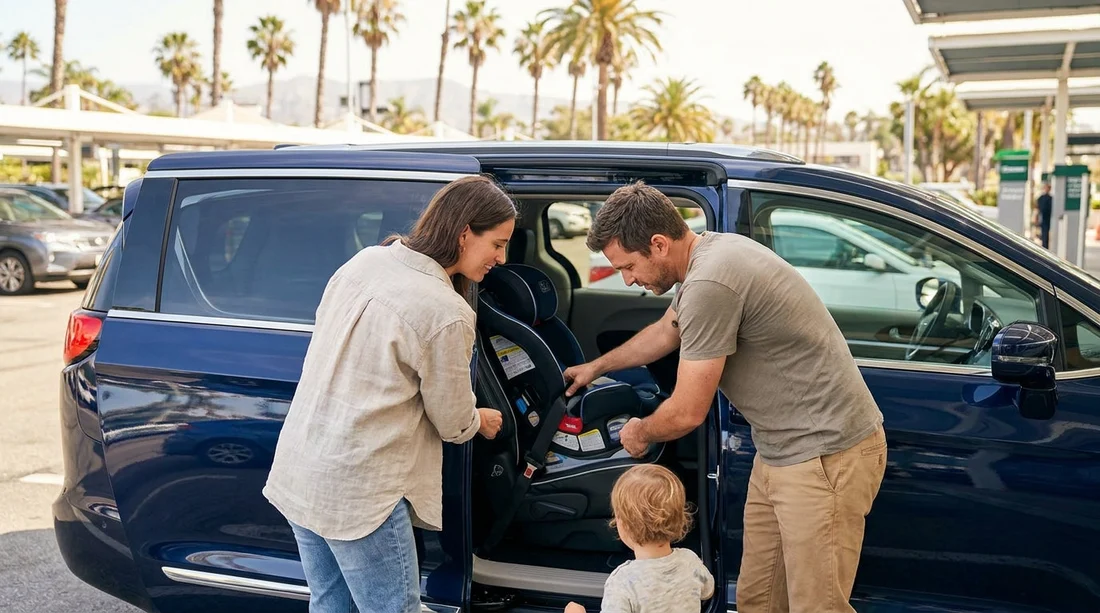
Even with the right restraint, incorrect installation is common. Take time in the car park to fit the seat properly before you drive away.
Choose the safest position: The rear seat is generally safest. If the seat is rear-facing, avoid placing it in front of an active airbag.
Secure installation: Whether you use the vehicle belt or the lower anchor system where available, the seat should not move more than about an inch side-to-side or front-to-back at the belt path.
Harness fit: Straps should lie flat. The harness should be snug enough that you cannot pinch excess webbing at the shoulder.
Booster belt fit: The lap belt should lie low across the hips, not the stomach. The shoulder belt should cross the middle of the shoulder and chest, not the neck or face.
If you are picking up in the Orlando area for theme parks, allow extra time for installation, especially during busy periods. Some families staying nearby use locations linked with airport arrivals, for instance car hire at Orlando MCO, and find it helpful to install seats before leaving the airport road system.
Do you need to bring your own child seat to Florida?
Many tourists decide between bringing a seat from home or using a seat supplied with car hire. Bringing your own can provide familiarity and confidence in the seat’s history, and it may suit children with specific fit needs. Using a rental seat can reduce baggage and make airport transfers simpler.
If you bring your own, check it is in-date, complete, and suitable for travel. If you use a rental seat, take time to inspect it and confirm you know how it adjusts.
For travellers staying in Coral Gables, you might see different supplier options and pick-up points that affect convenience, such as car rental in Coral Gables. Wherever you collect, plan a few extra minutes for checks and installation.
FAQ
Q: What does Florida law require for children aged 0 to 3 in a rental car?
A: They must ride in a separate carrier, built-in child seat, or another approved child restraint device, used correctly for the child.
Q: Can a 5-year-old use just a seat belt in Florida?
A: No. Florida requires children aged five and under to be in a child restraint system, and ages four to five must use a child seat or booster.
Q: When can children stop using a booster seat in Florida?
A: The legal minimum is usually age six for a seat belt, but many children need a booster until the belt fits properly across hips and shoulder.
Q: Are tourists exempt from Florida child-seat rules when using car hire?
A: No. The rules apply to visitors driving in Florida, including in rented vehicles, and the driver is responsible for compliance.
Q: What should I check when I receive a prebooked child seat with my hire car?
A: Confirm the seat type, inspect labels and condition, ensure all parts are present, and install it tightly with the correct harness or belt fit.






























































































