


Quick Summary:
- Check real-time road closures before departure and at every fuel stop.
- Use major highways and open corridors, avoiding canyon roads and ridgelines.
- Run recirculation, seal windows, and wear a proper mask outside.
- Protect your car hire by limiting ash contact and checking filters.
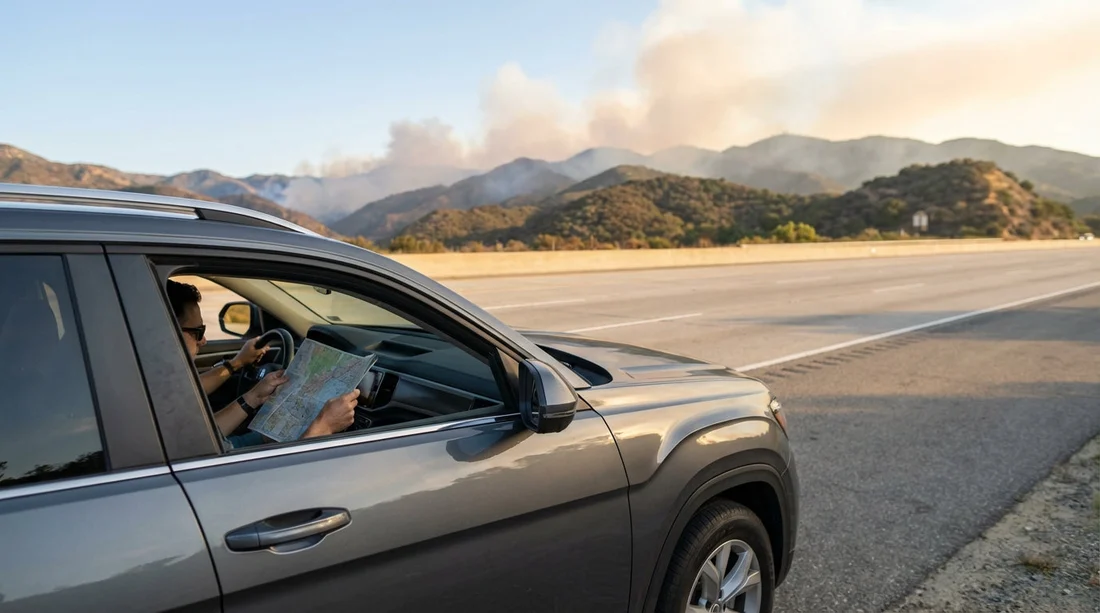
Wildfires can change a Los Angeles road trip in minutes. A route that looked clear at breakfast can be closed by midday due to shifting winds, falling debris, emergency access, or poor visibility from smoke. If you are using car hire in and around Los Angeles, the safest approach is to treat your plan as flexible and keep checking conditions as you go, not just once at the start.
This guide explains how to verify closures in real time, build safer detours that avoid the most vulnerable road types, and reduce the impact of smoke and ash on both your lungs and your car hire. It is informational, not emergency advice, so always follow instructions from local authorities and emergency services first.
1) Confirm the closure is real, current, and on your exact segment
When wildfires are active, rumours travel quickly, and mapping apps can lag behind road operations. Before you reroute, confirm three things, the closure location, the direction affected, and the timeframe. Some roads reopen briefly for escorted traffic, while others close for days due to damaged slopes, downed power lines, or ongoing firefighting.
Build a quick routine you can repeat, check your route before leaving, then check again when you stop for fuel or food. If you landed and collected your car hire at the airport, do this check while you still have strong signal and time to adjust. If you are travelling from the terminals, see the practical pickup context on car hire at Los Angeles LAX.
When you check closures, focus on official road operators and emergency alerts first, then compare with your navigation app. If the official source shows a hard closure, do not attempt to “try your luck”. Barriers can appear suddenly, and turning around on a narrow shoulder is risky, especially in smoke.
2) Prioritise safer detours: choose wide, well-serviced corridors
Not all detours are equal during wildfire season. In Southern California, the most problematic roads tend to share a pattern, canyon routes, ridgeline roads, and smaller two lane sections with limited exits. They can become hazardous quickly due to reduced visibility, fire traffic, and falling rocks or branches. They also have fewer services if you need to wait out a closure.
In contrast, major motorways typically have better incident response, clearer signage, and more options to stop safely. When you have to detour, prefer routes with multiple exits, plenty of fuel stations, and wider shoulders. Think in terms of “open corridors” rather than the shortest distance. A detour that adds 40 minutes can be far safer than one that saves 10 minutes but cuts through a smoky pass.
As you plan, set expectations for your day. Wildfire detours can increase fuel use because of stop start traffic, steeper grades, or air conditioning usage in hot weather. If you are exploring beyond LA into the wider state, it helps to understand the regional driving context and typical distances. The overview on car hire in California from LAX can help you frame how quickly plans can change when you are covering longer stretches.
3) Keep fuel, charge, and water margins higher than normal
Closures often create “accordion” traffic. A motorway can be clear, then suddenly slow to a crawl where traffic is funnelled away from a closed connector. That is inconvenient in normal conditions, but during wildfire events it can become a wellbeing issue if you are stuck in heat and smoke.
Aim to keep at least half a tank whenever a fire is active in the region you are crossing. Top up earlier than you normally would, especially before heading toward hillier areas where services are spaced out. Keep a phone charger available, ideally both a car charger and a power bank. Carry drinking water for everyone in the vehicle, and if you are travelling with children or older passengers, plan more frequent indoor breaks in cleaner air.
4) Reduce smoke exposure inside the vehicle
Smoke can enter a cabin quickly, particularly at low speeds where you spend longer in a smoke plume. In your car hire, your goals are to reduce infiltration, keep the cabin air as clean as possible, and avoid bringing ash and soot inside on clothing.
Use these steps when driving through or near smoky conditions:
Switch the ventilation to recirculation. This limits outside air intake and can reduce particulate exposure. If your windows are fogging, toggle briefly, then return to recirculation when safe.
Keep windows closed. Even a small gap can pull in smoke at speed. If the cabin is hot, use air conditioning rather than opening windows.
Limit time outdoors. When you stop, choose indoor locations with filtered air. Avoid lingering at scenic viewpoints during smoky periods.
Consider a proper mask outside. If smoke is heavy and you must be outdoors, a well-fitting particulate respirator can help reduce inhalation of fine particles. Standard cloth face coverings do not perform the same way.
If anyone develops breathing difficulty, chest pain, or severe irritation, prioritise medical advice promptly. Smoke affects people differently, and conditions like asthma can worsen quickly.
5) Protect your car hire from ash, heat, and reduced visibility
Ash is not just messy, it can be abrasive. It can scratch paint and glass when wiped dry, and it can clog air pathways if exposure is prolonged. Wildfire conditions also raise the risk of cracked windscreens from debris and reduced visibility in changing winds.
To protect your car hire:
Do not dry-wipe ash off paint or windows. If you have access to water, gently rinse first. If you must clear the windscreen to drive safely, use washer fluid generously and a soft wiper action, then rinse properly when you can.
Check wiper blades and washer fluid. Ash and grit can wear blades quickly. If visibility deteriorates, pull over somewhere safe rather than pushing on.
Park strategically. If ash is falling, avoid parking under trees, and choose covered parking when available. In extreme heat, shaded parking can also reduce cabin temperatures and help you keep windows closed.
Be cautious with the cabin filter. After extended smoke exposure, the cabin air filter may be loaded with particulates, which can reduce airflow and increase odours. If the airflow drops noticeably, ask your rental provider about the right next step rather than attempting repairs yourself.
Avoid driving through active ash fall if advised. If authorities recommend staying off certain roads, comply. Limited visibility plus debris makes collisions more likely.
Vehicle choice can also matter when conditions are variable. If your itinerary involves higher ground, longer distances, or you want extra stability and clearance for detours, you may prefer a larger vehicle. The options outlined on SUV hire in Santa Ana (SNA) are useful to understand what that category typically offers.
6) Navigate like a local: avoid the “fastest route” trap
During wildfire disruptions, the fastest route suggested by a navigation app can funnel thousands of drivers onto the same small alternates, sometimes through residential streets with narrow lanes and limited signage. That can create new choke points and increase the chance of getting stuck near smoke.
Instead, choose a detour with these characteristics:
Multiple exit options. If one junction closes, you can bail out without backtracking far.
Regular services. Fuel, toilets, and indoor spaces matter when delays stretch.
Clear signage and lighting. Smoke can reduce contrast, so well-marked routes are safer.
Lower exposure to canyons and ridgelines. Wind-driven smoke and embers can shift quickly in these areas.
If you are unsure, it is often safer to route around the outer edges of an affected zone rather than skimming past it. A longer loop on major roads can reduce your time in smoky pockets even if the total distance increases.
7) Know when to stop travelling for the day
Sometimes the best response to a closure is not a detour, it is a pause. Consider stopping and reassessing if any of the following occur, visibility becomes poor, you smell dense smoke inside the cabin despite recirculation, you receive an emergency alert for your area, or traffic is gridlocked with limited exits.
Choose a safer stopping point that is away from hillsides and vegetation, ideally a town centre or commercial area with solid buildings. Keep your car hire parked with windows closed, and avoid idling for long periods in thick smoke. If conditions improve, you can continue. If they worsen, you will be glad you did not commit to an exposed stretch of road.
8) Practical rental considerations during wildfire disruptions
Wildfire closures can affect your schedule, return time, or even your ability to reach the original drop-off location. As soon as you suspect a material delay, communicate early with your rental provider and keep records of official closure notices or alerts. The key is to avoid surprises, both for your timing and any changes to your route.
If you arranged your car hire through a specific brand option at LAX, having the correct pickup and contact details saved can reduce stress when plans change. Relevant pages include Payless car hire at Los Angeles LAX and Enterprise car rental at Los Angeles LAX.
Also, keep your rental documents accessible offline. If mobile networks are congested during an incident, screenshots of reservation details and roadside assistance numbers can be useful.
FAQ
How often should I check for closures when driving in wildfire season? Check before you set off, then at least every time you stop. If you see smoke, shifting winds, or heavy fire traffic, check more frequently.
Is it safe to drive through light smoke if the road is open?“Open” does not always mean low risk. If visibility is reduced, slow down, increase following distance, use headlights, and be ready to stop if conditions worsen.
What should I do if ash is coating the windscreen?Do not wipe it dry. Use washer fluid generously, clear only what you need to see safely, then rinse properly with water when available.
Can smoke damage my car hire’s air conditioning or filters?Heavy smoke can load the cabin air filter and reduce airflow. Use recirculation, minimise exposure time, and report persistent odours or reduced airflow to the provider.
What is the safest option if all detours look unreliable?Pause your journey in a safer built-up area, monitor official updates, and continue only when a clear corridor is confirmed open.






























































































