


Quick Summary:
- Read ACRISS codes left to right, each letter narrows the category.
- Use the first letter to estimate size, luggage space, and comfort.
- Check the third and fourth letters for transmission, fuel, and air conditioning.
- Assume “or similar”, confirm must haves like seats and bags.
If you have ever searched for car hire in Florida and seen codes like ICAR, you have already met the ACRISS system. ACRISS is a four character code used across many rental fleets to describe a vehicle category in a standard way. It can be helpful, but it can also be misunderstood, because it describes a class, not a specific make and model. The key is knowing what each position in the code does, and what it does not promise.
This guide breaks down the ACRISS pattern, decodes common letters you will see in Florida, and shows how to pick the right category for airport runs, theme park days, beach driving, and longer road trips.
What ICAR actually means
Let’s decode the example people often ask about: ICAR.
I is the car category and roughly indicates size. In many fleets, I is “Intermediate”.
C is the body type. C is commonly “2/4 Door car”.
A is the transmission and drive. A usually means automatic.
R is fuel type and air conditioning. R is commonly “Unspecified fuel, air conditioning”. In Florida, air conditioning is effectively expected, but the code is still how it is represented.
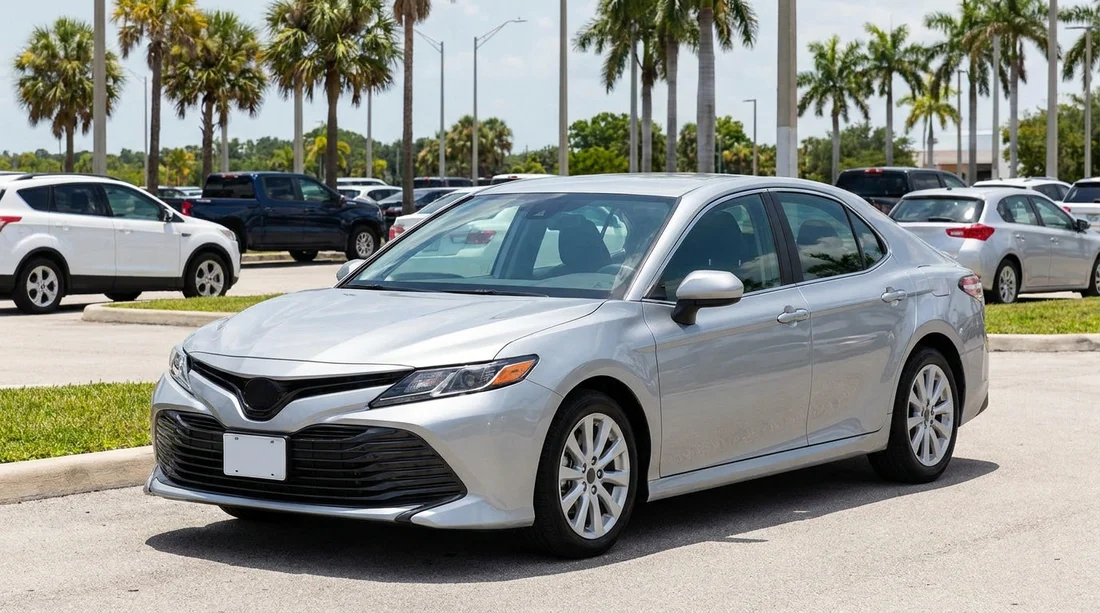
So ICAR usually reads as an intermediate, 2 or 4 door, automatic car with air conditioning. It does not mean a specific vehicle, colour, trim, boot size, or a guaranteed number of seats beyond what is typical for that category.
The 4 positions in an ACRISS code
ACRISS codes always work left to right. If you remember what each position covers, you can sanity check a deal quickly.
1st letter, vehicle category: Think of this as the size tier. Common letters include M (Mini), E (Economy), C (Compact), I (Intermediate), S (Standard), F (Full size), P (Premium), L (Luxury). You may also see X for special, and various letters for vans and SUVs depending on supplier.
2nd letter, body style: This is the “shape”. You will often see B (2 door), C (2/4 door), D (4 door), W (Wagon or estate), V (Passenger van), F (SUV), J (Open air all terrain, sometimes used for Jeep style). Exact mapping can vary, but the intent is consistent: it distinguishes a car from an SUV, and a small hatch style from a people carrier.
3rd letter, transmission and drive: A is usually automatic. M is manual. Other letters can indicate automatic with four wheel drive, all wheel drive, or special drivetrains. In Florida most mainstream categories are automatic, but it is still worth checking if you strongly prefer automatic, especially when comparing suppliers.
4th letter, fuel and air conditioning: This letter often carries “air con” plus fuel type or whether fuel is unspecified. In Florida, you should treat air conditioning as essential, and confirm it is included in the class description, not only assumed.
Common ACRISS examples you will see for Florida car hire
While suppliers vary, you will often come across a handful of repeatable patterns:
ECAR: Economy, 2/4 door, automatic, air conditioning. Typically best for solo travellers or couples with light luggage.
CCAR: Compact, 2/4 door, automatic, air conditioning. Often a sweet spot for city driving and parking.
ICAR: Intermediate, 2/4 door, automatic, air conditioning. Common for families who need more boot space than compact.
SCAR: Standard, 2/4 door, automatic, air conditioning. Generally roomier cabin, sometimes larger boot opening.
FCAR: Full size, 2/4 door, automatic, air conditioning. More shoulder room for long drives.
SFAR: Standard SUV, automatic, air conditioning. A popular Florida choice for higher seating position and easier loading.
IFAR: Intermediate SUV, automatic, air conditioning. Similar idea, often slightly smaller than standard SUV classes.
PFAR or LFAR: Premium or Luxury SUV, automatic, air conditioning. Typically higher comfort, but still “or similar”.
As you compare options, pair the code with the written description and the passenger and luggage icons on the listing. Those elements, together, are more reliable than any single abbreviation.
What ACRISS codes do not guarantee
The biggest pitfall is assuming the code promises a specific model or a precise set of features. Even when a page shows a photo, most listings are “example vehicle”. Here are the common non guarantees:
Exact make and model: An intermediate car could be one of several similar sedans, or even a differently shaped car depending on fleet.
Boot volume and luggage fit: “2 bags” icons can be optimistic, especially with pushchairs, golf clubs, or hard shell cases.
Tech and comfort features: Apple CarPlay, Android Auto, built in sat nav, leather seats, adaptive cruise control, and parking sensors are rarely guaranteed by class code alone.
Fuel policy details: The code’s fuel letter is not the same as the rental fuel policy. Always read the terms for the fuel arrangement.
Choosing the right category for different Florida trips
Orlando theme parks and family days: You will likely spend plenty of time loading and unloading bags, snacks, and possibly a buggy. Many families find an intermediate or standard car class more comfortable than compact, and SUV categories can make entry and loading easier. If your trip starts at the main hub, compare categories around Orlando Airport car hire and focus on passenger count and luggage, not just the code.
Miami city driving and parking: Tight spaces and heavy traffic can make compact categories attractive. If you are staying central, it can be useful to check local pickup options such as Brickell car rental, where smaller classes may be easier to live with day to day.
Fort Lauderdale and beach gear: Coolers, beach chairs, and larger suitcases push you towards intermediate, standard, or SUV categories. If you know you will want a higher ride height, look at SUV rental in Fort Lauderdale and compare the SUV codes against the number of seats and bags shown.
Airport convenience near Miami: If you are flying in and heading straight to the Keys or down the coast, the fastest plan is usually a straightforward airport pickup. You can review typical categories through Miami Airport car hire and shortlist two adjacent classes, for example compact versus intermediate, depending on luggage.
A practical checklist to decode the code before you choose
1) Start with people, then luggage. Decide how many adults, child seats, and large bags you truly have. If you are on the line between two classes, moving up one tier often improves comfort and boot access more than you expect.
2) Translate the first letter into a size expectation. E and C are typically small. I and S are mid range. F, P, and L are larger and often more comfortable for longer drives.
3) Use the second letter to avoid surprises. If you want an SUV, look for body type letters that indicate SUV rather than “2/4 door”. If you want a standard car, avoid SUV coded groups.
4) Confirm transmission in the third position. If the third letter is not what you want, treat it as a deal breaker. Most Florida visitors prefer automatic, and most listings will reflect that.
5) Treat the fourth letter as a climate sanity check. Florida heat and humidity make air conditioning important. If the listing is unclear, rely on the written inclusions and the supplier terms more than assumptions.
FAQ
What does ICAR mean for car hire in Florida? ICAR usually means an intermediate size, 2 or 4 door car, automatic transmission, with air conditioning. It is a category, not a specific model.
Are ACRISS codes the same with every rental company? The structure is standard, but the exact vehicles sitting in each class can vary by fleet and location. Always read the class description alongside the code.
Does an ACRISS code guarantee luggage capacity or boot size? No. It implies a general size tier, but it does not guarantee boot volume. If you have bulky luggage, consider moving up a class or choosing an SUV or van.
How can I make sure I get an automatic car in Florida? Check the third letter of the ACRISS code. In many cases, “A” indicates automatic. Also confirm the listing explicitly states automatic transmission.
Is air conditioning always included for Florida rentals? It is very common, but you should still confirm it in the class details and terms. The fourth letter of the code often indicates air conditioning status.






























































































