


Quick Summary:
- You can usually use your own SunPass or E-PASS, if registered.
- Prevent double-charges by disabling rental toll programmes before driving toll roads.
- Match the rental’s plate and dates in your toll account, then remove promptly.
- Photograph the plate, windscreen, and transponder status, plus keep receipts.
Florida’s toll roads are everywhere, from expressways around Orlando to causeways and managed lanes in Miami. When you pick up a car hire, the counter often offers a toll package, and the vehicle may already have a toll transponder or plate-based billing set up through the hire company. If you already own a SunPass or E-PASS, it is reasonable to ask whether you can use your own device instead of the rental’s solution.
The short version is that it is usually possible, but it is not always straightforward. The biggest risk is being billed twice, once by your personal toll account and once by the car hire company’s toll administrator. The second risk is being billed correctly, but having too little evidence to challenge a wrong charge later. This guide explains what is typically allowed, how to set it up legally, and what to photograph and keep as proof.
Can you legally use your own SunPass or E-PASS in a Florida hire car?
In Florida, tolls are collected either by reading a transponder (SunPass, E-PASS and related interoperable systems) or by photographing the vehicle’s number plate and sending a bill to the registered owner or their billing agent. Using your own transponder is generally legal because toll agencies care that the toll is paid, not who owns the vehicle. What matters is that the toll system can match a valid account to the correct identifier, either the transponder ID or the vehicle plate.
Where people get into trouble is not legality, but contract terms and overlapping billing arrangements. Many hire companies enrol vehicles in a toll programme that uses the built-in transponder, a sticker tag, or plate-based billing. You can often decline the hire company’s toll option, but you may still be responsible for any tolls plus administrative fees if the vehicle is processed through their system. That is why the practical question is: can you ensure the tolls flow to your account only?
If you are collecting a vehicle near Orlando, it helps to confirm your plan early, especially around busy airport locations like car rental at Orlando MCO where toll roads are commonly used within minutes of leaving the terminal area.
Understand how Florida tolling will identify your hire car
To avoid surprises, you need to know which identifier will be charged:
1) Transponder-based charging. If the car has a transponder mounted or embedded and it is active, the toll reader will usually prioritise that transponder. If you also bring your own transponder, the reader may capture one of them, or in some cases create a mismatch that triggers plate imaging. This is where double-billing can occur if both systems later claim the trip.
2) Plate-based charging (toll-by-plate). If no transponder is read, the toll system bills the plate. With a hire car, that bill typically goes to the hire company, then to you, often with additional fees. You can sometimes add the hire car’s plate to your personal SunPass or E-PASS account so the plate bills your account instead. This can be effective if, and only if, the hire company’s toll programme is not simultaneously billing you.
3) Managed lanes and express lanes. Some lanes and facilities are less forgiving about misreads. If you are driving in South Florida, especially around airport corridors and express lanes, you want a clean, single source of billing. If you are picking up near Miami, routes from car rental in Miami often involve toll options quickly, depending on your destination.
Will a personal transponder work in someone else’s vehicle?
Usually yes. A portable SunPass (such as a SunPass Pro) or E-PASS transponder can be moved between vehicles. The toll reader is looking for a valid transponder ID, and your account is billed when it is detected. The two common pitfalls are:
Account setup rules. Some accounts want you to register vehicles (plate numbers) to the transponder. If the plate on file does not match the vehicle being driven, it can still work, but any edge cases may become harder to dispute. Registering the hire car’s plate temporarily can reduce friction.
Vehicle class and axle count. Toll rates can differ by vehicle class. If you are hiring something larger, confirm your account is configured properly for that transponder type. This matters if you opt for a people carrier, for example from minivan hire at Orlando MCO, as you want billing to match the vehicle you actually drive.
How double-charging happens, and how to prevent it
Double-charging is usually the result of two parallel billing paths being open at the same time. A common scenario is: you bring your own transponder, but the hire car’s built-in tag is also active. Another scenario is: you add the hire car’s plate to your account, but the hire company is also processing toll-by-plate charges through their/topics toll service and billing you later.
Step-by-step: safest way to use your own transponder
1) Ask what toll programme is attached to the vehicle. At the desk, ask whether the vehicle has an active toll transponder, whether it can be disabled, and what happens if you decline toll coverage. Some fleets have a transponder that can be placed in a shielded bag or switched off, others do not. Get the answer in writing if possible, even as a note on your agreement.
2) Decline the hire company toll product if you plan to self-manage. This reduces the chance their system will invoice you. However, declining does not automatically guarantee the car’s tag is disabled, so you must still confirm the physical status in the vehicle.
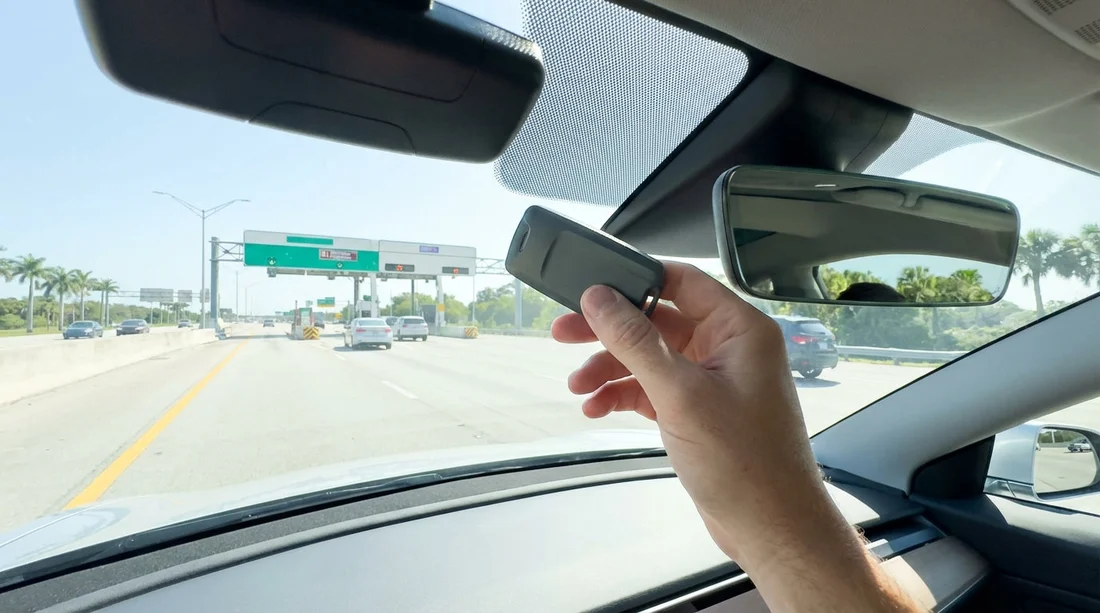
3) Physically check the windscreen area before you drive. Look for a mounted transponder, a sticker tag, or a device integrated near the mirror. If the rental’s tag cannot be removed, ask how to ensure it will not be read. Do not cover or tamper with sensors unless the hire company instructs you to.
4) Decide whether you will use “transponder-only” or “plate backup”. If you will use your personal transponder, mount it where it has a clear view through the windscreen. If you prefer toll-by-plate through your account, add the hire car’s plate as a temporary vehicle. Many travellers use both: personal transponder for the primary read, plus the plate registered as a backup in case of a missed read.
5) Add the hire vehicle plate to your SunPass or E-PASS, but only for your rental dates. If you do this, use the exact plate number, including any letters that could be mistaken for numbers. Add a start date that matches pick-up day, and remove it immediately after drop-off. Leaving it longer increases the chance of being billed for someone else’s tolls later if the car is rehired quickly.
6) Keep your toll receipts and trip history. Save screenshots of your account’s trip list showing date, time, plaza or gantry ID, and toll amount. If a toll charge appears from the hire company later, you will have the evidence to show it was already paid via your account.
What to photograph and keep as proof (this is crucial)
Disputes are easier when you have clear, time-stamped documentation. Before you leave the lot, and again at return, capture:
1) The vehicle number plate, front and rear. Photograph it clearly, and make sure the plate characters are readable. This proves which plate you were responsible for on that day.
2) The windscreen area around the mirror. Take a wide photo showing any installed transponder or toll sticker, plus a close-up that shows identifying numbers if visible. If you are using your own transponder, photograph where you placed it.
3) The rental agreement showing pick-up and return times. Toll disputes often hinge on timing. Keep a photo or PDF of the agreement page that shows the dates and times, plus the vehicle details and plate number if listed.
4) The dashboard at pick-up and drop-off (optional but helpful). A quick photo of the odometer and time can support your timeline if you have to explain when you entered toll roads.
5) Any desk communication about tolls. If the agent notes “customer using own SunPass” or similar, photograph that note. If you receive an email confirmation, keep it.
If you are collecting from the Gulf Coast side, toll routes may be less constant than Orlando or Miami, but they still appear around bridges and expressways. For travellers flying in, car rental at Tampa TPA is a common starting point, so it is worth doing the same proof routine there.
Timing matters: when tolls post and when hire toll charges arrive
SunPass and E-PASS transactions do not always post instantly. Some show within hours, others take days. Hire company toll administrators can also take days or weeks to send charges, especially if they are processing toll-by-plate images in batches. That lag is exactly why you should keep your screenshots and photos for at least several weeks after you return the car.
If you see a hire company toll charge that overlaps with your account history, compile your evidence: your rental agreement, your SunPass or E-PASS transaction screenshot, and your vehicle plate photos. Then contact the toll administrator listed on your rental paperwork and ask for the toll details line by line. Often, charges can be reversed when you show that the toll was already paid by a valid transponder account.
Special situations to watch for
Multiple drivers. If another driver takes the car and uses tolls, your account will still be billed if your transponder is in the car or the plate is added to your account. Make sure everyone agrees on the plan.
Changing vehicles mid-rental. If your car is swapped due to maintenance or an upgrade, repeat the whole process. New plate, new photos, update your account, and remove the old plate immediately.
Airport exit tolls. Some airport and expressway ramps have toll gantries close to the exit. Do your setup before you leave the car park, not after you join the road.
Brand and location differences. Toll programme rules can vary by operator. If you are hiring through a specific brand location, such as Thrifty car hire at Miami MIA, ask exactly how their toll billing works at that branch so you can avoid unintended enrolment.
So, should you use your own transponder or the rental’s toll option?
If you already have a funded SunPass or E-PASS and you are comfortable managing the plate registration and documentation, using your own setup can be cost-effective and transparent. It can also be quicker than waiting for toll invoices after your trip.
If you do not have an account, are making a short visit, or do not want to manage paperwork, the rental toll product can be simpler, but read the fee structure carefully. Some programmes charge a daily convenience fee on any day you incur tolls, plus the toll amounts, and the totals can add up on longer trips.
Whichever approach you choose, the key is to have only one billing method active, and to keep proof that shows which car, which plate, and which dates apply to your car hire.
FAQ
Can I add a Florida hire car’s plate to my SunPass or E-PASS account? Yes, you can usually add it as a temporary vehicle. Add it for the exact rental dates, double-check characters, and remove it immediately after return.
What if the rental car already has a transponder stuck to the windscreen? Ask whether it is active and how it is billed. If it stays active while you use your own transponder, you risk double-charging, so confirm how to disable or shield it.
How do I avoid being charged by both my account and the hire company? Use only one toll method. Decline the hire toll product if self-managing, ensure the rental transponder will not be read, and keep screenshots proving your account paid.
What proof should I keep in case I need a refund? Photos of front and rear plates, windscreen transponder area, and the rental agreement dates. Also save your SunPass or E-PASS trip history screenshots showing matching times.
How long after my trip might toll charges appear? Personal account transactions may post within hours to a few days. Hire company toll administrator charges can appear days or weeks later, so keep records for at least a month.






























































































