


Quick Summary:
- LDW often excludes windscreens and tyres, so check your rental terms.
- Excess usually applies even when LDW covers collision damage costs.
- Look for separate glass, tyre, wheel, or roadside cover add-ons.
- Photograph chips and tyre condition before leaving the rental lot.
When arranging car hire in Los Angeles, the most confusing part is often not the vehicle choice, it is working out what is covered if something goes wrong. One of the most common questions is whether LDW covers windscreens and tyres. The short, practical answer is that LDW often helps with body damage from a collision, but glass and tyres are frequently treated differently. Because policies vary by supplier, location, and rate type, the safest approach is to understand the usual pattern, then confirm the exact wording for your rental before deciding on any optional cover.
If you are collecting from a major hub like LAX, you will often see several cover options presented at the counter. Hola Car Rentals lets you compare providers and terms for Los Angeles, including pick-up at Los Angeles Airport (LAX) and related pages like car hire in Los Angeles (LAX). Use these pages as a starting point, then verify the specific inclusions and exclusions shown in your quote and rental agreement.
What LDW usually means for car hire in Los Angeles
LDW stands for Loss Damage Waiver. In US car hire, LDW is commonly described as a waiver rather than insurance. In plain terms, it can reduce or remove the rental company’s ability to charge you for damage to the vehicle, provided the damage happens in a covered scenario and you comply with the agreement.
Typically, LDW focuses on collision and theft related loss. That usually means dents, panels, bumpers, and other bodywork after an accident, plus the vehicle being stolen. However, it is not a universal rule that all parts of the car are included. Many agreements carve out certain components, and glass and tyres are among the most frequently excluded.
Do windscreens count as “damage” under LDW?
Sometimes, but often not. Windscreen damage is commonly treated as “glass damage”, and many suppliers list glass as an exclusion or a special category with separate cover. A chip from a loose stone on the freeway, a crack that spreads from heat, or damage from road debris can all be classed as glass damage rather than a collision. Even if you have LDW, you could still be charged for repair or replacement if glass is excluded.
Some rentals include limited glass cover within LDW, but apply conditions. For example, the waiver may apply only if the glass damage occurs as part of a documented collision, or only if a police report exists where required. You may also find that side windows, rear windows, and sunroofs are treated differently from the windscreen. That is why it is important to check the precise wording, not just the label “LDW”.
Do tyres count as “damage” under LDW?
Tyres are even more commonly excluded. A puncture can happen without an accident, and many rental terms consider tyre damage to be wear-and-tear adjacent, or a maintenance-type issue. If tyres are excluded, you may be responsible for a replacement tyre, towing charges if the vehicle cannot be driven, and the rental company’s downtime while the car is repaired.
Also note that “tyres” can include the wheel and rim depending on the wording. Kerb damage to alloy wheels is a common source of disputes, and it may not be covered by LDW even when the tyre itself is. If you are driving around Los Angeles, multi-storey car parks, tight kerbs, and parallel parking in busy areas can all increase the risk of wheel damage.
How excess works, even when you have LDW
A key point for car hire in Los Angeles is that LDW does not always mean “no cost to you”. Many agreements apply an excess (also called a deductible). That is the amount you may still pay towards covered damage. If the excess is, for example, $500, then a covered repair costing $1,200 could still mean you pay $500 and the waiver covers the rest.
Excess can apply differently depending on the incident. Some agreements have one excess for collision damage and a different one for theft. Others apply the same excess across categories but keep glass and tyres outside the waiver entirely. If you are comparing rates, look for the section that states the excess amount, then scan the exclusions for glass, tyres, wheels, underbody, and roof.
What optional cover usually changes for glass and tyres
If your quote shows that LDW excludes glass and tyres, you might see optional products that target these items specifically. Names vary, but common types include glass and tyre cover, wheel and rim cover, or a broader “roadside and tyre” package that combines puncture support with towing or lockout assistance.
Before you add anything, separate two questions:
1) Does the add-on cover the part? “Glass” might mean only the windscreen, or it might include all windows and mirrors. “Tyre” might cover punctures but not blowouts, or it might exclude sidewall damage. Wheels and rims are often separate.
2) Does it remove or just reduce the excess? Some products reduce your liability rather than eliminate it. Check whether an excess still applies to glass and tyres under the optional cover.
If you are browsing options through Hola Car Rentals for LAX and California, it can help to compare suppliers and see how their inclusions differ across car hire in California (LAX), as well as specific supplier pages such as Budget car rental at LAX or Alamo car rental at LAX. The key is still to rely on the terms shown for your exact dates and vehicle class.
Practical steps to reduce the risk of glass and tyre charges
Los Angeles driving is generally straightforward, but motorways, construction zones, and urban parking make glass chips and tyre issues more likely than you might expect. A few habits can reduce your exposure:
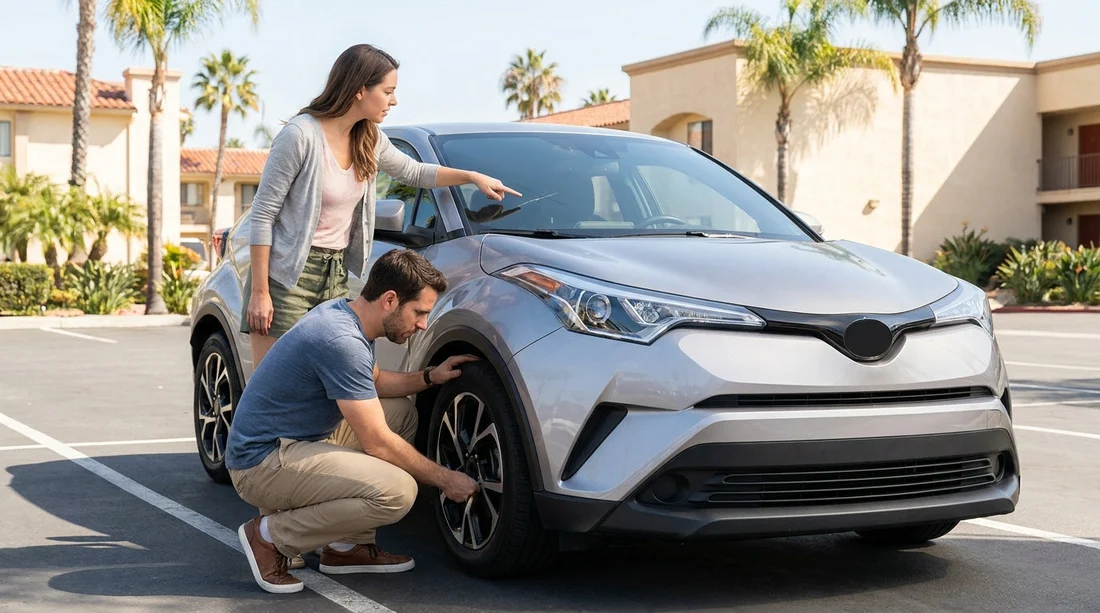
Document condition at pick-up: Take clear photos and a short walkaround video, focusing on the windscreen (chips and cracks), tyres (tread and sidewalls), and wheels (kerb marks). Make sure the time stamp is enabled if possible.
Check tyre pressure warnings: If a tyre pressure light is on at collection, report it immediately. Driving on an underinflated tyre can cause sidewall damage that may not be covered.
Avoid tailgating: Stone chips often come from following too closely behind trucks, especially on freeways.
Know what to do if it happens: If you get a chip or puncture, contact the rental company first and follow their instructions. Unauthorised repairs can create claim problems even when cover exists.
So, do you need extra cover for windscreens and tyres in Los Angeles?
It depends on the terms you are offered, but for many travellers the deciding factor is simple: if LDW excludes glass and tyres, and you would struggle to absorb the potential cost of a windscreen replacement or tyre and towing charges, optional cover may be worth considering. If your LDW already includes glass and tyre damage with a manageable excess, you may not need anything additional.
The best approach is to treat LDW as a starting point, not a guarantee that everything is covered. For car hire in Los Angeles, glass and tyres are exactly the categories where small, common incidents can still create unexpected charges, so it pays to check the exclusions line by line before you decide.
FAQ
Is LDW the same as full insurance for car hire in Los Angeles? Not necessarily. LDW is commonly a waiver with conditions and exclusions, and it may still include an excess and fees.
What is the difference between windscreen cover and glass cover? Windscreen cover may apply only to the front windscreen, while glass cover can include side windows, rear glass, and sometimes mirrors, depending on terms.
If I have LDW, will a puncture be free to fix? Often no. Tyres are frequently excluded from LDW, and you may be charged for the tyre, towing, and service costs unless you have specific tyre cover.
Can I be charged even if the damage is minor, like a small chip? Yes. Rental companies may repair or replace glass based on safety standards, and costs plus administration fees can apply if glass is excluded.
What should I do immediately after discovering windscreen or tyre damage? Contact the rental company, take photos, and follow their instructions. Avoid arranging repairs without authorisation unless the agreement explicitly allows it.






























































































