


Quick Summary:
- LDW often excludes roof and underbody damage, even on Florida rentals.
- Read the agreement for excluded parts wording before you sign.
- Ask if optional cover includes roof, undercarriage, tyres, and glass.
- Take clear photos at pickup and return to document condition.
When you arrange car hire in Florida, Loss Damage Waiver (LDW) is one of the most misunderstood protections. Many drivers assume it covers damage to the car in every scenario. In practice, LDW usually reduces what you might pay if the rental vehicle is damaged or stolen, but it commonly comes with exclusions. Two of the most frequent exclusions are roof damage and underbody, sometimes called undercarriage, damage.
If you are comparing providers and pick-up points, you can review Florida options through Hola Car Rentals pages such as car rental Florida and car hire Florida. The important next step is confirming the specific terms on the rental agreement you will sign at the counter.
What LDW usually means on a Florida rental
LDW is typically an agreement where the rental company waives, or limits, your financial responsibility for damage to the vehicle, subject to conditions. Those conditions can include an excess, approved driver requirements, permitted road use, and exclusions for specific parts of the vehicle.
Think of LDW as a bundle of rules rather than a simple yes or no policy. In many cases, LDW can still leave you responsible for certain categories of damage even if you did nothing intentional. This is why the question about roof and underbody damage is best answered as: often no, unless your agreement explicitly includes it.
Why roof and underbody damage are often excluded
Rental companies commonly exclude roof and underbody damage for three main reasons: verification, risk profile, and preventability.
Verification is difficult. Underbody damage may not be visible at check-in, and roof damage can be missed unless staff inspect the vehicle from a height. Because it is harder to prove when and where it occurred, providers manage this risk via exclusions.
The risk profile is higher. Underbody impacts can damage the oil pan, exhaust, suspension components, or battery trays on some models. Repair costs can escalate quickly, and the vehicle may be unsafe until fixed. Roof damage can also be expensive because it may involve structural panels, paintwork, and water sealing.
These incidents are often linked to avoidable situations. Typical undercarriage claims involve driving over kerbs, parking stops, debris, or taking a vehicle onto uneven ground. Roof damage is frequently associated with low-clearance garages, drive-throughs, or contact with overhanging structures. Even when accidents happen, rental terms often treat these as within the driver’s control, so they exclude them from LDW.
What cover options might help, and what they really cover
To reduce exposure, rental companies may offer add-ons or alternative packages that extend coverage, sometimes including previously excluded areas. Names and scope vary by brand, so focus on the wording, not the label.
Extended protection packages. Some packages reduce the excess to zero and may include additional parts like roof and undercarriage. Others still exclude them. Ask specifically: Is roof and undercarriage damage included in this option, and request confirmation on the contract or in the included terms.
Tyre and glass cover. Tyres, windscreen, and glass are often excluded from standard LDW. This can be useful, but it does not automatically include the roof or underbody.
Third-party excess reimbursement. Some travellers rely on separate cover that reimburses eligible charges after you pay the rental company. These products often have their own exclusions and may or may not cover undercarriage and roof. If you use this approach, read the policy conditions carefully, and check how claims are evidenced.
Vehicle choice as risk management. A vehicle with higher ground clearance can reduce underbody strikes on uneven surfaces. You can compare larger vehicle options such as minivan hire in Florida while also thinking about practical clearance limits in garages.
What to confirm before you sign the rental agreement
The most important protection is clarity before the keys are handed over. Use this checklist at the counter, and do not rely on assumptions from general descriptions.
1) Ask for the exclusions list. Confirm whether the agreement excludes roof, upper body, undercarriage, underbody, mechanical damage, water damage, tyres, and glass. These terms are often grouped together.
2) Check permitted use and road restrictions. If you drive somewhere prohibited, LDW may be invalidated. Ask what counts as an unpaved road, and whether hotel access roads or car park surfaces create issues.
3) Review the deposit and excess. Even when LDW applies, you might still pay an excess first. Ensure you understand the amount, currency, and how long a hold may remain on your card.
If you are collecting the vehicle from a major hub, the process can be busy. Planning ahead for pick-up helps, whether you are using car hire at Miami Airport or another location.
Inspection steps that can prevent disputes
Because roof and underbody areas are easy to miss, take a few extra minutes at pickup and return.
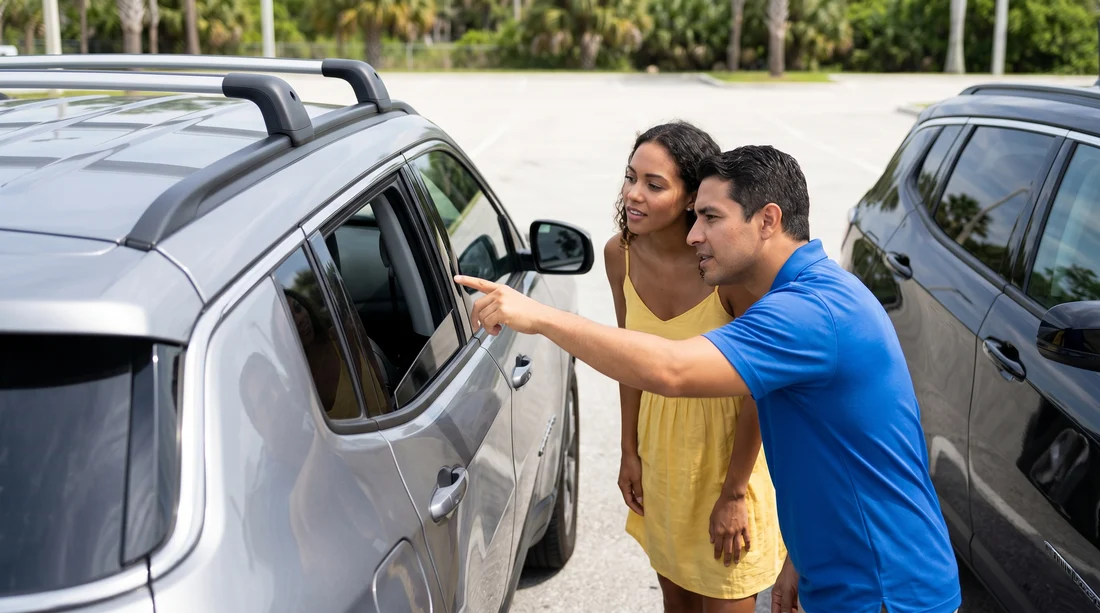
At pickup: photograph all sides, then take angled photos upwards to capture the roof edge and upper panels. If you cannot see the roof, ask staff where you can safely check it or whether they note roof unchecked. For the underbody, photograph low areas: bumpers, side sills, wheel arches, and the underside of the front bumper where scrapes show up first.
At return: repeat the photos in the return bay, including the roofline and lower panels. If possible, stay for the check-in inspection and ask for a signed or printed confirmation.
Pick-up and return routines may differ by provider and neighbourhood. For example, a downtown return can be tighter and more rushed than a suburban location, such as Hertz downtown Miami. Your own documentation helps regardless of where you return.
So, does LDW cover underbody and roof damage in Florida?
On most Florida car hire agreements, standard LDW does not automatically cover underbody and roof damage. Some premium options may include them, but you should only treat them as covered when the contract language clearly says so. If coverage is unclear, assume exclusions apply and decide whether to change cover, change vehicle type, or adjust your driving and parking plans to reduce risk.
FAQ
Q: Is LDW the same as car insurance on a Florida rental?
A: Not exactly. LDW is typically a damage waiver offered by the rental company with conditions and exclusions, while insurance can refer to separate liability or personal policies.
Q: If LDW excludes the undercarriage, what damage might I be charged for?
A: Common charges include scrapes to the underside, damage to the exhaust or suspension components, and impacts to lower bumpers or protective panels, depending on the assessment.
Q: Are roof racks or roof-mounted accessories covered under LDW?
A: Often they are excluded or treated as accessories with separate rules. Confirm in writing whether roof-mounted parts are included and what happens if they are damaged or missing.
Q: Does driving through flood water count as underbody damage covered by LDW?
A: Frequently not. Water-related and mechanical damage can be excluded, and driving into standing water may breach reasonable care or road-use conditions.
Q: What is the simplest way to reduce roof-damage risk on a Florida trip?
A: Know your vehicle height, avoid low-clearance garages when unsure, and take roofline photos at pickup and return so any change is clear.






























































































