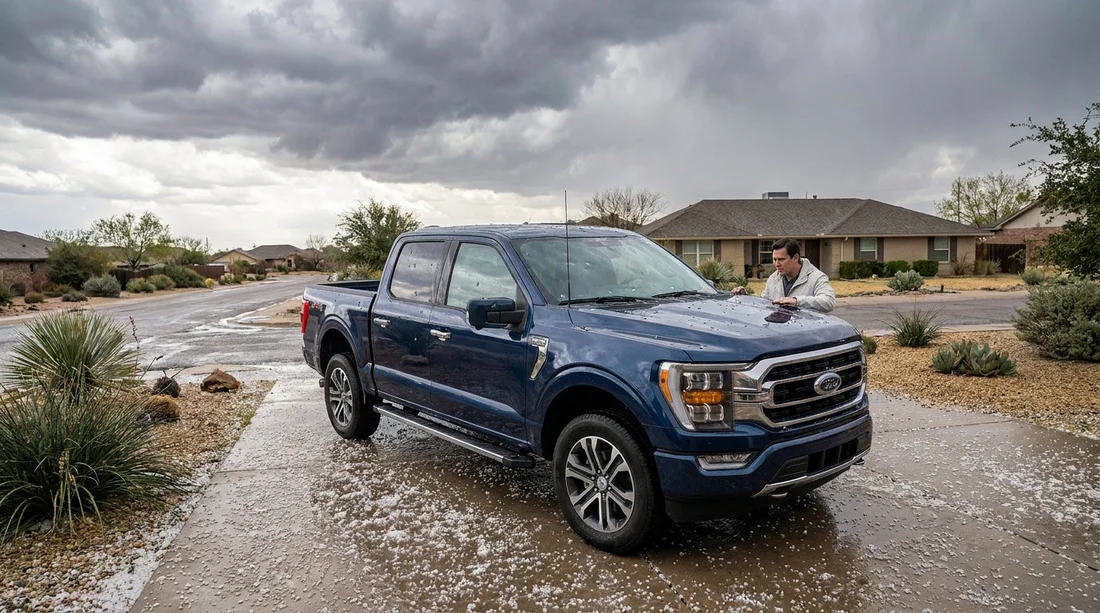
Quick Summary:
- LDW may cover hail if your terms include weather or acts of nature.
- Check your agreement for exclusions, definitions, and any excess amount.
- Photograph roof, bonnet, and glass at pickup to document condition.
- After hail, report promptly, take photos, and follow supplier instructions.
Hail is a real risk in Texas, particularly during storm seasons and in parts of North and Central Texas. If you are arranging car hire and you are offered Loss Damage Waiver (LDW), it is reasonable to ask whether it will protect you if hail dents the bodywork or cracks the windscreen. The answer is often, but not always, and the details hinge on how your rental company defines LDW, what it excludes, and what excess applies.
This article breaks down how hail damage is typically treated, whether it sits under collision or weather damage, what costs you might still face, and what you should check before you drive off the lot in Texas.
What LDW usually means for car hire in Texas
LDW is commonly presented as a waiver that reduces or removes your financial responsibility if the rental car is damaged or stolen. It is not always described as insurance, and coverage varies by supplier, location, and rate. In Texas, the same brand can still have different terms depending on where you pick up, such as an airport branch versus a city branch.
If you are comparing options at different pickup points, you can review location-specific information while planning, for example car hire at Dallas DFW or car hire at Austin AUS. The key is that the contract you sign at the desk governs what LDW covers.
Is hail collision damage or weather damage under LDW?
Hail is normally treated as a weather event, sometimes called an act of nature or storm damage. It is not usually categorised as collision damage unless the damage happened through a crash triggered by the weather. In practice, hail dents and broken glass are generally handled as non-collision damage.
Here is why that distinction matters. Some LDW products are focused on collision damage only. Others are broader and cover most accidental damage, including weather. If your LDW is collision-only, hail could be excluded even though you paid for a waiver.
What excess could apply for hail damage in Texas?
Even when LDW covers hail, it may still include an excess, also called a deductible. This is the amount you pay towards the repair cost before the waiver covers the rest. Excess can range widely depending on the vehicle class, supplier, and whether you choose additional protection.
Also note that charges connected to a hail claim can go beyond the physical repairs. Depending on the supplier and the agreement, you may see administrative fees, towing or relocation costs, or loss-of-use charges if LDW does not fully remove them.
Common exclusions that can affect hail claims
Hail looks straightforward, but exclusions can still affect whether LDW helps. Watch for these contract points, because they can convert what seems like a covered weather event into a chargeable incident.
Failure to report promptly. Some suppliers require you to notify them as soon as practical and follow a specific process.
Unauthorised driver or prohibited use. If someone not listed on the agreement was driving, LDW can be voided, even if hail caused the damage.
If you are hiring a larger vehicle, read the terms especially carefully, because repair costs rise with size and glass area. If you are considering a people carrier or cargo vehicle, you may compare details via van rental in Fort Worth DFW.
What to check before driving off the lot
Most disputes are avoided by taking ten minutes at pickup. Hail dents can be subtle, especially on light paint, and roof damage is easily missed because it is hard to see from ground level.
Read the LDW section on the rental agreement and any separate protection leaflet. Look specifically for acts of nature, weather, hail, storm, glass, and roof.
Confirm the excess amount that applies to damage claims. If multiple excess figures are listed, identify which applies to your booked class.
Take timestamped photos all around, including the roof and close-ups of any marks. Include the licence plate in at least one shot to link the images to the vehicle.
Doing this is helpful regardless of supplier. For instance, you might look at supplier pages like Payless car rental at Dallas DFW or Hertz car rental at San Antonio SAT, but always rely on the contract issued at pickup.
What to do if hail hits your rental car
If you are caught in a Texas hail storm, prioritise safety first. Once safe, shift to documentation and reporting, because LDW terms often require timely notice and cooperation.
Move to shelter if possible, such as a covered car park or fuel station canopy. Do not stop in unsafe places to avoid dents.
Photograph the damage as soon as it is safe. Capture wide shots and close-ups, and include the surroundings to show circumstances.
Record time and location. A note on your phone with the address or nearby junction can help if questions arise.
Contact the rental company using the number on your agreement. Ask what to do next, whether a replacement vehicle is needed, and what reporting they require.
If the windscreen is cracked, ask whether the vehicle is still permitted to be driven. A damaged screen may worsen quickly and affect visibility.
How to avoid surprises when arranging car hire in Texas
Texas weather can shift fast, and hail can occur with limited warning. You cannot control the sky, but you can control how well you understand your cover and how well you document the car’s condition.
To reduce uncertainty, focus on three checks: first, whether LDW includes weather events or acts of nature, second, the excess and any fees that still apply, and third, thorough pickup photos including the roof and glass.
If you want to compare coverage expectations across different Texas pickup locations, it can help to check your booking details for places such as car rental in El Paso ELP, then confirm the final LDW wording at the counter.
FAQ
Does LDW usually cover hail damage on a rental car in Texas? Often yes, but only if the LDW terms include weather or acts of nature. Some LDW products are collision-focused and may exclude hail.
If hail is covered, will I still pay an excess? Possibly. Many LDW options reduce your liability but keep an excess or certain fees. Check the agreement for the deductible and any admin or loss-of-use charges.
Is hail considered collision damage under LDW? Typically no. Hail dents and storm-related glass damage are generally treated as weather or non-collision damage, unless a separate crash occurred.
What should I inspect at pickup to protect myself? Photograph the roof, bonnet, boot, and all glass, then match any marks to the condition report. Confirm the LDW exclusions and the exact excess amount before leaving.
What should I do immediately after a hail storm damages the car? Get to a safe place, take photos, note time and location, and call the rental company for instructions. Avoid arranging repairs yourself without approval.