


Quick Summary:
- LDW may exclude roof and soft-top damage on Florida rentals.
- Check the agreement for roof, upper body, or convertible top exclusions.
- Photograph the roof and top at pick-up and return, including seams.
- Confirm how weather, vandalism, and misuse affect LDW and deductibles.
When you arrange car hire in Florida, Loss Damage Waiver (LDW) is often described as protection against damage or theft of the rental vehicle. The part that catches many travellers out is that LDW terms can be narrower than expected, especially around areas that are hard to inspect, easy to damage, or commonly excluded, such as the roof and convertible soft top.
This guide explains how LDW typically treats roof, glass-above-the-beltline, and convertible top damage in the US, what exclusions to watch for, and what to confirm before you sign the rental agreement at the counter.
What LDW usually does, and what it is not
In US rental contracts, LDW or CDW is generally a contractual waiver offered by the rental company, not a universal insurance policy. When it applies, LDW usually limits what you owe for damage or theft, subject to conditions and exclusions. It often comes with a deductible (sometimes called an “excess”), and it can be voided by prohibited use, driver ineligibility, or failing to report an incident properly.
Because LDW is contract-based, the exact coverage can vary by rental company, vehicle class, and location. That matters in Florida, where people commonly choose convertibles for coastal routes and SUVs for family trips, both of which can have extra “upper body” exposure.
If you are comparing Florida pickup points and vehicle types, it can help to read the local terms alongside the quote pages, such as Miami Airport car rental or Tampa Airport car hire, then confirm the final wording on the rental agreement you sign.
Does LDW cover roof damage in Florida?
Often, roof damage is limited or excluded. Many US rental agreements treat “roof”, “upper body”, “overhead”, or “top of vehicle” damage differently from door panels and bumpers. The reasons are practical: roof damage is frequently linked to low-clearance impacts, garage entrances, drive-thru awnings, parking structures, or loading items on the roof. Rental companies may exclude it entirely, cap coverage, or require an upgraded package to include it.
The important takeaway for car hire is that “LDW included” on a summary screen does not automatically mean “roof included”. The only reliable source is the signed agreement and the printed coverage list.
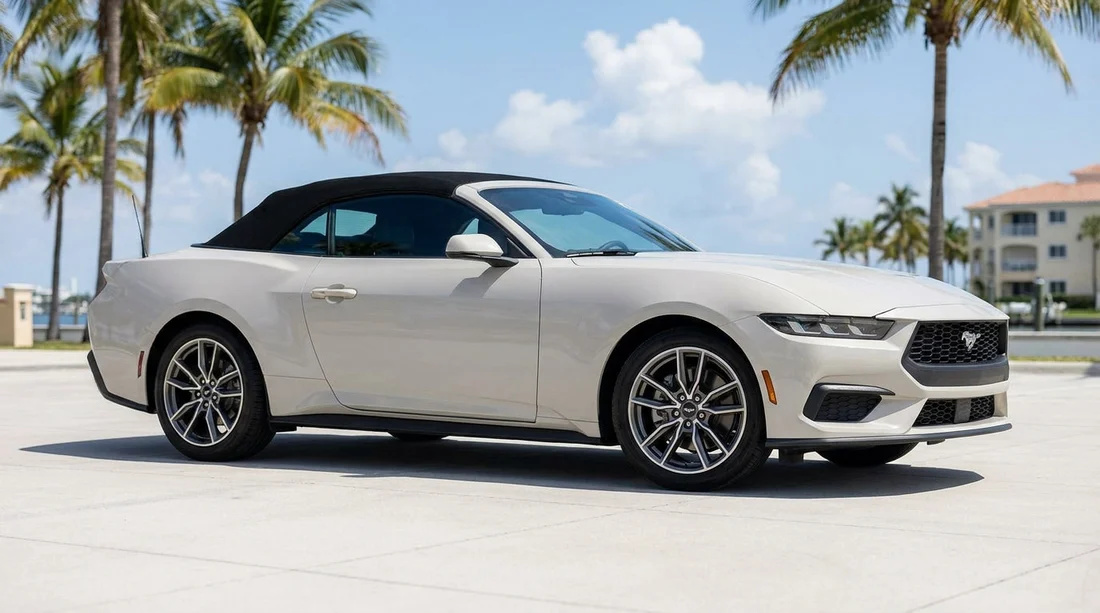
Does LDW cover damage to a convertible soft top?
Convertible tops are commonly excluded, or covered only under strict conditions. Soft tops are more vulnerable to slashes, punctures, improper latching, and wear. As a result, many rental companies classify them alongside tyres, wheels, and glass as items with separate rules.
Typical convertible-top problem areas that may be excluded from LDW include:
Tears, punctures, and cuts, including vandalism. Some contracts treat vandalism as covered only if you file a police report promptly, others still exclude soft tops regardless of cause.
Damage from incorrect operation, such as forcing the mechanism, closing it with debris in the seals, driving with it partially latched, or using automatic washes that snag fabric edges.
Water ingress caused by leaving the top open in rain, or failing to secure windows and latches properly. Even if the interior damage is incidental, the contract may treat it as preventable.
If you are considering a convertible for Florida driving, ask the counter staff to point out the clause that mentions “convertible top”, “soft top”, or “roof”, and confirm whether any optional package extends coverage to those components.
Common LDW exclusions that affect roof and top claims
Even where LDW can apply, exclusions often determine whether it actually will. Watch for these frequent carve-outs:
Prohibited use and negligence. Off-road driving, driving into flooded streets, racing, unauthorised drivers, or ignoring warning lights can void LDW. Flooding is a real Florida risk during heavy rain, and “water damage” is often handled harshly in contracts.
Failure to report and document. Many agreements require you to report damage immediately, obtain a police report for vandalism or theft, and cooperate with the rental company. Missing documentation can lead to denial.
Unattended vehicle requirements. Some companies require the vehicle to be locked and keys safeguarded. For convertibles, leaving the top open while parked can be viewed as a breach, even if nothing is stolen.
Restricted locations or activities. Driving on beaches, through saltwater, or on unpaved surfaces can trigger exclusions. In coastal Florida, beach access roads and sand parking areas can create grey areas, so clarify what counts as “off-road”.
What to confirm before signing at the counter
To avoid surprises, treat the agreement as a checklist. Before you sign, confirm these items in plain language and match them to the printed terms:
1) Is roof damage covered under LDW for this class? Ask specifically about dents, scrapes, and overhead impacts, not just “roof”. For larger vehicles, also ask about roof rails and aerials.
2) Is convertible-top fabric damage covered? If yes, ask what conditions apply, such as police reports, time limits, or exclusions for improper operation.
3) What is the deductible and what fees can still apply? Even with LDW, you may still face deductible amounts, loss-of-use, admin fees, or towing, depending on the package and local law.
4) How are weather and vandalism handled? Florida storms can be sudden. Ask whether falling debris is treated as a covered accident or excluded “act of nature”, and what evidence is required.
If your trip involves a people carrier or larger vehicle, the same “upper body” issues can matter even more due to height. When comparing options, you might look at a passenger van collection point such as van hire in Doral, then confirm clearance risk guidance at pick-up.
Inspection tips for roofs and soft tops
A careful inspection reduces disputes and helps if you need to report a claim. Spend an extra five minutes on the parts people do not normally photograph.
At pick-up: take time-stamped photos and short video of the roof from multiple angles. For SUVs, include roof rails and the top edge of the windscreen. For convertibles, photograph the fabric, seams, rear window, and latching points, plus any existing scuffs or discoloration.
At return: repeat the same shots, ideally in the return lane before you leave. If you return after hours, use the drop-off instructions and keep evidence of the time and location.
These habits are useful whether you pick up near Orlando through providers such as Thrifty car hire at Orlando MCO or elsewhere in Florida, because the terms may be similar but the condition disputes happen in the same way.
Choosing a vehicle with roof risk in mind
Your vehicle choice changes the likelihood of roof-related issues. Convertibles introduce soft-top concerns, while taller SUVs and vans increase clearance risk.
If you need space but want to reduce overhead risk, consider whether a standard-height vehicle suits your itinerary better than a tall SUV. If you do choose an SUV for family travel, be extra cautious with hotel car parks and multi-storey ramps. You can browse vehicle categories for context, such as SUV rental in Tampa, then focus your counter questions on roof and “upper body” wording.
Key takeaway for Florida car hire
LDW can reduce your financial exposure, but roof and convertible-top damage are frequently where the fine print bites. The safest approach is to assume these areas may be excluded until you confirm they are included for your exact vehicle and package. Read the agreement, ask targeted questions, document the vehicle condition, and adjust your driving and parking habits to reduce the most common roof and soft-top risks.
FAQ
Is roof damage usually excluded from LDW on a Florida rental car? Often yes. Many US rental agreements exclude or limit “roof” or “upper body” damage, so you must confirm the exact wording on your contract.
Does LDW cover a slashed convertible soft top? Sometimes only with strict conditions, and sometimes not at all. Ask whether soft-top vandalism is covered, and whether a police report is required to make LDW apply.
What should I ask at the counter before signing? Ask whether LDW covers roof and convertible-top damage, what the deductible is, and what fees may still apply. Also ask how weather, vandalism, and misuse affect eligibility.
What evidence helps if there is a dispute about roof or top damage? Time-stamped photos and video at pick-up and return, plus any incident report number. For convertibles, include close-ups of seams, latches, and the rear window.
Can driving through flood water affect LDW in Florida? Yes. Water or flood damage is frequently excluded or treated as negligence, and it may void LDW. Avoid flooded roads and report any incident immediately.






























































































