


Quick Summary:
- Flex settings matter when carpool discounts depend on declared vehicle occupancy.
- For toll-only express lanes, the setting usually does not change charges.
- Confirm your rental toll option, device type, and billing before leaving.
- Read corridor signs carefully, as HOV rules vary by region.
California’s express lanes can save time, but they can also create confusion when you are in a rental car hire vehicle and you see signs mentioning FasTrak, FasTrak Flex, and different prices based on occupancy. The short version is that you only need a FasTrak Flex setting when the lane uses your declared occupancy to decide whether you pay full price, a reduced toll, or nothing at all. In other places, the lane is simply an all-electronic toll road or toll lane, and the transponder setting does not change what you owe.
This guide explains what FasTrak Flex is, when it actually matters for express or HOV use, and what to prepare before you pick up your rental so you can drive confidently and avoid surprise admin fees later.
What FasTrak and FasTrak Flex actually are
FasTrak is California’s statewide electronic toll collection system. A FasTrak transponder communicates with overhead readers in toll roads, bridges, and express lanes. Traditionally, having a transponder linked to an account made it easier to pay tolls and, in certain lanes, to claim carpool benefits.
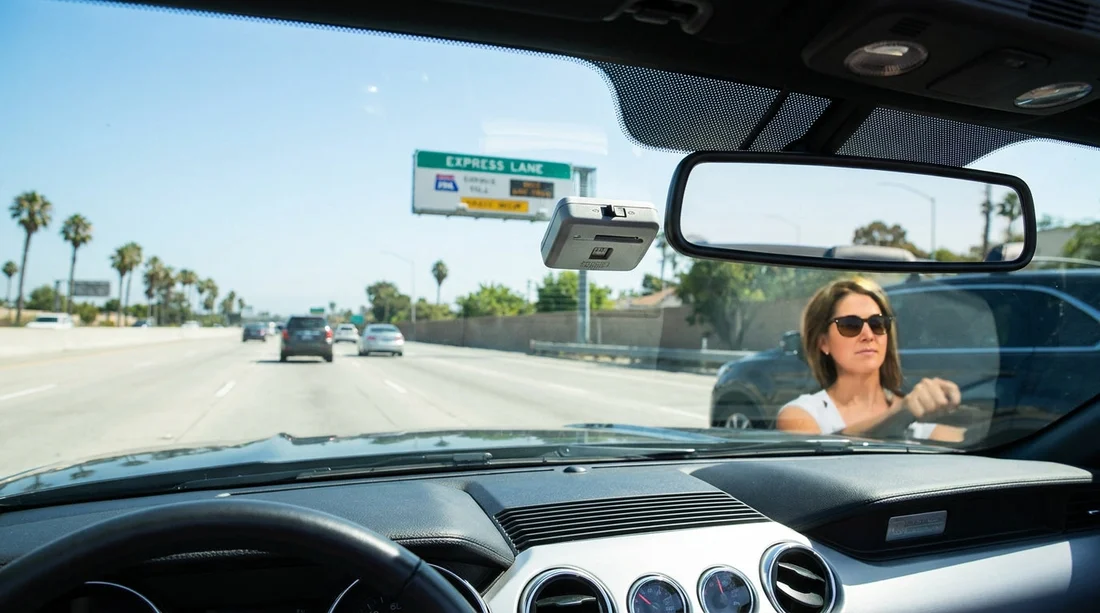
FasTrak Flex is a specific type of transponder with a physical switch. The switch usually has positions for 1, 2, or 3+, which indicate how many people are in the vehicle. Some express lanes use that setting to decide whether you qualify for a carpool discount or a toll-free trip. Other roads ignore the setting and simply charge tolls based on vehicle type and time of day.
Because the rules are set by different local agencies, you will see variation across California. What matters most is the specific corridor you are entering and whether that corridor prices carpools differently.
When you need the Flex setting for express lanes
You need the FasTrak Flex switch when an express lane offers toll-free or discounted travel for carpools, and it relies on the transponder setting to verify your claimed occupancy. In these corridors, selecting the right position before you enter the lane is essential. If you leave it on “1” while travelling with enough passengers to qualify as a carpool, you may be charged the full toll. If you set it to “2” or “3+” without meeting the carpool requirement, you risk a violation if enforcement checks.
If you are planning airport pickups in busy regions, the question comes up often. For example, travellers collecting vehicles via car hire options near LAX may quickly encounter priced express lanes on major motorways, where the carpool benefits can depend on the switch position.
When the Flex setting does not matter
In some places, an electronic toll facility will charge you regardless of how many people are in the car. In those cases, the Flex setting generally does not change the toll amount. You still need a way to pay, either via the rental company’s toll programme, your own transponder and account, or a pay-by-plate arrangement where available.
Even when the setting does not affect the toll, having a functioning transponder or an approved payment method still matters, because many California toll facilities do not have cash booths.
Rental car hire and tolls, what to confirm before pick-up
With a rental car hire vehicle, the biggest differences are administrative. The toll agency charges the toll, but the rental company is the registered owner, so they receive the bill or plate match, then pass the toll plus any agreed fees to the renter. To avoid surprises, confirm these points before you leave the lot.
1) Does your rental include a transponder, and what type?
Ask whether the car has a FasTrak transponder, and if it is FasTrak Flex with a switch. Some fleets have a built-in device, some provide a portable unit, and some rely on licence plate billing through a toll programme.
2) How will tolls be charged?
Clarify whether you are opting into a toll package, paying per day of use, or paying per toll plus an admin fee. Also confirm if express lane charges are treated the same as toll roads.
3) What is the correct procedure for express lanes?
If a device is installed, ask where it is located, how to confirm it is active, and whether you need to set occupancy manually. If it is a Flex transponder, find the switch and practise changing it while parked.
This prep is especially helpful if you are landing in Northern California and collecting near San Francisco Airport car hire, where regional toll bridges and express lane corridors can come up quickly, and many facilities are all-electronic.
How to read the signs quickly and correctly
California express lane signs usually tell you three things: who can use the lane, whether a transponder is required, and how pricing works.
“FasTrak only”
means you must have an electronic payment method, often a transponder or an approved toll account arrangement.
“HOV 2+” or “HOV 3+”
indicates the minimum occupancy for any carpool benefit. It may be toll-free, discounted, or allowed to use the lane at a reduced rate, depending on the corridor.
Pricing displays
often show a dollar amount for solo drivers, sometimes with different messaging for carpools. If the sign references FasTrak Flex or shows different rules by occupancy, that is your signal that the switch setting matters.
Practical tips to avoid violations and extra charges
Set occupancy before entering the lane. Do it while you are still in general traffic, not after crossing the entry point. If you are unsure of the requirement, assume you will be charged and leave the setting at “1”.
Do not guess carpool eligibility. “Two people” is not universal, and some lanes require three or more for a free trip. If the sign says HOV 3+ and you have two, select “1” and expect to pay.
Keep passengers consistent with the setting. Enforcement may check occupancy visually. If your setting indicates 3+ and you only have two people, that can be treated as misuse even if you are willing to pay.
Plan ahead for common pickup regions. Around Orange County pickups like Santa Ana Airport car hire, you may encounter tolled corridors where a working device and the right setting make a real difference in cost.
Key takeaways for California travellers
So, do you need a FasTrak Flex setting for express lanes with a rental car in California? You need it when the express lane’s carpool benefits depend on the 1, 2, or 3+ selection. If the lane is simply tolled for everyone, the setting is less important than having a valid payment method. The smartest move is to confirm your rental’s toll arrangement at pick-up, locate any transponder switch, and rely on signage for each corridor you enter.
If you are collecting in Silicon Valley, San Jose car hire locations are often close to commuter express lanes, so it is worth confirming device type and billing before you start driving.
FAQ
Q: Can I use California express lanes in a rental car hire vehicle?
A: Yes, if the lane accepts electronic payment linked to the car’s transponder or plate billing. Confirm your rental’s toll programme and device setup before driving.
Q: If I have passengers, can I set FasTrak Flex to 2 or 3+ automatically?
A: Only if the sign for that specific express lane states HOV 2+ or HOV 3+ eligibility, and you meet it. Incorrect settings can lead to being charged or cited.
Q: What happens if I forget to change the Flex switch?
A: If you leave it on “1”, you will usually be charged the solo toll even if you qualify for a discount. If you set it higher than your actual occupancy, you risk a violation.
Q: Will tolls show up immediately on my receipt?
A: Not always. Toll processing can take days or weeks, and charges may appear after the rental closes, depending on the toll agency and your rental agreement.






























































































