


Quick Summary:
- Standard cars suit couples or light luggage, with easier city parking.
- Full-size cars add rear-seat space and a larger boot for suitcases.
- Choose standard for lower fuel use, choose full-size for comfort.
- Typical models vary, check seat and luggage counts before picking.
When you’re planning car hire in Los Angeles, “standard” and “full-size” can sound almost interchangeable. In practice, the difference usually shows up in the back seat, boot capacity, and long-drive comfort. Los Angeles is a city of long distances, heavy traffic, and big day trips, so a small jump in vehicle class can feel significant once you’ve done an hour on the 405 or loaded luggage after a red-eye flight.
This guide breaks down what you can typically expect from standard versus full-size rental cars in LA, how each class handles common traveller scenarios, and what to check before you confirm a vehicle class.
What “standard” and “full-size” usually mean in US car hire
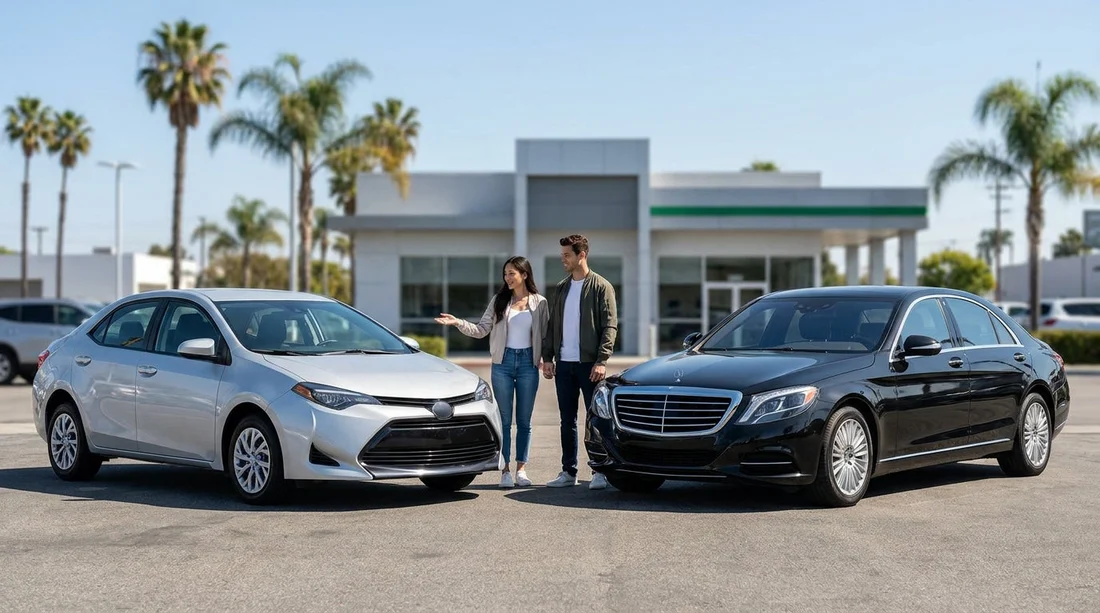
Rental car classes are categories, not guarantees of a specific make or model. A “standard” car in the US is generally a mid-size sedan class, while “full-size” usually means a larger sedan with more overall cabin volume and boot space. Both are typically 5-seaters with 4 doors, but the comfort difference comes from shoulder room, rear legroom, and how well the car copes with passengers plus luggage.
In Los Angeles, you will often collect at LAX. If you are comparing options around the airport, it helps to understand how fleets are grouped on local pages such as car rental at LAX and car hire at LAX, where vehicle classes and suppliers can vary by season.
Cabin space and seating comfort
Front seats: Standard cars are usually comfortable for two adults in the front, with adequate headroom and seat width. Full-size cars tend to provide noticeably more shoulder room and a more relaxed driving position, which matters if you’re tall or if you’ll spend hours on freeways each day.
Rear seats: This is where most travellers feel the difference. Standard cars can fit three across in the back, but it may be tight for adults, especially with child seats. Full-size cars are generally better for three adults for short trips, and two adults plus a child seat for longer drives. If you plan to carry airport passengers, colleagues, or family, full-size often reduces the “knees to seatback” feeling.
Ride quality: Full-size sedans often feel calmer over LA’s patched urban roads and freeway expansion joints. The extra wheelbase and weight can translate into a smoother ride, less road noise, and less fatigue over a week of driving.
Boot size and luggage: what actually fits
Boot capacity is one of the most practical differences for car hire in Los Angeles because travellers frequently combine shopping, theme parks, and coastal day trips with hotel changes.
Standard: Typically works for one large suitcase plus one to two smaller bags, or two medium cases and day packs. It can be a squeeze if you’re carrying camera gear, prams, or bulky coats, particularly if everyone is travelling with hard-shell luggage.
Full-size: Usually fits two large suitcases more comfortably, plus additional soft bags. The boot opening can also be wider, making it easier to load rigid cases. If you expect to pack souvenirs, plan outlet shopping, or carry beach kit, that extra boot volume is often the difference between a tidy load and bags on the rear seat.
A useful rule is to pick the class for your luggage first, then your passengers. A five-seater only helps if the boot can take the bags without blocking rear visibility or making the cabin cluttered.
Typical models you might see in Los Angeles
Models vary by supplier and availability, but these are common examples of what “standard” and “full-size” can resemble in US fleets.
Standard examples: Toyota Camry, Hyundai Sonata, Nissan Altima, Volkswagen Jetta-class equivalents depending on fleet. These cars are familiar, easy to drive, and efficient enough for city and freeway work.
Full-size examples: Chevrolet Malibu, Toyota Avalon-type equivalents, Nissan Maxima-type equivalents, and other larger sedans. Some suppliers may also group near-luxury trims into full-size at times, but you should not assume premium features unless stated.
Because “or similar” applies, focus on measurable needs: number of suitcases, child seats, and how many adults will sit in the back. If you’re unsure, comparing supplier pages can help set expectations, for example Dollar car hire at Los Angeles LAX and Payless car rental at LAX.
Fuel use, parking, and drivability in LA
Fuel: Standard cars often have a slight advantage in fuel consumption, especially in stop-start traffic. Full-size sedans can be close, but generally use a little more, particularly if you’re doing a lot of short trips across town. Over a week, that difference can add up if you’re covering big mileage, such as Malibu to Anaheim to Hollywood and back.
Parking: Los Angeles parking ranges from tight multi-storey garages to street bays in busy neighbourhoods. Standard cars are typically easier to slot into smaller spaces and manoeuvre in older parking structures. Full-size sedans are still manageable, but you may feel the extra length when turning into compact bays.
Freeway comfort: If your itinerary includes long freeway runs, for example day trips to Santa Barbara or San Diego, full-size tends to feel more stable and less tiring, especially with passengers in the rear.
Which class suits common LA travel plans?
Weekend city break with light bags: Standard is usually ideal. It is easy to drive, simpler to park, and generally cheaper to run.
Couple’s trip with two large suitcases: This is a tipping point. A standard may work if you pack efficiently, but full-size is the safer choice if you want easy loading and room for shopping bags.
Three or four adults: Full-size is usually more comfortable, particularly for rear passengers. If four adults also have luggage, consider whether you actually need a larger category, such as an SUV or minivan, because sedans can run out of boot space before they run out of seats.
Family with child seats: Full-size can make installing child seats easier and leave more front seat legroom. For two child seats plus luggage, many families find an SUV or minivan simpler, but if you prefer a sedan, full-size is generally the better starting point.
Business travel and longer drives: Full-size is often worth it for comfort, smoother ride, and extra space for a colleague in the back seat.
Standard or full-size vs SUV and minivan alternatives
Some travellers compare standard and full-size, then realise they actually need a different body style. SUVs offer a higher driving position and flexible cargo space, while minivans maximise passenger room and luggage capacity for groups.
If you are travelling with bulky gear, multiple child seats, or five passengers, it can be useful to compare sedan classes with an SUV option via SUV rental at LAX or a people-carrier via minivan hire at LAX. Even if you still choose a sedan, checking these categories can clarify whether “more boot space” is your real requirement.
What to check before you choose your car class
Luggage count in real terms: Estimate by suitcase size, not just number of bags. Two large hard-shell cases can overwhelm a standard boot.
Rear-seat needs: If adults will sit in the back daily, full-size tends to improve comfort. If the back seat is mostly for occasional short hops, standard is often fine.
Child seats and boosters: Confirm how many you need, and remember that fitting them can reduce usable seating space in the middle.
Driving mix: More city parking and short urban trips can favour standard. Longer freeway days and multiple passengers can favour full-size.
“Or similar” expectations: Treat the class as a size promise, not a specific model promise. If a particular feature matters, such as folding rear seats, check what the supplier typically provides in that class.
FAQ
Is a standard rental car big enough for four adults in Los Angeles? It can work for short trips, but rear-seat comfort is limited. For longer drives and regular use with four adults, full-size is usually more comfortable.
How many suitcases fit in a standard vs a full-size car? A standard typically manages one large suitcase plus smaller bags. A full-size usually fits two large suitcases more easily, with extra room for soft bags.
Are standard and full-size cars both automatic in LA? In Los Angeles, automatic transmission is common across both classes. Manual cars exist but are less typical, so check the listing details if it matters.
Will a full-size car be harder to park in Los Angeles? Slightly, mainly in tight garages or compact street bays. Most travellers adapt quickly, but standard is generally easier for frequent parking.
Should I choose an SUV instead of a full-size sedan? Choose an SUV if you need flexible cargo space, higher seating, or easier loading for bulky items. If you mainly want a comfortable motorway cruiser with a large boot, a full-size sedan can be the better fit.




























































































