


Quick Summary:
- Check all four tyres for damage, tread depth, and matching sizes.
- Test headlights, brake lights, indicators, and reverse lights before exiting.
- Inspect wiper blades for splits, then verify washer spray reaches windscreen.
- Photograph any faults on pick-up and report them before you drive.
Los Angeles driving can throw a lot at you quickly, bright sun glare, sudden night-time freeway runs, and occasional coastal mist. When you collect a car hire vehicle, the safest time to spot problems is before you leave the pick-up car park. A two minute walkaround can help you avoid poor visibility, reduced grip, or an awkward return dispute later.
This checklist focuses on three items you rely on immediately, tyres, lights, and wipers. You do not need tools, just your eyes, hands, and the car’s controls. If anything looks wrong, ask for it to be fixed or the vehicle to be swapped before you drive off.
Tyres: quick checks that affect grip and braking
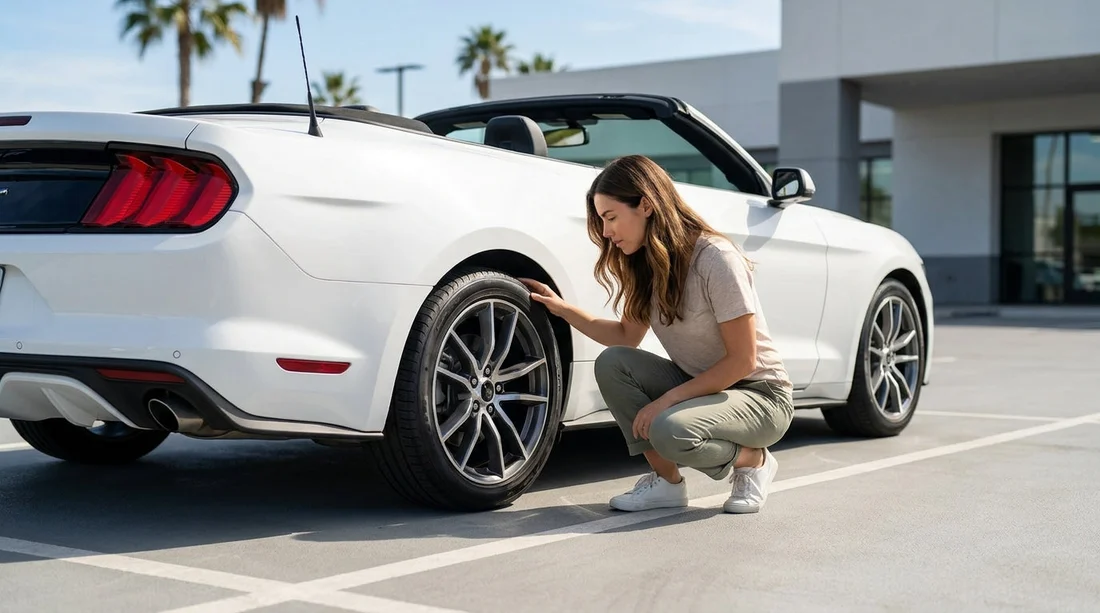
Start at the front left and work around the car in one direction so you do not miss anything. Tyres are your only contact with the road, and in Los Angeles that means high-speed freeways, tight multi-storey ramps, and frequent lane changes.
1) Sidewall condition. Look for cuts, bulges, or exposed cords on each tyre’s sidewall. Bulges can indicate internal damage and a risk of failure at speed. Also check the valve stem is present and not cracked.
2) Tread depth and even wear. You do not need a gauge to spot a problem. Compare the tyre’s tread grooves across the width. If one edge looks much smoother than the other, the tyre may be unevenly worn. Very low tread reduces wet grip and increases stopping distances, especially if you hit rain on the 405 or pooled water near kerbs.
3) Matching tyres on each axle. Check the two front tyres look broadly the same brand, pattern, and condition, and do the same for the rear pair. Mixed tread patterns are not always unsafe, but big differences can affect handling and braking feel. If one tyre is clearly newer or a different type, ask the agent to confirm it is acceptable for that vehicle.
4) Signs of under-inflation. A tyre that looks squashed at the bottom, or has scuffed edges, may be low on air. While you cannot accurately set pressures without a gauge, you can spot obvious under-inflation before it becomes a heat build-up issue on long freeway stretches.
If you are collecting near the airport, you may find it helpful to compare options and policies on Hola’s local pages such as car hire Los Angeles LAX and car rental California LAX, then confirm your specific vehicle’s tyre condition at the counter.
Lights: verify you can see, and be seen
Lights are easy to overlook in a bright Los Angeles afternoon, but you will notice the problem as soon as you hit a parking structure, a tunnel, or a late evening drive. Do a full light test while the car is still parked safely.
1) Headlights and high beams. Switch on dipped headlights, then high beams. Step out and check both sides illuminate evenly. A headlight that is out, dim, or a different colour temperature may indicate a failing bulb or moisture in the housing.
2) Indicators and hazard lights. Turn on left indicator, then right, then hazards. Walk around and confirm each corner flashes. Fast clicking inside can suggest a bulb is out.
3) Brake lights. If you have a travel companion, ask them to stand behind the car while you press the brake pedal. If you are alone, reverse up close to a reflective surface such as a window, or use your phone camera video placed safely to one side. Confirm both brake lights, and the high-level brake light if fitted, illuminate.
4) Tail lights and number plate light. With headlights on, check rear tail lights glow on both sides. Also look for a lit number plate area, as a failed plate light can attract unwanted attention at night.
5) Reverse light. With the parking brake engaged and your foot on the brake, select reverse and check the reverse light(s) come on. This is particularly useful in busy hotel forecourts or tight lots where others rely on seeing you move.
Different operators at LAX can have slightly different vehicle prep routines. If you are comparing providers through Hola, you might recognise pages like Avis car rental California LAX or Enterprise car rental California LAX, but the pick-up light check stays the same whichever desk you use.
Wipers and washers: your visibility in sun, dust, and sudden showers
Wipers matter in Los Angeles even when it is not raining. Dust, road film, salt air near the coast, and washer use after a splash can all leave a smeary windscreen. Do this check before you join traffic.
1) Blade condition. Lift each wiper arm gently and look at the rubber edge. If it is split, hardened, or visibly nicked, it will streak. Also check the blade is seated properly in its frame and not half-detached.
2) Windscreen condition in the wiper sweep. Look through the main wiped area for chips or cracks. Small chips can spread with heat, and Southern California sun can be intense. If there is damage in the driver’s sightline, ask for a different vehicle.
3) Washer spray coverage. Activate the washer and confirm fluid sprays onto the windscreen, not over the roof or onto one corner only. Weak spray can mean empty fluid or a blocked nozzle. If it is empty, it should be topped up before you leave.
4) Wiper speeds and smearing. Try intermittent, low, and high speed quickly. Wipers should move smoothly without juddering. If they chatter, the blades may be worn or the screen may be greasy. Ask for blades to be replaced rather than accepting poor visibility.
How to document issues before leaving the car park
Once you finish the checks, take clear photos of each tyre, the dashboard showing any warning lights, and a short video of indicators and headlights if you notice a fault. If something is wrong, report it immediately while you are still on-site. It is much easier to resolve a tyre, light, or wiper issue at pick-up than later on the roadside.
Common problems you can spot in under two minutes
Most pick-up issues are simple. A tyre with a visible bulge, a headlight that does not illuminate, a rear indicator that flashes quickly, or washer fluid that does not spray. Any of these can affect safety straight away, particularly if you plan to drive at night, head into the hills, or spend time on faster routes.
Doing this quick check is part of responsible car hire use, and it helps you start your Los Angeles trip with fewer surprises.
FAQ
Do I need to check tyre pressure before driving a rental in Los Angeles? You do not need to measure it at the desk, but you should look for obvious under-inflation, warnings on the dashboard, or a tyre that looks squashed. If a tyre pressure warning is on, ask the staff to address it before you leave.
What tread depth should I expect on a rental car tyre? You should expect safe, clearly defined tread grooves without bald patches or cords. If the tread looks very shallow or uneven compared with the other tyres, request a different vehicle.
How can I test brake lights if I am travelling alone? Use a reflective surface behind the car or record a short phone video placed safely off to the side. Keep the parking brake on and press the brake pedal while checking the lights illuminate.
What should I do if the wipers smear the windscreen during the pick-up check? Ask for the wiper blades to be replaced or the vehicle to be swapped. Smearing reduces visibility at night and in sudden showers, and it is a quick fix on-site.
Is it normal for some cars to have automatic headlights and wipers? Yes, many newer vehicles do. Even if they are automatic, verify they work, and learn how to switch them to manual settings so you can respond quickly in tunnels, dusk, or changing weather.




























































































