


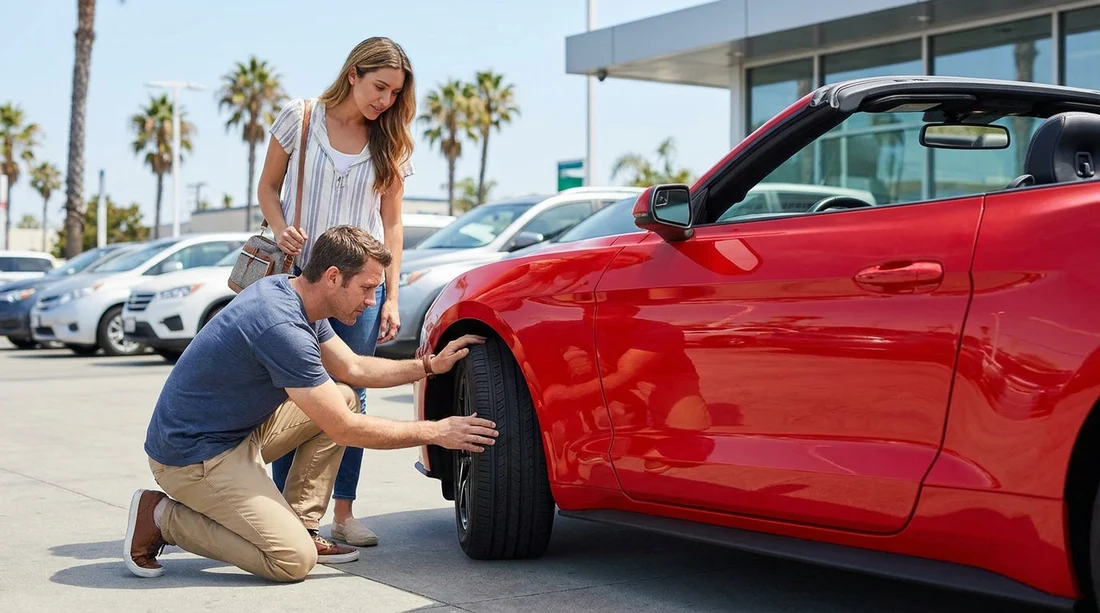
Quick Summary:
- Match tyre pressures to the door-jamb placard, not the sidewall.
- Inspect tread depth and uneven wear before joining fast freeway traffic.
- Scan sidewalls for cuts, bulges, cracks, and embedded debris.
- Check rims for damage and confirm the TPMS light is off.
Tyres are the only part of a rental car that touches the road, so a quick pre-departure check can prevent a stressful start to your California trip. Whether you are leaving a busy airport terminal or a downtown lot, the goal is the same, spot issues early, get them logged, and switch vehicles or have the tyre corrected before you drive off.
This guide is a practical, walk-round checklist for car hire in California, focused on tread, sidewalls, rims and dashboard warnings. It takes about three minutes if you know what to look for, and it helps you avoid vibration, poor grip in rain, or a tyre pressure warning halfway onto the freeway.
If you are collecting at a major hub such as car hire at Los Angeles LAX or car rental in San Diego, you can do the same checks in the garage or pick-up lane before merging into traffic.
1) Start with the dashboard: TPMS and other warning lights
Before you even roll forward, start the car and look at the instrument cluster. Most modern vehicles have a Tyre Pressure Monitoring System (TPMS) that illuminates a warning symbol when a tyre is significantly under-inflated, or when the system detects a fault. On many cars, the TPMS light should come on briefly at start-up, then turn off.
If the TPMS light stays on, take it seriously. It could be a genuinely low tyre, a slow puncture, or a sensor issue. Any of these are worth resolving before departure because they can affect handling and braking.
Also watch for traction control or ABS warning lights. They are not tyre issues directly, but they can point to wheel speed sensor problems. It is easier to swap vehicles while you are still on-site than to troubleshoot later.
2) Confirm tyre pressures using the car’s placard
The correct pressure is usually listed on a placard in the driver’s door jamb (sometimes the fuel filler flap). This figure is set by the vehicle manufacturer and is the one you should use. Do not use the maximum pressure printed on the tyre sidewall, that is a tyre limit, not the recommended setting.
If the vehicle shows individual pressures on the dashboard, compare them to the placard figures. If it does not, you can still do a quick visual check for obvious under-inflation, then ask the desk or the lot attendant to confirm pressures if anything looks off.
As a final check, make sure the valve stem is present and the cap is fitted on each wheel. Caps are small, but they help keep dust and moisture away from the valve core.
3) Check tread depth and wear patterns
Tread is your grip in rain and your resistance to hydroplaning. California can be dry for long periods, which can lull drivers into ignoring tread, but winter storms and sudden downpours do happen.
Low tread: Many tyres have wear bars in the grooves. If the tread is close to those bars, it is near the legal limit and will perform poorly on wet roads.
Uneven wear: More worn on one edge can indicate alignment issues. Uneven wear can cause noise, vibration, and longer stopping distances.
Feathering or cupping: A scalloped pattern can indicate suspension issues. It is not your job to diagnose it, but it is a sign you should raise with the rental company and consider a different vehicle.
If you are picking up at Dollar car rental at San Jose SJC and heading straight onto the highway, good tread is especially important for stable braking and lane changes at speed.
4) Inspect sidewalls closely: cuts, bulges, cracking, and repairs
Sidewalls are more vulnerable than people realise because they flex constantly and can be damaged by kerbs, potholes, and debris. Walk around the car and look at the inner and outer sidewall of each tyre as best you can.
Bulges or bubbles: These can indicate internal damage. A bulge can fail without warning, so do not drive off with one.
Cracks or dry rot: Fine surface cracking may appear on older tyres, but heavy cracking suggests deterioration. In a rental context, it is reasonable to request a different vehicle if it looks severe.
Cuts, tears, or exposed cords: Any cut deep enough to show layers is unsafe.
Plugs or patches: A professional repair in the tread area can be acceptable, but visible external plugs or multiple repairs may be worth questioning. If you see a repair, ask for it to be noted on the condition report.
Also check for nails or screws in the tread. Even if the tyre is holding air now, a slow puncture can appear later.
5) Look at the wheel rims and lug area
Wheel rims matter for both safety and the condition report. A bent rim can cause vibration and slow air loss, and rim damage is easy to miss in dim garages.
Kerb rash and gouges: Cosmetic damage is common, but make sure it is documented before you leave.
Bends or dents: Look along the rim edge for wobbles or flat spots.
Lug nuts and centre cap area: You are not tightening anything yourself, just confirm nothing looks obviously missing or tampered with.
If you are travelling as a group and collecting a larger vehicle via minivan hire at Sacramento SMF, pay extra attention here. Heavier vehicles place more load through tyres and wheels, so defects can be felt more quickly once you are on the move.
6) Confirm what to do if you find a problem
If you notice any damage or concerns, take clear photos of the tyre and wheel from a couple of angles, including a wider shot showing which corner of the car it is. Then ask staff to note it on the vehicle condition report. This is particularly important for rim scrapes and sidewall scuffs that could be interpreted as new damage later.
For safety items, such as a bulge, cords showing, a TPMS warning, or visibly low tread, the right outcome is a different vehicle or a corrected tyre before departure.
It is easier to address these issues before you join fast traffic, particularly around airports and interstates. If you are collecting from Payless car rental at Santa Ana SNA, do your slow check before committing to multi-lane roads.
FAQ
How long should tyre checks take before leaving a California rental lot? A focused check takes about three minutes: dashboard warning lights, a walk-round for tread and sidewalls, then a quick look at rims and valve caps.
Is it normal for the TPMS light to come on briefly when starting the car? Yes. Many cars illuminate warning symbols for a moment during the self-check. The TPMS light should then go out; if it stays on or flashes, ask for it to be checked.
What tread issues are most likely to cause problems on a rental? Very low tread and uneven wear are the big ones. Both can reduce wet grip and make the car feel unstable, especially at freeway speeds.
Should I accept a car with a repaired tyre? A professional repair in the tread area can be acceptable, but any repair should be disclosed and noted. Avoid driving off if you see sidewall damage or bulges.
What if the car has no spare wheel? Many vehicles provide an inflator and sealant kit instead. Check what is included before leaving, and ask staff what to do if the TPMS warning comes on during your trip.




























































































