Quick Summary:
- Smoking or vaping fees cover deep cleaning and lost rental time.
- Check the agreement for fixed fees, evidence standards, and dispute steps.
- Photograph the interior at pickup and drop-off to document condition.
- Ask the agent to note any existing odours or ash before leaving.
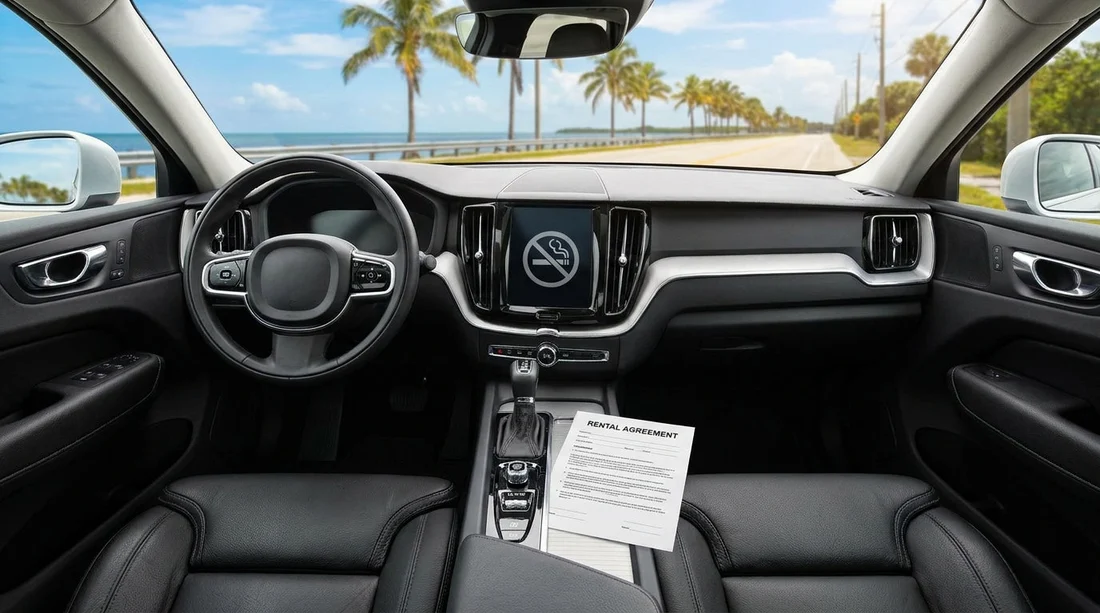
When you arrange car hire in Florida, most drivers focus on mileage, fuel rules, and insurance. Smoke related charges often appear in the small print, and they can be expensive because the fee is meant to cover more than a quick wipe down. In rental terms, smoking or vaping is usually treated as a prohibited use of the vehicle, which can trigger a cleaning fee, an administrative charge, and sometimes compensation for the time the car is unavailable to rent.
This article explains how smoke and vapour related fees are typically defined in rental agreements for Florida, what evidence can lead to a charge, and what to verify at the counter so you are not caught out later.
What the “smoking or vaping fee” usually means
A smoking or vaping fee is generally a set charge applied if the vehicle is returned with signs of smoking, vaping, or related odours. The agreement often describes it as a “smoke remediation” or “special cleaning” fee. The fee is not a fine issued by the state of Florida, it is a contractual charge for breaching the rental terms and for restoring the car to a smoke free condition for the next customer.
Even if you only vaped, many companies treat vaping the same as smoking because vapour can leave residue on glass, surfaces, and air vents, and odour complaints can still arise. The contract wording may include “smoke, vapour, ash, burn marks, or odours consistent with tobacco, cannabis, or e-cigarettes”. The exact language matters, so read it before you sign.
What can trigger a smoke related charge
Most rental terms describe triggers in broad language, because companies want discretion to act if the next renter complains. Common triggers include a noticeable smell, visible ash, nicotine or film on the inside of the windscreen, cigarette burns on upholstery, or evidence such as lighters and cigarette ends left behind. Some agreements also mention smoke detector readings used during cleaning, but more commonly the trigger is an inspection outcome.
In Florida, many rentals happen through busy airport locations where vehicles are turned around quickly. If the inspection process is rushed, the first documented sign might appear after you have left. That is why your own documentation at pickup and return is essential.
If your trip begins in Miami, the policies can be reviewed alongside location information for Miami Airport car rental, where fast turnarounds make condition notes particularly useful.
How fees are defined in rental terms
Rental agreements usually define smoke related fees in one of three ways.
1) Fixed fee schedule. The agreement or an addendum lists a specific amount for “smoking in vehicle” or “special cleaning”. This is the most straightforward. You can ask for the fee schedule before signing and keep a photo of it.
2) “Up to” a maximum amount. Some terms state an amount “up to” a cap, depending on severity. This can be less predictable, because the company may decide the level of remediation required.
3) Cost based plus administration. Less common, but possible, the agreement states you will pay cleaning costs and any related expenses, sometimes adding an administrative fee. This can matter if the company claims the vehicle was removed from service.
What to verify at the counter to avoid disputes
Before you drive away, take a minute to confirm the smoke related policy in plain language. You do not need to debate it, you simply want clarity on how they decide a fee applies, and what you should do if you notice an existing smell.
Ask to see where the fee is written. Get the exact line in the agreement, including the amount or the maximum. If the terms are on a screen, request a printed or emailed copy. If you collect in an urban location such as Brickell, you may have more time to review the wording than at a peak airport desk.
Confirm the inspection process. Ask whether the vehicle is inspected in your presence at return, and whether you can receive a condition receipt. If they say inspections happen later, make your own record at drop off.
Request written notes for pre-existing odours. If you detect a lingering smoke smell at pickup, do not assume it will “air out”. Ask the agent to mark it on the checkout report, or switch cars. A short note like “interior odour present at checkout” can help if a fee is attempted later.
Document the vehicle condition, especially the interior
Photos and short videos are your best protection. Focus on the interior because smoke related disputes are about smell and residue, not dents. At pickup, take a slow video showing the dashboard, vents, cupholders, seats, door pockets, headliner, and the inside of the windscreen. Photograph any stains, burn marks, or debris. Then repeat a quick set at drop off to show the vehicle was returned clean and empty.
Time stamps matter. If your phone does not automatically store them clearly, keep the images in a single album for the trip. If you are dropping off at a high volume location such as Orlando Airport, a clear drop off video can be especially helpful because staff may not check interiors immediately.
What happens if you are charged after return
Smoke related fees are often applied to the payment card on file after the vehicle is processed. If you see a charge, check your agreement first. Confirm the exact name of the fee and whether it matches the contract wording.
Then request the supporting evidence. Depending on the company and location, evidence may include cleaning reports, photos of ash or burns, or an odour complaint logged by staff. Provide your own documentation, including pickup notes, photos, and drop off video. Keep the discussion factual and tied to the agreement language, not general fairness.
If your itinerary includes South Florida coastal areas, you may see similar policies at places like Miami Beach, where vehicles are used for short trips and interior condition can change quickly between renters. The key is to document and to ensure the checkout condition is accurate before you leave.
Finally, plan a few extra minutes at return to tidy the cabin, take a quick video, and obtain any available receipt. This is particularly useful at airport locations like Fort Lauderdale where queues and shuttle timing can encourage rushed drop offs.
FAQ
What is the smoking or vaping fee on a Florida rental car agreement? It is a contractual charge for returning the vehicle with smoke or vapour odours, ash, residue, or burn damage, usually covering deep cleaning and related costs.
Can you be charged if nobody smoked, but the car smells like smoke? Yes, a charge can occur if the company concludes the vehicle was returned with smoke odour. That is why you should report any pre-existing smell at pickup and get it noted in writing.
Is vaping treated differently from smoking for car hire in Florida? Often no. Many agreements prohibit both and apply the same fee, because vapour can leave residue and odour complaints are difficult to separate from smoking.
What should I check at the counter before signing? Verify the exact fee amount or maximum, how the company determines a breach, whether you can get pre-existing odours recorded, and whether you receive a return inspection receipt.
How can I dispute a smoking or vaping fee? Ask for the evidence and the clause used to apply the fee, then provide your pickup and drop off photos, videos, and any written notes showing the interior condition and any pre-existing odour.