


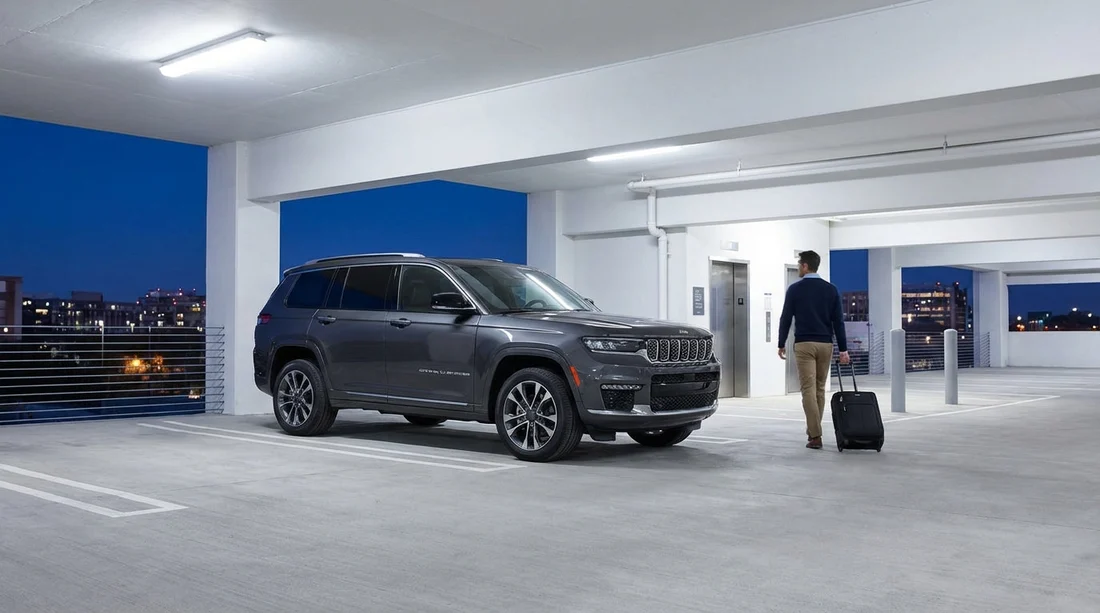
Quick Summary:
- Choose garages or official lots, avoid street parking with alternating-side rules.
- Confirm overnight is permitted, note closing times, and keep payment proof.
- Prioritise well-lit, staffed facilities near frequent transit, not quiet edges.
- Remove valuables, lock everything, photograph signs, and record your bay number.
Overnight parking near Manhattan can be surprisingly tricky when you are using a car hire in New York. Street parking rules change by block, enforcement is consistent, and some “park-and-ride” style lots are designed for commuters, not overnight stays. The safest plan is to treat overnight parking as a product you are buying: confirm rules in writing on-site, understand fees and access hours, and select locations with clear security features.
This guide compares common overnight options used by visitors who want to leave the car outside Manhattan and finish the journey by train, PATH, ferry, or subway. It also lists practical checks that reduce the risk of returning to a ticket, a tow, or a break-in.
What “overnight park-and-ride” really means around Manhattan
In the New York area, “park-and-ride” can refer to several different setups: municipal commuter lots, private garages near transit hubs, airport long-stay facilities, and large retail or hotel car parks that may tolerate parking only under specific conditions. Only some of these are appropriate for leaving a car overnight, and fewer still are sensible if your priority is predictable access and security.
With a car hire, predictability matters. You may have luggage, you may arrive late, and you may need the car early the next morning. That combination tends to favour staffed garages with controlled entry, clear terms, and a receipt that proves you are entitled to be there.
Option 1: Private garages near PATH or NJ Transit, most predictable
For many travellers, the most straightforward overnight park-and-ride near Manhattan is a private garage in New Jersey near a major transit station, especially along PATH (to Midtown or the World Trade Center) or NJ Transit (to Penn Station). These facilities are designed to handle non-local users, often have longer operating hours than municipal commuter lots, and typically have some combination of cameras, attendants, or controlled gates.
Rules: Private garages usually allow overnight, but access times vary. Some are 24/7, others lock after a certain hour and reopen early. Read the entrance signage before you enter and keep the ticket safe. Ask how re-entry works if you will return after midnight.
Fees: Costs are usually higher than open commuter lots, but you are paying for clarity and a lower chance of enforcement surprises. Watch for “daily maximum” wording that resets at a specific time, which can turn one overnight stay into two billable days.
Security: Better-lit interiors, active staff, and controlled entry generally reduce opportunistic theft. Even so, do not leave visible items, and avoid keeping the boot packed with bags in view through rear windows.
If your trip begins or ends via Newark, you might compare pickup logistics and parking plans alongside Hola Car Rentals information such as car rental Newark EWR and Hertz car rental Newark EWR, which can help you match timing and routes to your overnight stop.
Option 2: Municipal commuter lots, cheaper but rule-heavy
Municipal park-and-ride lots exist across New Jersey, parts of Long Island, and outer boroughs. They are often priced for weekday commuters and may be free or low-cost for daytime use. Overnight policies vary sharply: some allow it with a permit, some prohibit it entirely, and some allow it only for short periods.
Rules: Look for signs that mention “permit holders only,” “no overnight parking,” or towing hours. Many lots are patrolled, and the tow risk is real when the rule is explicit. Also note whether the lot is tied to a specific transit operator, which can add restrictions.
Fees: When a lot is metered or uses pay-by-app, the rules may require you to re-pay daily. A low headline price can become expensive if the system forces multiple day payments and adds penalties for “expired session” overnight.
Security: Municipal lots are often open, with minimal staffing overnight. Choose them only if rules clearly allow overnight and the location is busy, well-lit, and has a steady flow of commuters early and late. If the lot becomes deserted after the evening rush, it can attract break-ins.
Option 3: Airport long-stay parking, high security and 24/7 access
Airport long-stay facilities are not classic park-and-ride for Manhattan, but they can work well for overnight parking when you value security and round-the-clock access. The trade-off is cost and distance, plus the need to connect from the airport area into Manhattan by rail.
Rules: Generally straightforward. Long-stay parking is explicitly intended for overnight and multi-day stays. You still need to keep the ticket, note your section, and follow any height restrictions.
Fees: Typically higher than commuter lots, but pricing is transparent. Some facilities charge by 24-hour periods, others by calendar days, which can matter if you arrive late.
Security: Airports usually have better lighting, cameras, and patrols. There is also a steady presence of staff and travellers, which helps. If you are collecting a larger vehicle, consider how vehicle size affects garage fit and comfort, for example with van rental New Jersey EWR or SUV hire New Jersey EWR planning.
Option 4: Street parking in outer boroughs, high enforcement risk
Some visitors consider parking on residential streets in Queens, Brooklyn, or the Bronx and taking the subway in. This can look cheap, but it is the riskiest “overnight park-and-ride” approach for a car hire because you are exposed to local rules you may not anticipate.
Rules: Alternate-side parking for street cleaning is the big trap. Signs can be confusing, and rules can differ on each side of the same street. Missing a street-cleaning window can mean a ticket, and repeated violations can increase the chance of towing. There are also “no standing,” “no parking,” and permit-only zones that can apply at specific hours.
Fees: Street parking may be free, but one ticket can erase any savings. If your car is towed, retrieval is time-consuming and costly.
Security: Break-ins are not limited to any one area. What matters is whether the street is quiet overnight, whether there is foot traffic, and whether your vehicle looks like a visitor car with luggage. With a car hire, keep the cabin empty and avoid leaving charging cables, coins, or shopping bags visible.
Option 5: Retail or hotel car parks, only with explicit permission
Large retail car parks and some hotel car parks can resemble park-and-ride, but they are private property. Many have policies against overnight parking, and enforcement can include towing. Rely on these only when the policy is explicit and you have written confirmation or a paid receipt showing overnight permission.
Rules: If signage says “customer parking only” or “no overnight,” take it literally. Do not assume a late arrival and early departure will go unnoticed.
Fees: Sometimes low, but the real cost is uncertainty. A tow from private property is a worst-case scenario because it can be hard to identify who authorised it and where the car was taken.
Security: Varies widely. Some hotels have monitored garages. Open surface lots are easier targets.
How to choose the safest overnight option, a practical checklist
1) Confirm overnight permission in plain language. Do not rely on assumptions. Read signs at the entrance and inside the facility. If it is a garage, ask an attendant: “Is overnight allowed, and can I access the car at any hour?” If it is a lot, look for posted rules that explicitly permit overnight.
2) Understand billing cut-offs. Some facilities charge by 24-hour periods, others reset at midnight or a specific morning hour. If you park at 10pm and leave at 8am, you want one overnight charge, not two calendar days.
3) Check access hours and re-entry rules. A facility can allow overnight but still lock pedestrian doors overnight or restrict vehicle exit. If you might return late, choose 24/7 access or confirm how to get out.
4) Look for security signals you can verify. Prioritise bright lighting, visible cameras, staffed booths, and controlled gates. Avoid lots where cars are scattered, lighting is poor, or fencing is broken. If you cannot see any security measures, assume they are minimal.
5) Reduce break-in temptation. Empty the cabin completely. Put charging cables, sunglasses, coins, and shopping bags out of sight. If you must leave something, place it in the boot before you arrive, not after you park, so nobody observes you stowing valuables.
6) Document your compliance. Photograph the entrance sign showing rates and rules, plus any sign near your bay or row. Keep your parking receipt. If there is a dispute later, your photos help you show you followed posted terms.
7) Make retrieval easy. Note the exact location: level, section colour, and bay number. Take a photo of the nearest pillar marker. This matters in large facilities and reduces time spent wandering with luggage.
8) Plan the last-mile transit. A park-and-ride is only useful if the station feels safe at the times you will use it. Consider lighting, crowds, and service frequency late at night. Waiting alone on a quiet platform can be as risky as leaving the car in a quiet lot.
9) Respect height and size limits. If you have a larger hire vehicle, confirm clearance at the entrance. For family trips that start at JFK, vehicle choice and luggage space can influence whether a garage is practical, especially when comparing options like minivan rental New York JFK.
10) Avoid leaving the keys anywhere except with authorised staff. Some valet-style garages hold keys. If that is the policy, confirm it is an established operation with staffed control, and remove house keys and identifiable tags from the keyring. Never leave keys in an unattended drop box unless the facility clearly instructs it.
Common mistakes that lead to tickets, tows, or break-ins
Assuming “commuter lot” means overnight is fine. Many commuter lots are not intended for multi-day storage, and enforcement is often strict.
Parking in a “quiet” area for peace of mind. Quiet can mean fewer witnesses. A well-used, well-lit area is typically safer.
Leaving bags in the boot after you park. Someone watching the lot now knows valuables are inside, even if they cannot see them.
Misreading street signs. New York parking signs can stack multiple restrictions. If you cannot confidently interpret the sign, choose a garage instead.
Forgetting that tolls and routes affect return timing. If a toll bridge or tunnel adds time, you might miss a closing hour and get stuck until morning. Build in buffer time.
FAQ
Is it legal to leave a car hire overnight in a park-and-ride near Manhattan? It can be legal, but only where the facility explicitly allows overnight parking. Many commuter lots restrict overnight or require permits, so always check posted rules and ask staff if available.
Which is safer overnight, a private garage near transit or a municipal lot? Private garages are usually safer because they tend to have controlled entry, better lighting, and staff presence. A municipal lot can be fine if overnight is clearly permitted and the area stays busy and well-lit.
Can I park overnight on the street in New York and take the subway in? Sometimes, but it is easy to get ticketed due to alternate-side parking and time-based restrictions. If you are unfamiliar with local signage, a garage is generally the lower-risk option.
What should I leave in the car overnight? Ideally nothing visible. Remove all valuables and personal documents, and keep the cabin clear of bags, cables, coins, and shopping. Photograph your parking terms and keep the receipt.
What are the key checks before I walk away from the car? Confirm overnight permission and access hours, understand billing cut-offs, note your exact bay location, and ensure the vehicle is locked with nothing on display. If anything feels unclear, switch to a staffed garage.




























































































