


Quick Summary:
- Match the agreement fuel line to the fuel-door label before leaving.
- Check the fuel cap and dashboard notes for petrol or diesel wording.
- Confirm the model and engine type at the counter before collecting keys.
- Photograph labels and your agreement in case misfuelling charges are disputed.
Misfuelling a rental car can be expensive, inconvenient, and sometimes damaging, especially if you drive away before noticing anything is wrong. In Texas, most passenger cars run on petrol, but diesel versions of certain SUVs, pickups, and specialty vehicles still appear in fleets from time to time. The simplest way to avoid a costly mistake is to verify the correct fuel type twice, first on your paperwork, then on the vehicle itself, before you leave the car park.
This guide explains where to look on a typical car hire agreement, what physical labels to check on the vehicle, and what to do if anything does not match. These steps are useful whether you are collecting from a major airport location such as Dallas DFW or picking up after landing at Austin AUS.
Start with the agreement, find the fuel type line
Before you even locate the car, open your rental agreement and look for the vehicle description section. Depending on the supplier and counter system, the fuel type may appear as “Fuel”, “Fuel type”, “Unleaded”, “Gasoline”, “Petrol”, “Diesel”, or an abbreviation like “ULP” or “DSL”. It is often near the vehicle make and model, registration or licence plate, and the odometer reading at checkout.
If you cannot see an explicit fuel line, look for an engine note or trim code, then ask the agent to confirm in plain language, “Is this car petrol or diesel?” Do not rely on assumptions based on vehicle size. Even within the same model, fleets can include different engine variants.
Verify on the car itself, use three physical checks
Paperwork errors do happen, and last minute vehicle swaps are common when a specific model is unavailable. That is why the vehicle checks matter. Use these checks before leaving the lot.
1) Fuel door sticker or label
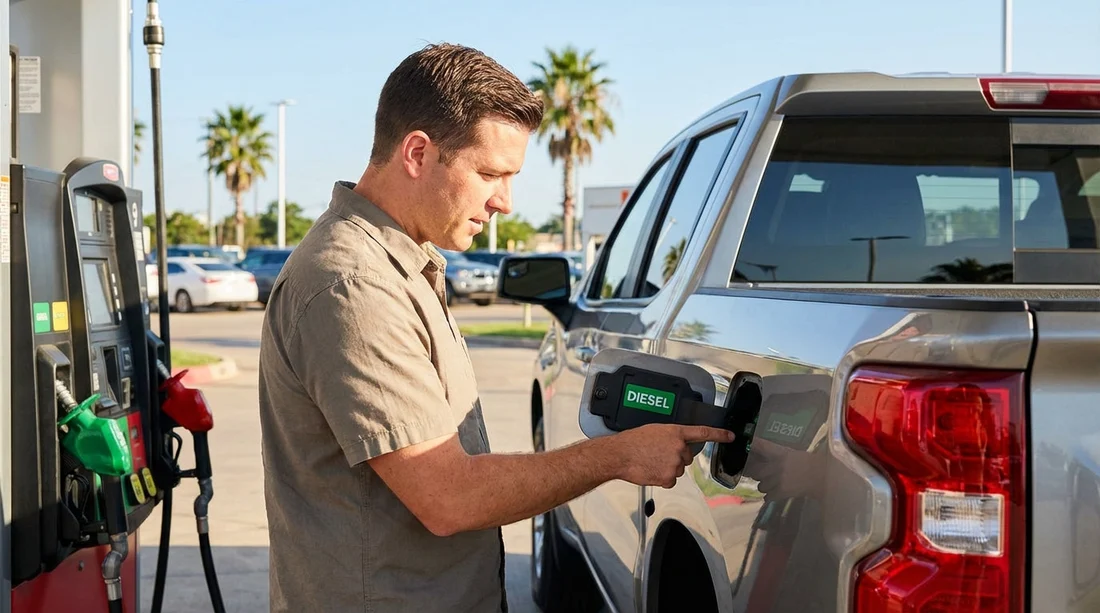
Open the fuel door and look for a label stating the required fuel. In the US you will commonly see “Unleaded gasoline only”, “Diesel fuel only”, or “E85” guidance. Some cars show octane requirements instead, such as “87 minimum”, which still indicates petrol. If you only see an octane number, that is a strong sign it is petrol, since diesel is not sold by octane rating.
If there is no label, move to the next check rather than guessing.
2) Fuel cap text or cap colour coding
Many vehicles have text on the cap itself, for example “Diesel” or “Unleaded”. Some manufacturers also use colour cues, often a green cap or green ring for diesel in certain markets, though colour is not universal. Treat colour as a supporting hint only, not a final confirmation.
If the car has a capless fuel system, look inside the filler neck area for a label. Capless systems sometimes include a clear printed warning about petrol or diesel.
3) Dashboard and instrument cluster notes
Some vehicles have a “Diesel” badge on the instrument cluster at ignition, or a sticker near the driver’s sun visor or door jamb. You might also see a “DEF” message on certain diesel vehicles that use diesel exhaust fluid, although that is more common on heavier duty trucks.
If you see diesel-specific warnings, do not treat them as optional. Go back to the fuel door label and confirm, then ensure your agreement matches.
Cross-check the agreement against the car before you move it
Your goal is to make sure the agreement and the car say the same thing. If the agreement states petrol but the fuel door says diesel, or vice versa, stop and sort it out immediately. A mismatch can create problems later, such as being charged for the wrong fuel type if there is any dispute after return.
When collecting at a busy hub like Houston IAH, it is easy to feel rushed. Take an extra minute by the vehicle, with the agreement in hand, and compare the fuel line on the agreement with the fuel door label.
Ask for a plain-language confirmation at handover
If you are unsure, ask the staff member a direct question and request they point to the fuel label on the vehicle. This matters most for larger vehicles, specialty categories, or when you have chosen something different from a standard compact car. For example, if you are collecting a larger family vehicle via minivan hire in Austin or opting for a bigger model through SUV hire in Dallas, confirm the fuel type as part of your walkaround checks.
Use clear wording. In Texas, “gas” usually means petrol. If you are used to UK terms, you can ask “petrol or diesel?” and then restate it back as “So it takes unleaded petrol, correct?” to remove ambiguity.
Know the misfuelling cost risks, and why prevention is cheaper
Misfuelling charges typically include recovery, tank draining, fuel system flushing, labour, and sometimes loss-of-use fees while the vehicle is off the road. If you put petrol into a diesel vehicle, or diesel into a petrol vehicle, do not start the engine. Starting can circulate the wrong fuel and increase the likelihood of damage, which can increase costs.
If you realise your mistake at the pump, leave the ignition off, move to a safe position if possible, and contact the rental provider’s roadside assistance number on your agreement. The best outcome is always preventing the issue by confirming fuel type at collection and again at the station before you lift the nozzle.
Document what you checked, it helps if there is a dispute
Before you leave, take two quick photos: one of the fuel door label, and one of the agreement section that shows fuel type and the vehicle identifier. This is not about expecting trouble, it is simply an easy way to protect yourself if the car was mislabelled, swapped without the paperwork being updated, or later inspected incorrectly.
FAQ
Where is the fuel type shown on a Texas rental agreement? It is usually in the vehicle details section near the make, model, and licence plate, often labelled as Fuel, Fuel type, Unleaded, Gasoline, Petrol, or Diesel.
Is “gas” the same as petrol in Texas? Yes. In Texas, “gas” means gasoline, which is petrol in UK English. Diesel will be labelled explicitly as diesel.
What should I do if the agreement says petrol but the fuel door says diesel? Do not drive away. Return to the counter or exit booth and request corrected paperwork or a different vehicle so the fuel type and vehicle records match.
How can I tell at the pump that I am choosing petrol? Petrol pumps are marked “Unleaded” with octane numbers such as 87, 89, or 93. Diesel pumps are labelled “Diesel” and do not use octane ratings.
If I accidentally put the wrong fuel in, should I start the car? No. Keep the ignition off and contact the rental provider’s roadside assistance immediately, starting the engine can increase damage and costs.




























































































