


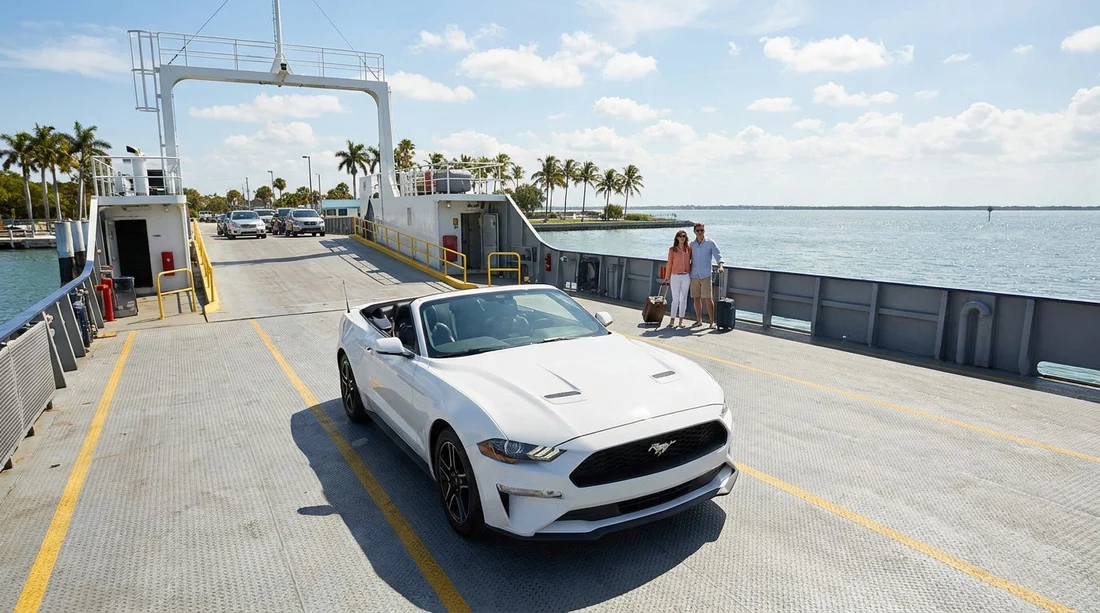
Quick Summary:
- Read your agreement for ferry, island and carrier restrictions before travel.
- Assume you may need written approval for vehicle ferry crossings.
- Keep insurance valid by staying within approved areas and road rules.
- Confirm tolls, parking and key handling before boarding any ferry.
When planning car hire in Florida, it is sensible to ask one practical question early: are ferry crossings allowed with a rental car? The short answer is that many US rental contracts allow some ferry use, but only under specific conditions, and some crossings or islands can be excluded entirely. Because policies vary by supplier, location and vehicle type, the safest approach is to understand the common contract rules and then confirm what applies to your booking.
If you are collecting near major gateways, the terms you see for car hire at Orlando MCO or a city pickup such as car rental in Florida via Miami can differ in the fine print, even when the brand is the same. That is why the contract matters more than assumptions about what is normal in Florida.
Why rental companies restrict ferries and islands
Ferries introduce risks and complications that do not exist on standard roads. Damage can occur during loading and unloading, vehicles can be exposed to saltwater, and recovery after a breakdown may require specialist towing. Some carriers also operate in remote areas where the rental company has limited support. As a result, many rental agreements treat ferries and islands as higher risk and apply tighter rules.
Restrictions are usually written into sections labelled “Prohibited Use”, “Geographic Limitations”, “Where You Can Drive”, or similar. Even if ferries are not explicitly banned, there may be conditions that effectively limit them, such as “no travel to unapproved islands” or “no use on unpaved roads”, which can apply once you leave the ferry.
Common contract language you should look for
Before you commit to car hire, scan the agreement and the rental terms for these typical items.
Ferry permission and prior authorisation. Some companies allow ferries only with advance approval, meaning you must notify them before travel. Others allow ferries but state that damage or loss during ferry transport is your responsibility. If permission is required, get it in writing and keep it with your travel documents.
Island exclusions. Florida is associated with islands, but not every island journey involves a ferry. Many popular destinations are connected by bridges. Ferry-focused exclusions tend to apply to islands that require a vehicle ferry, or where roadside assistance is limited.
Carrier restrictions. A contract may allow a ferry crossing but restrict which operator you can use, or require that the vehicle is transported as a standard passenger car, not as freight. If a ferry operator classifies your trip differently, it can create complications if a claim arises.
Insurance and waiver validity. Collision Damage Waiver type products and supplemental liability options typically have exclusions for prohibited use. If ferries are listed as prohibited, any incident could leave you paying out of pocket, even if you purchased cover. The key point is that cover often depends on compliant use, not simply on what you paid at the counter.
Road surface rules after the ferry. Some islands have sandy tracks, gravel access roads, or limited paved routes. If the contract bans unpaved roads, you can breach terms after disembarking, even if the ferry itself was allowed.
Florida-specific realities that affect ferry plans
Florida travel often includes coastal drives, the Keys, and barrier islands. Many of the best known areas are reachable entirely by bridge, so a ferry may not be necessary. That can simplify compliance because bridge travel is treated like any other road use.
Where you may encounter ferry options is on shorter local crossings, private or municipal services, or when visiting areas with limited road access. Even then, it is worth considering whether you truly need to take the car aboard, as walking on as a passenger can avoid the contractual risk entirely.
For travellers staying in busy coastal districts, such as those comparing car hire in Miami Beach with a downtown pickup, parking and access can be the bigger practical issue. Some ferry terminals have tight queues, height restrictions in nearby car parks, and limited space for larger vehicles.
How to check your rental terms before you travel
Use a simple checklist approach before you drive towards a ferry terminal.
1) Identify the exact supplier and vehicle category. Restrictions can vary between economy cars, SUVs and people carriers. If you are hiring a larger vehicle for family travel, terms can differ again, so check the conditions tied to the specific category, such as minivan hire in Florida.
2) Search the agreement for four keywords. Look for “ferry”, “island”, “geographic”, and “prohibited”. If the agreement is long, these terms usually lead you straight to the relevant clauses.
3) Confirm what “allowed” actually means. Sometimes a contract does not ban ferries, but excludes coverage while on a ferry, or excludes specific routes. Treat that as a restriction, not a permission.
4) Ask about breakdown support. Even if ferry use is allowed, ask what happens if you have a flat battery or tyre on an island. Some providers will require you to pay for recovery to the mainland, even when roadside assistance is included.
5) Keep records. If you receive approval, keep the email or written note. If you only get verbal confirmation, ask for written confirmation at pickup. In a dispute, documentation matters.
Operational tips for taking a hire car onto a ferry
If your contract permits the crossing, these practical steps reduce risk.
Inspect and photograph the car before and after. Take clear photos of all sides, wheels and the roofline. Ferry loading areas are tight, and minor scrapes are common.
Know who drives on board. Some ferries require the driver to load and park; others have staff direct you closely. Follow instructions precisely and avoid sudden steering inputs on metal ramps.
Secure valuables and keep your keys. Do not leave passports or devices visible. If staff request you leave the keys, confirm the policy and consider removing keyrings with personal identifiers.
Plan for tolls and plate billing. Florida tolling is widespread. If your route to the ferry involves toll roads, understand how your rental handles toll charges and admin fees, and budget accordingly.
Key takeaway for car hire in Florida
Ferry crossings with a rental car can be allowed, but only when the rental agreement and insurance terms support it. The decision should be made based on written contract language, not on assumptions or local custom. If you confirm the rules in advance, keep documentation, and plan for the practical realities of ferry terminals, you can avoid accidental breaches and enjoy a stress-free Florida itinerary.
FAQ
Are ferries automatically allowed with car hire in Florida? Not automatically. Some contracts permit ferries, others prohibit them, and many require prior approval or exclude cover during ferry transport.
If the contract does not mention ferries, can I take one? Not necessarily. “Prohibited use” and insurance exclusions may still apply, and some suppliers treat unapproved ferry travel as a breach. Ask for clarification in writing.
Does insurance still apply if something happens on the ferry? Only if ferry use is permitted under your agreement and your chosen cover remains valid. If ferry travel is excluded, you may be responsible for loss or damage costs.
Do island roads matter after I leave the ferry? Yes. If the island has unpaved or restricted roads, driving there can breach the contract even when the ferry crossing itself is allowed.
Is it safer to avoid taking the car on the ferry? Often, yes. Parking on the mainland and walking on as a passenger avoids many contractual and damage risks, while keeping your car hire compliant.




























































































