


Quick Summary:
- Upgrades can raise the deposit hold because vehicle value and risk increase.
- Ask the desk to confirm the new authorisation total before signing.
- Make sure your credit limit covers charges plus the higher authorisation.
- Decline unnecessary extras to help keep the deposit hold lower.
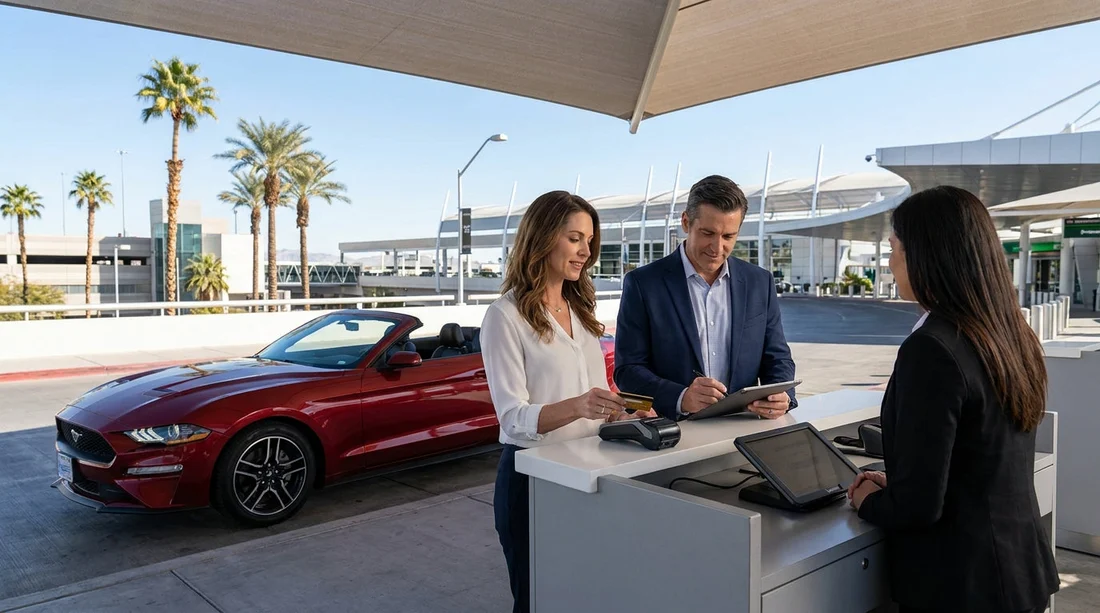
In Las Vegas, it is common to be offered a car hire upgrade at the counter, for example a larger vehicle, a newer model, or a premium category. The key point is that many rental suppliers link the credit-card deposit hold to the vehicle class and the overall rental agreement value. So if you accept an upgrade at pick-up, the deposit hold can increase, sometimes by a noticeable amount.
A deposit hold, also called a pre-authorisation, is not a charge. It is a temporary amount your card issuer sets aside to cover potential costs, such as damage, missing fuel, late return fees, toll administration, or other contractual charges. The final bill is usually charged separately when the vehicle is returned, and the hold is then released. However, while it is in place it reduces your available credit, which matters if you are relying on that credit for hotels, meals, or day-to-day spending in Las Vegas.
This article explains why upgrades can raise the hold, what else can increase it, and what you can do at the counter to understand the total amount being authorised. If you are comparing supplier rules, you may find it useful to review Hola’s Las Vegas pages for providers such as Enterprise car hire in Nevada (Las Vegas) and Hertz car rental in Las Vegas.
Why a car hire upgrade can increase the deposit hold
Most rental companies set deposit holds using a combination of factors, including vehicle group, expected rental charges, and the supplier’s financial risk. When you upgrade, several of those factors change at once.
Higher vehicle value usually means higher risk. A larger SUV, convertible, or premium model can be more expensive to repair or replace. Even if you drive carefully, the supplier may still hold more money on the card to cover a potential incident.
A higher daily rate increases the total agreement value. If the upgrade adds to the rental price, the supplier may also increase the authorisation to cover that larger expected bill.
Some upgrades change the insurance and excess picture. Depending on what protection is included in your booking, switching categories can sometimes alter the default excess or the way the supplier calculates risk. Even when the policy terms remain the same, the supplier may still use a higher standard deposit for higher categories.
What else at the counter can raise the hold
Upgrades are not the only reason a deposit hold can change at pick-up. It is worth separating vehicle class changes from other desk additions, because both can affect the authorisation.
Optional extras. Adding a child seat, GPS, additional driver, or roadside products usually increases the estimated rental charges, which can increase the total held amount. Even if an extra is billed separately, some suppliers still incorporate it into their authorisation calculation.
Fuel choice. Prepaid fuel options or choosing to return empty can increase the predicted bill. A full-to-full choice often keeps charges clearer, which can help keep authorisations closer to the basic deposit level.
Debit cards and alternative payment methods. Some suppliers apply different deposit rules for debit cards, and may require a larger hold or additional proof, even when the rental itself is approved. Always check what payment methods are accepted for your specific supplier and location.
How to check the hold before accepting an upgrade
The simplest way to avoid surprises is to ask one specific question before you sign: “What is the total amount you will authorise on my card today, including the rental and the deposit?” Staff can usually see the figure on screen. If the desk is busy, keep the question short and repeat it if needed.
Then, take these practical steps:
1) Ask for the figure in dollars and confirm what it covers. Some suppliers authorise a fixed deposit plus the estimated rental. Others authorise only the deposit, then charge the rental at return. Knowing which model is being used helps you estimate the total impact on your credit limit.
2) Confirm whether the upgrade is only a category change. Sometimes an “upgrade” is simply a nicer model within the same class, which may not change the deposit. A class change, like standard to full-size SUV, is more likely to change the hold.
3) Check whether any protection products are being added. If you did not request additional cover, confirm what is included in your booking and what is being sold at the desk. You can often keep the authorisation lower by avoiding unnecessary add-ons.
4) Read the agreement totals before signing. Look for the estimated total and any separate line indicating an authorisation or deposit. If the numbers look higher than expected, ask for a breakdown.
5) Make sure your card can handle two holds at once. If you recently rented elsewhere, an old hold might still be pending. In that case, even a normal Las Vegas hold can push you over your limit.
Ways to keep the deposit hold lower in Las Vegas
There is no single trick that works across every supplier, but these approaches often help reduce the chance of a larger hold.
Stick to the reserved category. If your priority is keeping the hold manageable, politely decline an upgrade that changes vehicle class. If you do want a better car, ask whether there is an upgraded model within the same group.
Limit chargeable extras. Only add what you will genuinely use. Each additional paid item can push the predicted bill upward, which can increase the authorisation.
Consider how different suppliers structure policies. Deposit rules vary by supplier and location. If you are comparing alternatives for other trips, you can review regional pages such as Budget car rental in California (LAX) or Alamo car rental in San Jose (SJC) to see how supplier choice can differ across airports.
How Hola fits in, and what to do if the hold changes
Hola Car Rentals helps you compare car hire options and understand what is included. The deposit hold itself is set by the rental supplier at pick-up, based on their local rules, your vehicle group, and the agreement you sign. That is why it is so important to clarify the authorisation amount before you accept any changes at the desk.
If you accept an upgrade and then realise the deposit hold is higher than you can accommodate, ask immediately whether the agent can revert to the original category, remove optional extras, or switch to a different available class with a lower deposit rule. The earlier you raise it, the more options there tend to be.
FAQ
Will accepting a car hire upgrade at pick-up always increase the deposit hold in Las Vegas? Not always. If the upgrade is within the same vehicle group, the supplier may keep the same hold. A move to a higher category is more likely to raise it.
Is the deposit hold the same as the amount I will be charged? No. A hold is a temporary authorisation that reduces available credit. Your final charge is calculated at return, and the hold is released once the agreement is closed.
Can the hold include the estimated rental cost as well as the deposit? Yes. Some suppliers authorise the deposit plus the estimated rental charges, especially when extras are added. Ask the desk for the total authorisation amount in dollars.
How long does it take for the hold to be released after return? Often a few business days, but timing varies by bank and card issuer. Weekends and bank processing times can extend how long the authorisation remains visible.
What should I do at the counter to avoid a surprise hold increase? Before signing, confirm the total authorisation amount, decline unwanted extras, and clarify whether the upgrade changes vehicle class. Make sure your credit limit comfortably covers the hold.




























































































