


Quick Summary:
- “Or similar” means you’ll receive the category, not a guaranteed model.
- Size, seats, doors and luggage space are the key protected features.
- Engines, trim, brand and exact boot shape can vary at pick-up.
- Choose categories based on passengers, bags and Orlando driving plans.
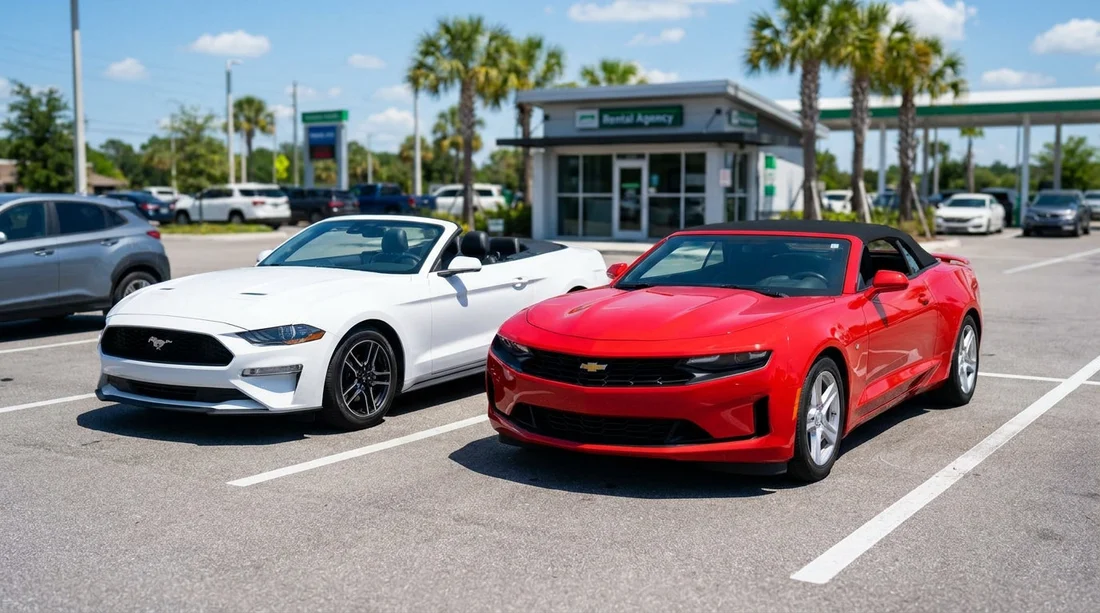
When you shop for car hire in Orlando, you’ll often see a vehicle shown with the words “or similar”. It can feel vague, especially if you have a specific car in mind for a Florida holiday. In practice, “or similar” is the rental industry’s way of saying you’re reserving a category of car, not a particular make and model. The photo is a guide to the type of vehicle you might get, but the rental desk can provide any car that meets the category description.
This matters because Orlando is a high-volume market, particularly around peak school holidays and theme park seasons. Fleet availability changes hourly as vehicles are returned late, moved between locations, cleaned, or taken out for maintenance. “Or similar” gives suppliers flexibility to keep cars moving while still meeting the practical needs you booked for, like seating, luggage space, and general size.
If you’re collecting from the airport, it helps to understand how categories work before you arrive. Hola Car Rentals’ Orlando pages explain pick-up points and options, including car hire at Orlando MCO and car hire for Disney-area airport arrivals.
What a rental “category” actually includes
A rental category is a bundle of characteristics that suppliers use to group similar vehicles. The exact labels vary slightly between companies, but the logic is consistent. Categories are usually built around:
Passenger capacity: how many seatbelts and usable seats the vehicle has.
Luggage capacity: the approximate number of suitcases that fit in the boot and cabin.
Vehicle size and body style: compact, intermediate, full-size, SUV, minivan, and so on.
Transmission and fuel type: in Orlando, most vehicles are automatic, but the category will still specify it if relevant.
Air conditioning: typically standard, but it is still part of the expected spec in warm climates.
So if you reserve an intermediate car “or similar”, you’re reserving the intermediate category, not a specific saloon you saw in the image. You should expect something with comparable interior space and comfort, but the brand, engine, and styling may be different.
What can vary at pick-up in Orlando
“Or similar” mainly affects the details that don’t change how the car functions for your trip. Common variations include:
Make and model: you might be shown one model online but receive another from the same size group.
Trim level: infotainment screens, upholstery, alloy wheels, driver assistance features, and other extras vary widely.
Boot shape and opening: two cars with similar capacity can load differently, which matters for bulky prams or hard-shell cases.
Engine performance: some vehicles feel more powerful, especially when fully loaded, even if both are in the same class.
Fuel efficiency: real-world mpg can differ between similar-sized vehicles.
Colour: almost always unpredictable.
What should not change is the fundamental class you paid for. If you reserved a 7-seater minivan category, you should not be asked to accept a 5-seater car as an equivalent. Similarly, if you reserved an SUV category for higher seating position and cargo room, you should receive a vehicle that fits that category, even if the model differs.
How “or similar” is different from upgrades and downgrades
It’s useful to separate “or similar” from changes in category. “Or similar” stays within the same class. An upgrade is when you receive a higher class than you paid for. A downgrade is when the available vehicle does not meet the category you reserved.
If the desk offers a different vehicle, evaluate it against the essentials you actually need for Orlando: number of seats, luggage capacity, and body style. If those essentials are met, it is likely a legitimate “similar” option. If not, it is worth asking how the supplier is matching the category, particularly if you have a large group or lots of bags.
Choosing the right category for an Orlando trip
The best way to avoid disappointment with car hire is to choose a category that matches your real requirements, not just your preferred model. Orlando driving is generally straightforward, but the demands of theme parks, outlet shopping, and longer day trips can increase the need for space and comfort.
1) Count passengers properly
Remember that a “5-seater” often means five seatbelts, not five adults in comfort. If you are travelling with three adults in the back, or using child seats, consider going up a category or choosing an SUV or minivan.
2) Be realistic about luggage
Florida holidays often involve big suitcases, shopping bags, and sometimes pushchairs. If you are arriving after an international flight, you may have more luggage at pick-up than you will later in the trip. If the boot is borderline, the “or similar” variation in boot shape can become a problem.
3) Decide if you want an SUV for height and versatility
Many visitors like SUVs in Orlando for a higher driving position and easier loading. If that’s important, book an SUV category rather than an intermediate car and hoping for a crossover. See typical options on SUV hire in Disney Orlando.
4) Consider a minivan for families and groups
If you need sliding doors, multiple child seats, or truly usable third-row seating, a minivan category is often the most predictable choice. It reduces the chance that “or similar” results in an awkward compromise. Review the category expectations on minivan hire in Orlando.
5) Think about where you’ll collect the vehicle
Orlando International Airport (MCO) typically has the widest fleet selection, but busy periods can still mean rapid changes in what is on the lot. If you want to understand pick-up logistics and supplier desks, the Orlando MCO car rental page is a helpful reference.
How to compare categories beyond the marketing name
Category names like “compact” or “full size” are not perfectly standard across brands, so focus on the measurable details shown during booking. Look for:
Number of doors: two-door and four-door vehicles behave differently for families.
Seating and luggage icons: treat these as guidance, then add a margin if you are close to the limit.
Body style: SUV, minivan, saloon, and convertible are more meaningful than brand.
Special requirements: if you need space for mobility equipment, confirm which category best suits it.
Also remember that fuel prices, parking, and tolls are part of the Orlando driving experience. A larger category may cost more to run, but can save stress and time if everyone and everything fits comfortably.
Tips to reduce surprises at the rental desk
Arrive with your must-haves: write down your non-negotiables (for example, 7 seats, large boot, automatic). Then check the offered vehicle against them.
Inspect luggage fit before leaving: if your bags do not fit safely in the boot, it is better to resolve it at pick-up than later in a car park.
Ask for clarification on “similar”: if the alternative looks smaller, ask how it matches the class you reserved.
Be flexible on brand: being open to different manufacturers makes “or similar” less stressful, while still meeting your practical needs.
Travel periods matter: during peak weeks, the exact vehicle shown online is less likely to be available, so choosing the right category becomes even more important.
FAQ
Does “or similar” mean I could get any car at all?
No. It means you’ll receive a vehicle that matches the booked category’s key characteristics, such as size, seats and typical luggage capacity.
Can I insist on the exact make and model shown in the photo?
Usually not. The image is illustrative, and suppliers allocate from their fleet based on what is available at the time you collect.
If I booked an SUV category, could I be given a standard car instead?
Not as a true equivalent. If the offered vehicle does not match the category you reserved, ask the desk to explain the substitution or provide an appropriate alternative.
Why do Orlando rental companies use “or similar” so often?
Because fleet availability changes quickly at busy locations like MCO, especially during holidays. “Or similar” allows them to meet demand while keeping categories consistent.
What’s the safest choice for families with lots of luggage in Orlando?
Book for your space needs rather than a specific model. Many families prefer an SUV or minivan category to avoid tight boot space.




























































































