


Quick Summary:
- Match the restraint to your child’s age, height, and weight limits.
- Confirm exact seat type, tether, and install method before you travel.
- At pick-up, check labels, expiry guidance, and missing or damaged parts.
- Test-fit the seat, verify belt path, and tighten before leaving.
Planning family car hire in Pennsylvania can be straightforward, but child-seat rules and availability are easy to overlook until you are at the counter. Pennsylvania’s requirements focus on using an appropriate child restraint for the child’s age and size, and using it correctly every journey. The practical goal for your trip is simple, match the restraint to the child, secure it properly, and confirm what the rental company will actually provide.
This guide covers the age and height basics you should know, what to confirm when reserving child seats and boosters, and what to check at pick-up before you drive away.
Pennsylvania child-seat and booster basics to know
Pennsylvania law is commonly summarised by age bands. Children under 2 years old should ride in a rear-facing car seat. Children from about 2 up to 4 years should use a forward-facing seat with a harness. From about 4 up to 8 years, a booster seat is required. After that, children can use the adult seat belt once it fits properly.
Because real children vary, it helps to think in fit terms as well as age. A booster is for children who have outgrown a harnessed seat but are still too small for the vehicle belt to sit safely. The adult lap belt should lie low on the hips, not on the stomach. The shoulder belt should lie across the centre of the chest and shoulder, not cutting into the neck and not slipping off the shoulder. If the belt does not fit this way, keep the child in a booster, even if they are older.
Also remember that the seat’s own labels matter. Car seats and boosters have manufacturer height and weight ranges, and those ranges can be more specific than general guidance. For car hire, you are aiming to avoid a mismatch, such as reserving a forward-facing seat when your child still fits rear-facing, or receiving a booster that does not meet the child’s minimum weight.
Questions to ask before you reserve seats with your car hire
Child seats are usually an optional extra with car hire, and the details vary. Before you commit, it is worth confirming a few points in writing, or at least in the reservation notes.
1) What exact seat category will be provided? Ask whether the provider distinguishes between rear-facing infant seats, convertible seats, forward-facing combination seats, and high-back versus backless boosters. If you have a younger child, confirm whether rear-facing is possible with the specific seat they supply.
2) What are the stated weight and height limits? Provide your child’s current weight and approximate height, and ask whether the seat supplied fits those limits. If you are travelling with multiple children, confirm each restraint separately. One child seat line item can mean very different things.
3) How will the seat be installed, LATCH or seat belt? In the US, many vehicles have LATCH anchors (Lower Anchors and Tethers for Children). Some seats can be installed either with LATCH or the vehicle belt. Confirm what is expected at the location, and whether staff will assist. Even if assistance is offered, you should be comfortable checking the installation yourself.
4) Will you get the tether strap for forward-facing? Forward-facing harnessed seats often use a top tether that attaches behind the seat. Confirm the tether is included and that the vehicle has the anchor point accessible. A missing tether strap or inaccessible anchor can turn installation into a last-minute scramble.
5) Do you need a larger vehicle? Three-across seating is tricky, and rear-facing seats take space. If you have more than one child seat or want extra luggage room, it can be easier in a people carrier. For airport arrivals, it helps to know your collection point options, such as car hire at Philadelphia Airport (PHL) or a downtown counter through Philadelphia car rental pages. For more cabin space, compare vehicle categories like minivan rental in Philadelphia or van rental in Philadelphia, depending on your group size.
What to inspect at pick-up before leaving the car park
Once you are at the desk, do not assume the seat handed over matches what you reserved. Take a couple of minutes before you sign off and drive away. It is much easier to resolve issues while you are still at the location.
Check the seat type and labels. Find the label that shows the model, date of manufacture, and the child height and weight limits. Confirm the limits match your child. If the seat is an infant-only seat, check whether it includes the correct base (if required) and whether the carrier clicks into the base securely.
Look for an expiry date or usable life guidance. Many seats have an expiration date printed on a label, or a statement such as do not use after a certain number of years from manufacture. If you cannot find it, ask for another seat. You are not being difficult, you are checking a critical safety item.
Inspect condition and completeness. Look for cracks, missing padding, frayed straps, damaged buckles, or any missing pieces such as a chest clip. For boosters, check armrests, belt guides, and any adjustable headrest mechanism. Anything that looks compromised is a reason to request a different restraint.
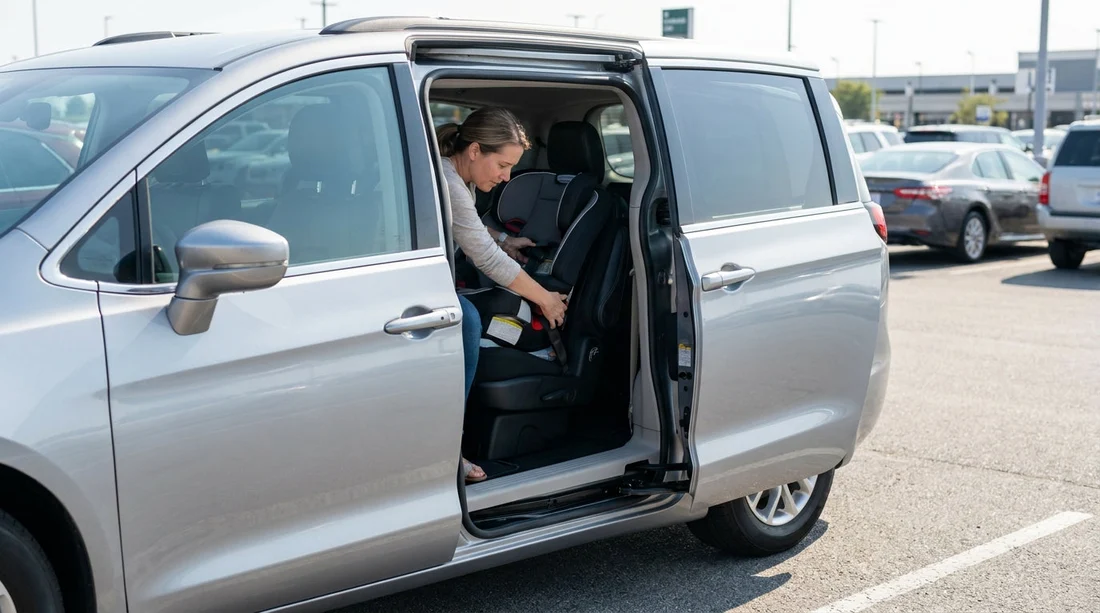
Do a quick fit test in the vehicle. Install the seat in the intended position and test for tightness. A commonly used check is that the seat should not move more than about an inch side-to-side or front-to-back at the belt path. For boosters, sit the child (or mimic the belt route) and confirm the belt lies correctly on the shoulder and hips. If the shoulder belt rubs the neck, try adjusting the headrest or swapping seating position.
FAQ
Q: What are the basic child-seat rules I should know for Pennsylvania?
A: Common guidance is rear-facing under age 2, harnessed seat until about age 4, booster until about age 8, then seat belt when it fits properly. Always check the seat’s weight and height limits.
Q: Can I rely on a booster if my child is tall for their age?
A: Use belt fit as the deciding factor. If the lap belt sits on the tummy or the shoulder belt touches the neck, your child still needs a booster, even if they seem tall.
Q: What should I confirm when reserving a child seat with car hire?
A: Confirm the exact seat type, weight and height range, whether it installs with LATCH or seat belt, and that any tether strap or belt guides are included.
Q: What should I check on the seat at pick-up?
A: Check labels for limits and manufacture date, look for an expiry date, inspect for damage or missing parts, and test-fit it in the car to ensure it tightens correctly.
Q: Is a high-back booster better than a backless booster in a rental car?
A: High-back boosters can help position the shoulder belt and provide head support if the vehicle seat has a low back. Either can be appropriate if the belt fits correctly and the booster suits the child’s size.




























































































