


Quick Summary:
- Expect a pending authorisation hold, not a charge, at pick-up.
- Most holds drop off within 3 to 10 business days.
- Weekends, bank processing, and extra transactions can delay the release.
- Use one card, leave headroom, and keep receipts for simpler reconciliation.
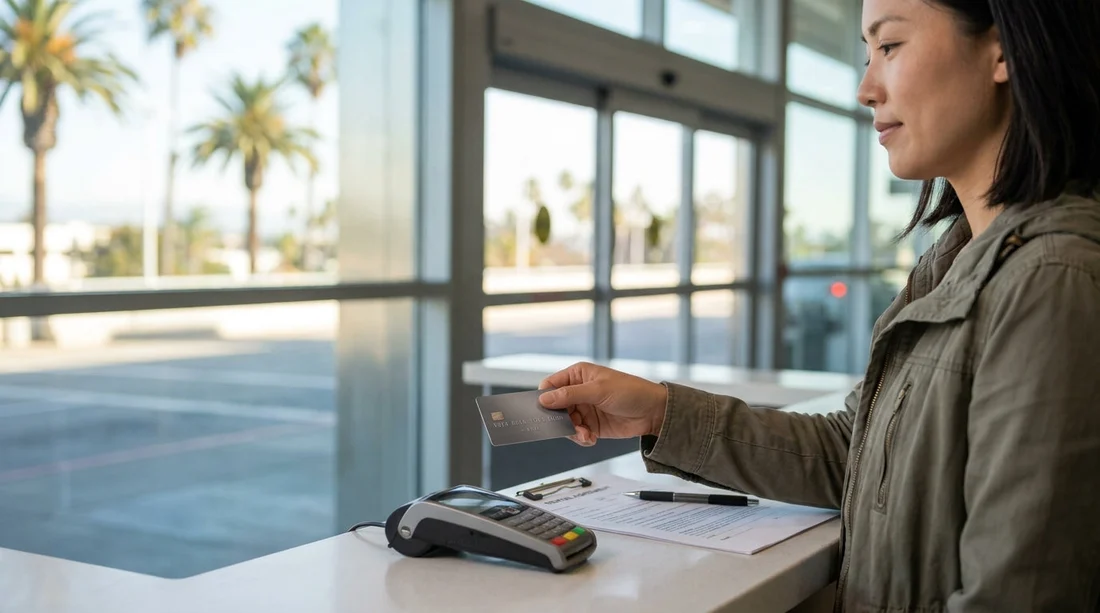
When you collect a car hire in California using a credit card, it is common to see a “deposit” appear on your account. With Hola, this is typically a credit-card-only authorisation hold. That means the amount is ring-fenced against your available credit, but it is not a completed purchase. It can still feel like money has left your account, especially if your bank app lists it alongside transactions, but the mechanics are different from an actual charge.
The key question is how long the hold takes to release. In most cases, once you return the vehicle and the rental is closed out correctly, the hold disappears within about 3 to 10 business days. Some card issuers release sooner, sometimes within 24 to 72 hours, but it is safer to plan for up to two working weeks, particularly around weekends and public holidays.
If you are collecting at a major hub, volume can affect how quickly agreements are finalised. For example, car hire collections around Los Angeles LAX can involve high throughput and end-of-day settlement batches. The same is true for other busy desks, such as San Jose SJC. These operational realities do not mean anything is wrong, they just mean the authorisation may remain visible until the next settlement cycle is processed by your bank.
Pending hold versus charge, what you should see
A pending hold (also called an authorisation) usually shows as “pending”, “authorised”, or “preauthorisation” in your banking app. It often does not have a final transaction ID, and it does not always appear in your posted transaction list. A charge, by contrast, posts to your statement, reduces your balance (or increases your card balance), and becomes part of your bill.
With car hire deposits, you will commonly see one of three patterns:
1) Hold only, then release. This is the cleanest outcome. The hold is placed at pick-up, then removed after return, and you later see only your final rental charges (if any) posted separately.
2) Hold, then replaced by final charge. Some banks show the hold disappearing and the final amount posting. The timing can look like a “double charge” for a short period, but it is usually overlap while systems update.
3) Hold remains longer than expected. This typically points to issuer processing time, a still-open rental agreement, or an adjustment that needs settlement, such as an extra day, toll administration, or a fuel charge.
Typical release timeframes in California
Although exact timing depends on your issuer, the following ranges are realistic planning assumptions for California car hire: 3 to 10 business days after return is common. The faster end of the range is more likely when the rental is closed promptly, the return inspection is completed, and your issuer processes reversals quickly. The slower end is more likely when a return happens late at night, on a weekend, or near a holiday, when settlement batches can shift by a day or two.
Airport locations often run high volumes and operate across time zones. If you are returning at Sacramento SMF or a similarly busy desk, the agreement might be completed immediately, but the reversal still waits on issuer processing. That is why two travellers returning identical vehicles can see different release dates, simply because they use different card providers.
What can extend a deposit hold
Several common situations can keep an authorisation visible for longer than you expect:
Weekend and holiday processing. Holds may not update until the next business day, and some issuers only process reversals in batches.
Vehicle return not fully closed. If the agreement remains open, the hold may stay active. This can happen if the return was “after hours” and the final check is completed later.
Additional transactions created at return. Fuel, extra days, young driver fees, or upgrades can lead to a new authorisation or a posted charge. Sometimes a new authorisation replaces the earlier one.
Multiple cards used. Splitting payment across cards, or switching cards between pick-up and return, can create separate holds that release on different schedules.
Issuer risk controls. Some card providers hold authorisations longer for travel-related merchants, especially if your usual spending pattern is different.
Vehicle class can also affect perceived impact. Larger vehicles can carry higher deposit holds, which can feel more disruptive even when the process is normal. If you are hiring a larger people-carrier, information on options like minivan hire at Sacramento SMF can help you plan headroom on your credit limit before you arrive.
How to avoid payment-day surprises with a credit card
Most “surprises” happen because a hold reduces available credit, even though it is not a final charge. The following habits reduce stress and prevent knock-on issues with other spending during your California trip.
Leave enough headroom on your credit limit. Treat the deposit hold as temporarily unavailable credit. If your card is close to its limit, routine travel expenses can be declined even when you have not been charged for the hold.
Use one card for the whole rental. Using the same credit card for pick-up and return reduces the chances of multiple authorisations that release at different times.
Keep your return paperwork. Your return receipt and rental closure confirmation help if you need your issuer to trace the authorisation. In a dispute, dates matter, including the timestamp when the agreement was closed.
Watch for overlapping transactions. It is common to see the hold still pending when the final charge posts. Give it a few business days before assuming you have been charged twice.
Avoid debit cards if a credit card is required. Hola’s process here is credit-card-only for the deposit hold, and debit behaviour can differ widely between banks. Sticking to a credit card usually gives clearer authorisation handling and better visibility.
What to do if the hold has not released
If it has been more than 10 business days since you returned the vehicle and you still see a pending authorisation, take a structured approach. First, confirm the rental agreement shows as closed and you have a final receipt. Next, check whether the pending item changed reference numbers, which can indicate a replacement authorisation. If you returned at a very busy desk, it is worth re-checking that the return was processed correctly and not left as “open” due to an after-hours drop.
If everything looks closed on the rental side, contact your card issuer. Issuers can often see the authorisation status more clearly than a mobile app displays, and they can confirm whether the hold has an automatic expiry date. In many cases, the bank can also remove a stale authorisation once it is confident no completion is coming through. Be ready to provide the merchant name, the authorised amount, and the date and time of the authorisation.
Finally, if you are comparing experiences across California, note that different suppliers and desks can follow slightly different processes for completion and settlement. If you are picking up with a particular supplier, such as Alamo at Santa Ana SNA, the core principle is the same, but the timing of end-of-day processing can vary.
FAQ
How long does Hola’s credit-card-only deposit hold usually take to release in California? Most customers see the pending authorisation drop off within 3 to 10 business days after the vehicle is returned and the rental is closed, depending on the card issuer.
Why does it look like I have been charged twice? You may be seeing a pending hold and a posted final charge at the same time. This overlap is common and usually resolves when the issuer removes the authorisation.
Does returning the car after hours change the release time? It can. If the return is processed later, the agreement may not be closed until the next business day, which can delay when the hold is triggered for release.
Can a fuel charge or extra day affect the hold? Yes. Additional charges can create a new authorisation or replace the original one, and this can extend the time before your available credit fully returns.
What should I do if the hold is still there after two weeks? Gather your final receipt and return confirmation, then contact your card issuer to trace or release the authorisation, as the issuer controls the final removal.




























































































