


Quick Summary:
- Adding LDW can reduce your excess, often lowering the deposit hold.
- Buying SLI usually increases the pick-up estimate, not the damage deposit.
- Declining LDW typically triggers a higher hold to cover potential excess.
- Arrive with extra available credit for fuel, tolls, upgrades, and taxes.
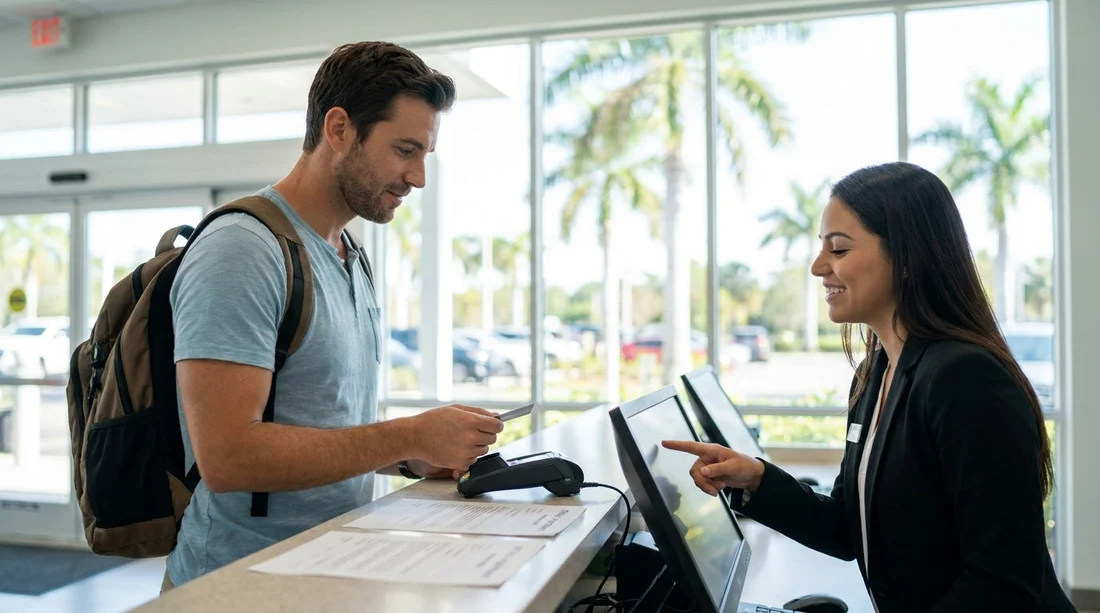
When you collect a car hire vehicle in Florida, the rental counter usually places a credit-card pre-authorisation, also called a deposit hold. It is not an immediate charge, but it reduces your available credit until the hold is released. The size of that hold can change depending on what insurance options you accept or decline, especially LDW and SLI. Understanding the difference helps you avoid a surprise at the desk and ensures your card has enough headroom for the pre-authorisation plus your planned spending.
Florida car hire pricing often shows an estimated total online. At pick-up, the final “estimated charges” can increase if you add coverage, optional products, or if your chosen cover changes the required deposit logic. The two common options that affect the maths are LDW, which relates to damage and theft of the rental car, and SLI, which relates to third-party liability limits.
What the deposit hold is, and why it changes
A pre-authorisation is a temporary hold against your credit limit. The rental company uses it to protect itself against possible unpaid items, such as a damage excess, missing fuel, tolls, extra days, or administrative fees. The hold amount varies by supplier, location, and vehicle type, and it can also vary based on the protection package you choose.
In Florida, airport locations can be particularly strict because they handle high volumes. If you are collecting from Orlando International Airport, details can differ from other stations, so it is helpful to review location information such as car rental at Orlando MCO before you travel.
LDW explained, why it affects the hold most
LDW, often called Loss Damage Waiver, is the option most closely linked to the deposit. While terminology varies, LDW generally reduces what you may owe if the rental vehicle is damaged or stolen, subject to contract terms. When you accept LDW, the rental company’s exposure is lower, so the required hold can be lower as well.
When you decline LDW, the rental company typically treats you as responsible for damage up to a higher amount, often called the excess or deductible. To protect itself, the supplier may place a higher pre-authorisation to cover that potential liability. This is the most common reason customers see a bigger than expected hold.
There is another wrinkle, some travellers expect their credit card or travel insurer to cover the rental car. Even if you have separate cover, the rental company may still require a larger hold when you decline its own LDW, because the contract still makes you responsible initially. Your insurer reimburses you later, it does not reduce the supplier’s risk at the counter.
SLI explained, what it usually changes at the desk
SLI stands for Supplemental Liability Insurance. It relates to third-party liability, meaning claims made by other people for injury or property damage. SLI usually increases the daily rental cost, so it affects the estimated total at pick-up. However, it typically does not reduce the damage-related deposit in the way LDW can, because it is not primarily covering damage to the rental car itself.
That said, adding SLI still matters for your card, because the rental company may authorise an amount that includes your rental charges plus the deposit portion. If you add SLI at the counter, the chargeable total rises, and the pre-authorisation can rise with it. In other words, SLI can increase the “estimated charges” line, even if it does not change the underlying damage hold formula.
How LDW and SLI change the pick-up estimate
At the counter, staff typically present an agreement showing estimated rental charges, plus any deposit hold. Insurance selections affect these numbers in different ways:
LDW effect: often changes the deposit component. If LDW lowers your responsibility, the supplier may need a smaller security amount. If you decline LDW, the supplier may increase the hold to reflect a higher potential excess.
SLI effect: usually changes the rental charges component. Your total price estimate increases because SLI is priced per day or per rental. The deposit may remain similar, but the overall authorisation can still increase because the “rental charges” part is higher.
This is why two customers renting the same vehicle for the same dates can see different authorisation amounts, even before any extras like GPS or child seats. It is also why comparing like-for-like is important if you are collecting at busy hubs such as car rental at Miami MIA or car rental at Fort Lauderdale FLL.
What else can increase the hold in Florida
Even with LDW and SLI understood, several common items can push the authorisation above what you expected.
Vehicle class: Larger vehicles or premium categories often carry higher deposits. An SUV may require more security than a small saloon because repairs and replacement value are higher. If you are considering a larger vehicle, check category details such as SUV rental at Orlando MCO.
Fuel policy: If you return the car without refuelling, the supplier can charge fuel plus a service fee. Many companies include a buffer for this risk in the hold.
Tolls: Florida toll roads are common. If you use toll passes or toll-by-plate systems, charges can post after return. Some suppliers include a cushion in the hold to account for tolls and related admin fees.
Additional drivers and young driver fees: These increase the rental charges part of the authorisation. They do not usually reduce the deposit, but they can raise the total pre-authorised amount.
Practical ways to arrive with enough available credit
The goal is not to guess an exact number, but to avoid maxing out your credit limit when the hold is placed. Use these practical checks before you fly.
1) Treat LDW as the deposit lever. If you want the best chance of a lower hold, accepting LDW is often the most impactful choice. If you plan to rely on separate cover and decline LDW, expect a higher hold and plan available credit accordingly.
2) Treat SLI as a total-price lever. Adding SLI mainly increases the rental agreement total. If you add it at the counter rather than in advance, the authorisation may rise immediately.
3) Keep spare credit for travel spending. Hotels in Florida also use pre-authorisations, and some theme park purchases can be sizeable. If your card limit is tight, you can end up with insufficient available credit even though you have funds in your current account.
4) Use a credit card in the main driver’s name. Many suppliers prefer or require a credit card rather than a debit card for the deposit. If the card name does not match the main driver, you may face complications or higher requirements.
FAQ
Does choosing LDW always reduce the credit-card deposit hold in Florida? Not always, but it often helps. LDW typically lowers your damage responsibility, so many suppliers require a smaller security hold than when LDW is declined.
If I add SLI, will my deposit hold drop? Usually no. SLI mainly affects third-party liability coverage and the rental charges. Your authorisation may rise because the total price at pick-up is higher.
Why is the pre-authorisation higher than the online total I saw? The counter authorisation can include estimated rental charges plus a separate security amount for fuel, tolls, damage excess, or other risks, depending on your selections.
How long does it take for the hold to be released after return? The supplier can release it after closing the agreement, but your bank controls when it disappears. Timing varies, often a few days, sometimes longer for international cards.
Can I rely on my credit card insurance and decline LDW without consequences? You may be covered for reimbursement, but the supplier can still require a larger hold because you are responsible under the rental agreement until any claim is resolved.




























































































