


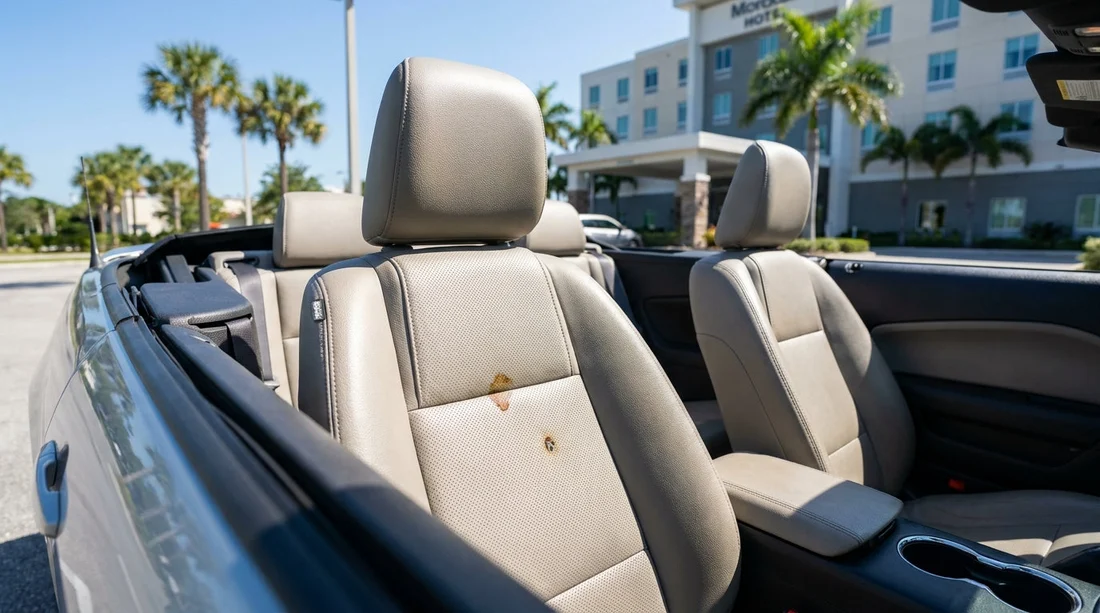
Quick Summary:
- LDW often excludes interior stains, burns, odours, and heavy cleaning charges.
- Minor wear may be accepted, but replacement or specialist cleaning is billed.
- Read the contract for upholstery exclusions, smoking rules, and cleaning fees.
- Photograph seats, carpets, and headliner at pickup and at return.
When you arrange car hire in Florida, the paperwork can feel like it is written in a different language. One of the most misunderstood terms is LDW, short for Loss Damage Waiver. Many drivers assume “damage waiver” means any damage anywhere, but interior issues such as stains, cigarette burns, melted plastic, or strong odours are often treated differently from exterior damage.
This guide explains how interior damage is typically classified, why LDW may not apply, what common exclusions look like, and what to check before you sign. The goal is not to guess what a specific supplier will do, but to help you read the right sections of your agreement and avoid surprises when you return the vehicle.
What LDW usually covers, and what it does not
LDW is generally designed to reduce or waive your financial responsibility for damage to the vehicle or loss of the vehicle, subject to the contract terms. In many Florida rental agreements, LDW is mainly aimed at collision-type damage, theft, and associated vehicle loss costs.
Interior problems are often categorised as “non-collision” issues, “cleaning” issues, or “damage to upholstery”. Even when the word “damage” appears broadly, the fine print may narrow what is included.
If you are comparing options for car rental at Orlando Airport (MCO), treat LDW as one layer of protection, not a blanket waiver for every issue you can imagine. It can be valuable, but it is not automatically a shield for interior staining, burns, or contamination.
Interior wear-and-tear vs chargeable interior damage
Most rental companies expect some signs of ordinary use, especially on higher-mileage fleets. That “wear-and-tear” idea is where many disputes begin, because it is subjective. In practice, the dividing line is whether the interior issue can be cleaned as part of routine preparation, or whether it requires specialist treatment, replacement, or takes the car out of service.
Often treated as wear-and-tear: light carpet flattening, minor scuffs on plastic trim, small marks that come out with standard cleaning, and gentle seat creasing consistent with normal use.
Often treated as chargeable damage: cigarette or vape burns, melted dashboard spots, pen ink on seats, red wine or oil-based stains that set, bodily fluid contamination, pet hair embedded beyond normal vacuuming, and any odour that requires ozone treatment or professional detailing. If an interior repair requires replacing fabric, leather panels, or headliner material, it is more likely to be billed as damage rather than cleaned as routine.
Why stains and burns are commonly excluded from LDW
There are three main reasons interior stains and burns are frequently excluded or treated as your responsibility even with LDW:
1) They are viewed as preventable behaviour. Smoking, carrying open drinks, transporting pets without protection, or letting children eat messy foods are choices the contract may address directly. When the agreement ties the damage to prohibited or negligent conduct, LDW is commonly voided for that issue.
2) They are classified as cleaning or restoration, not collision damage. Many terms separate “damage” from “cleaning, contamination, or deodorising”. LDW might apply to “damage to the vehicle” while the cleaning clause separately says you will be charged for excessive cleaning, smoke remediation, or biohazard cleaning.
3) Proof and assessment are easier for suppliers. A burn hole or heavy stain is visible and can be photographed quickly at return. That makes it simpler to assert the condition changed during your rental period, especially if there were no notes on the check-out report.
If you are arranging car rental in Miami (MIA) for beach trips and dining out, assume food spills and sand are common interior triggers for extra charges. Simple habits, like using floor mats correctly and avoiding wet towels on fabric seats, can reduce risk.
Common contract exclusions to look for before you sign
For Florida car hire, scan the rental agreement for headings such as “What is not covered”, “Renter responsibilities”, “Cleaning fees”, “Prohibited use”, and “Damage waiver exclusions”. The exact wording varies, but these are common interior-related exclusions and fee triggers:
Smoking or vaping policy. A smoke-free clause often allows a fixed fee if evidence is found, sometimes regardless of whether you bought LDW. Evidence might include odour, ash residue, or burn marks.
Upholstery and interior trim exclusions. Some agreements explicitly name “seats, carpets, headliner, dashboard, interior trim” as excluded from LDW, or they may be covered only for collision incidents, not for staining.
Excessive cleaning clause. Look for language like “excessive dirt, stains, sand, pet hair, odours, or spills” with a stated charge, and whether it is a cleaning fee only or can include replacement.
When picking up a vehicle through options like Avis car rental at Tampa (TPA), ask for clarity on any line items that mention cleaning or interior. You should understand how they define “excessive” and whether LDW affects those charges.
What to check on the vehicle before driving off
Because interior issues are easy to overlook when you are tired from travel, it helps to follow a consistent check routine. This is especially useful in Florida, where bright sunlight can hide stains until later, and sandy shoes can quickly make a car look worse than it arrived.
Check these areas carefully: driver seat bolster wear, rear seats for child-related stains, carpets and mats, door pockets, cup holders, headliner above the back seats, and the boot area. Also sniff briefly for smoke or strong deodoriser, because heavy fragrance can sometimes mask smoke.
Document condition: take time-stamped photos and a short video covering the seats, floors, and dashboard. If you spot an existing stain or burn, get it written on the check-out sheet or within the supplier’s app process before you leave the lot.
Keep proof of your return condition: at drop-off, take another set of photos in the same areas, plus the fuel gauge and mileage. If returning after hours, keep the drop-off receipt or any time-stamped confirmation.
Practical ways to reduce interior-damage risk during your Florida trip
Many interior charges happen without a dramatic incident. They happen through small, repeated habits that add up. These steps are simple and tend to help:
Use barriers: if you have children, place a washable cover under child seats where permitted, and avoid placing loose snacks directly on seats. For beach days, keep towels between wet clothing and upholstery.
Manage sand and moisture: shake out mats, keep a small brush or cloth, and avoid leaving wet items in the boot overnight, which can lead to odour or mildew.
Report spills immediately: blotting quickly can prevent a stain from setting. If a significant spill happens, consider getting a professional clean and keeping the receipt, because documentation can help if a dispute arises.
If you are travelling with a larger group and looking at people carriers such as minivan hire in Brickell (BRK), interiors face more wear simply due to passenger volume. More riders means more chances for spills, sun cream transfer, and scuffs, so your pre and post checks become even more important.
FAQ
Does LDW cover cigarette burns on seats in Florida car hire? Often no. Burns are commonly treated as chargeable interior damage, and smoking-related evidence may trigger fixed fees regardless of LDW.
Are stains ever considered normal wear-and-tear? Light marks that come out with routine cleaning may be treated as wear-and-tear. Set-in stains or large areas usually become chargeable damage.
Can I be charged for odours like smoke or mildew? Yes. Many contracts include deodorising or smoke remediation fees, which are frequently excluded from LDW and billed as cleaning or contamination.
What contract sections should I read before signing? Review LDW terms, exclusions, renter responsibilities, cleaning fees, smoking policy, and how damage is assessed and charged, including admin fees.
What is the best way to protect myself if the interior is already marked? Photograph and video the interior at pickup, get existing issues noted on the check-out report, and take matching photos at return with timestamps.




























































































