


Quick Summary:
- Cashless tolls are billed later, and admin fees are often added.
- Ask if your car hire includes a transponder or pay by plate.
- Confirm daily fees, per toll charges, caps, and when billing starts.
- Avoid toll facilities where possible to reduce programme charges overall.
Cashless tolling is common in California, and it often surprises visitors because there is no booth where you can pay with cash. If you are using a rental vehicle, that matters, because tolls usually get billed after your trip using the vehicle’s number plate, then forwarded to the rental company. Many rental companies also add administrative fees or enrolment charges for handling those tolls, even if the toll amount itself is small.
So, will a rental car incur admin fees for cashless tolls if you drive in California? Frequently, yes. The exact cost and trigger depend on the rental company’s toll programme and whether the vehicle is equipped with a transponder, or simply billed by plate. The most important step is to understand, before you leave the counter, what toll product is attached to your agreement and what it costs on the days you use toll roads.
How cashless tolling works in California
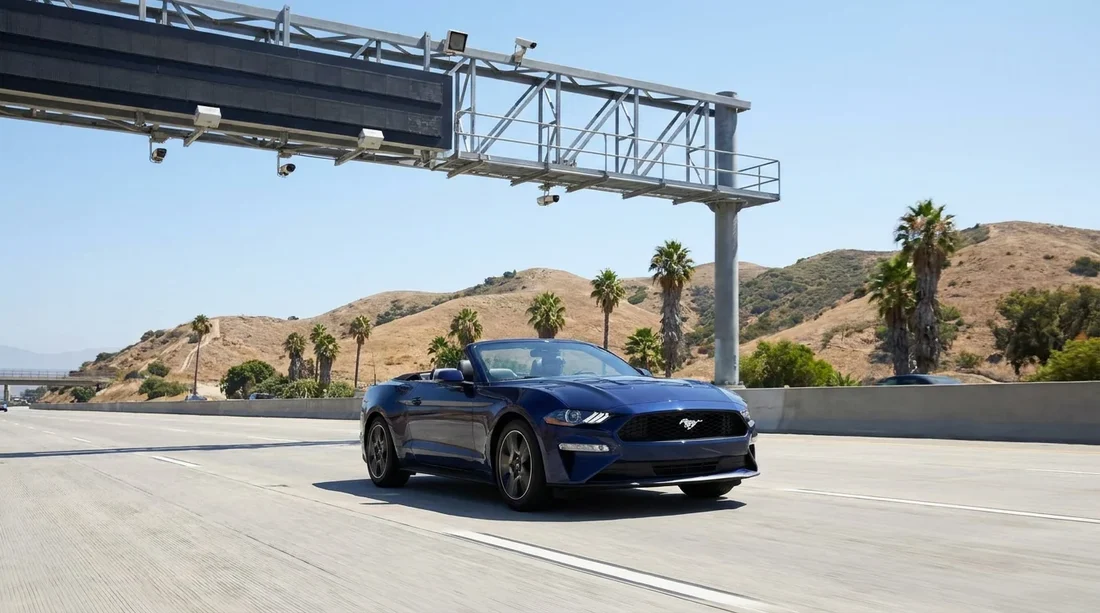
California uses several toll collection methods, and many have moved to all electronic tolling. Instead of stopping to pay, overhead gantries or cameras read a transponder signal, or capture your number plate. The toll operator then matches the plate to the vehicle owner, which for a rental car means the rental company.
Two common charging methods you will come across are transponder-based tolling, and pay-by-plate. With a transponder, such as FasTrak in much of California, the toll is charged automatically to an account linked to that device. With pay-by-plate, the toll authority bills the registered owner after the trip. On a rental vehicle, the registered owner is not you, so the rental company receives the invoice and then charges your payment card on file.
Why rental companies add admin fees for tolls
Rental companies manage high volumes of toll notices, plate lookups, and reconciliations across different toll authorities. Their toll programmes are designed to automate this and reduce unpaid tolls, but the convenience is often paid for by the driver through daily charges, per-toll service fees, or fixed admin fees.
Even if the toll authority would have let an individual pay online later, the rental company is usually billed first. The company then passes the toll through to you, and adds a fee to cover their processing and programme costs. That is why a small bridge toll can end up costing more once the programme fees are included.
Typical rental car toll programme fee structures
Fee structures vary by provider and brand, but most fall into a few patterns:
Daily toll programme fee on days you incur tolls. You only pay the daily programme charge on days when a toll is detected. This can be economical if you drive tolled facilities frequently on that day, but it can feel expensive if you only crossed a bridge once.
Per-toll service fee. Instead of a daily fee, some programmes add a service fee each time a toll is billed. This can add up quickly if you pass multiple toll points.
Prepaid toll option. Some counters offer a prepaid product, typically a flat daily rate, sometimes with limitations on what it covers. This can simplify budgeting, but you should confirm whether it includes all toll roads you might use, or only selected facilities.
Admin fee for toll notices or violations. If a toll becomes a formal notice, extra fees may be added. This can happen if the rental company receives a notice and treats it as an administrative event. Avoiding this means ensuring your rental agreement is set up correctly for toll billing.
What to confirm at the counter before you drive off
Cashless tolls are easy to overlook while collecting keys, but a two-minute conversation can prevent unexpected post-trip charges. Ask for clear answers to these questions, and if possible, have the responses reflected in your rental paperwork.
1) Is the car enrolled in a toll programme by default? Some rentals have a transponder fitted, but it does not always mean you are automatically enrolled. Confirm whether using a toll road activates a programme, and how it is billed.
2) What exactly will I be charged if I use one toll facility? Ask for a simple example using today’s date. You are not looking for guesswork, you want the daily fee, the per-toll service fee, and any caps explained plainly.
3) Is there a daily maximum for programme fees? Some programmes cap the total fees in a rental period, or per day. If there is a cap, confirm how it works and whether it includes only programme fees or tolls too.
If you are arranging car hire around major airports, it can help to check local driving patterns. For example, collecting from San Francisco SFO often means you may encounter tolled bridges in the Bay Area, so toll planning matters. Similarly, if you are picking up near Los Angeles LAX, you might use tolled express lanes depending on your route and time of day.
Common California toll situations for visitors
California tolling is region-specific. In the Bay Area, bridges and some express lanes use electronic tolling, and there is no cash option. In parts of Southern California, toll roads exist alongside free motorways, and you can often avoid tolls by choosing alternative routes, at the cost of extra time.
If your itinerary includes a lot of driving around Silicon Valley and nearby cities, understanding toll handling can still matter even if you mainly stay on free roads. Those picking up via car hire at San Jose SJC may still cross tolled bridges if they head into San Francisco or the East Bay.
How to reduce toll fees and admin charges on a rental
You have a few practical options to keep costs under control, while staying compliant.
Plan routes to avoid toll facilities where reasonable. Navigation apps usually offer an avoid tolls setting. Check travel time differences before committing, because avoiding tolls can add substantial time in peak traffic.
Minimise the number of tolled days. Because many programmes charge a daily fee on toll days, consolidating toll use into fewer days can reduce programme charges.
Keep good records of when you used toll roads. Note dates and approximate times. If a toll charge arrives later with a fee you do not recognise, you can query it with specifics rather than guessing.
Match the vehicle type to your route. Choosing the right vehicle for your trip helps overall cost control, such as an SUV rental at Los Angeles LAX for comfort on longer drives, versus a smaller car for city-heavy itineraries.
Understand what happens if you miss a toll payment window. With a rental, you often cannot pay later using your own name, because the bill goes to the registered owner. Your best protection is making sure the rental agreement and toll product are correctly set up before you leave.
FAQ
Do all California toll roads accept cash? No. Many facilities are all electronic, with no cash booths, and bills are issued via transponder or number plate.
Will my car hire company always charge an admin fee for tolls? Not always, but it is common. Fees depend on the company’s toll programme, and may be daily, per-toll, or notice-based.
How long after my trip can toll and admin charges appear? It can take days to several weeks for tolls to be processed, then charged to your card, depending on the toll authority and rental company.
Can I avoid toll programme fees by paying tolls myself online? Sometimes, but it is not guaranteed with a rental plate, because invoices often go to the registered owner. Confirm the process at the counter first.
What should I ask before leaving the rental counter in California? Ask how tolls are billed, what the programme fees are, whether there are caps, and how express lanes are handled for that specific vehicle.





























































































