


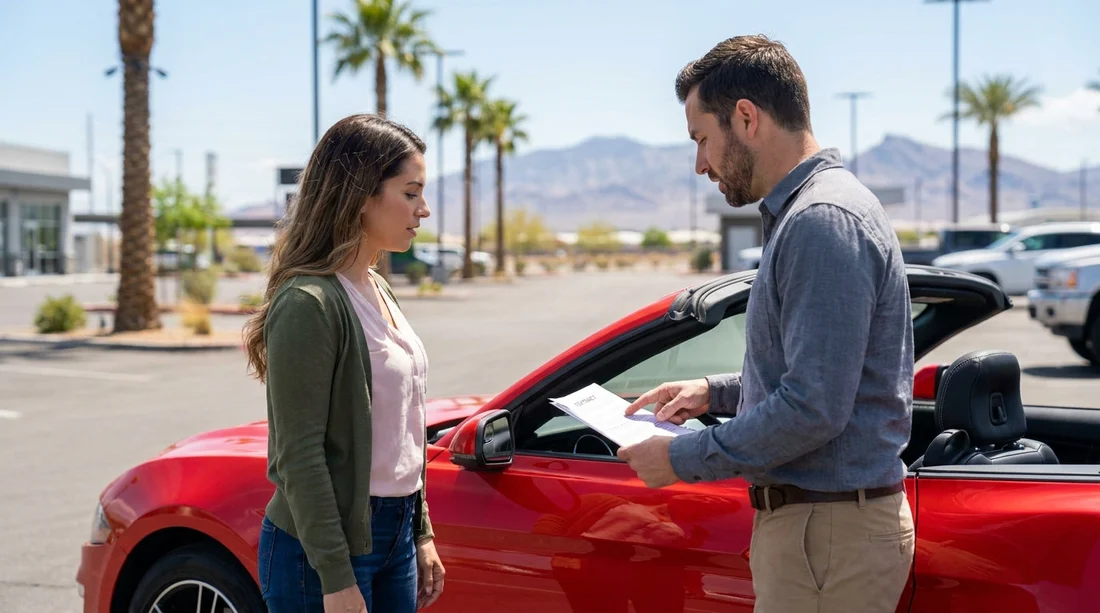
Quick Summary:
- Check the fuel gauge and trip computer before leaving the pick-up bay.
- Photograph the fuel gauge, odometer, and contract time stamp immediately.
- Ask staff to amend the fuel level on your rental agreement.
- Keep receipts if you refuel soon, and dispute any incorrect fuel charge.
Picking up a rental car in Las Vegas should be straightforward, but fuel level mix-ups are common. You might be handed keys with the agreement showing “full”, while the gauge sits at seven eighths, three quarters, or even lower. If you drive away without sorting it, you can be charged for fuel you never used, or pushed into an unnecessary refuelling stop. The good news is that a fuel gauge mismatch is usually easy to fix when you handle it calmly and document everything.
This guide explains what to do at the counter and at the vehicle, what evidence to collect, and how to protect yourself if the charge appears after you return the car. While this focuses on Las Vegas, the same principles apply to car hire anywhere in the United States. For a broader overview of typical rental rules and inclusions, see car rental in the United States.
1) Confirm what the contract actually promises
Before you challenge the fuel reading, check the paperwork or digital agreement. Car hire providers typically use one of these fuel policies: full-to-full, same-to-same, or prepaid fuel. The contract may specify a fuel fraction, a bar level, or a numeric percentage. It might also include a note that the vehicle was not filled completely and you should return it at the same level.
Make sure you are comparing like with like. A contract marked “Full” can still be issued when the car is missing a bar if the agent did not update it, or if the system defaults to “Full” unless manually changed. In Nevada this is often an administrative slip rather than an attempt to overcharge, but the burden of proof later can fall on you.
If you arranged your Las Vegas hire through Alamo car rental in Nevada (Las), keep a screenshot of the booking confirmation and fuel policy so you can reference it alongside the agreement.
2) Check the gauge properly, not just at a glance
Fuel gauges are not perfectly precise, and the reading can change when the car is moved. Do a quick but thorough check before leaving the bay.
Switch the ignition on and wait a few seconds for the needle or bars to settle. Look for a “distance to empty” reading, if available, and take note of it. Check whether the car is parked on a slope, which can alter a bar reading slightly. Finally, note if the low fuel warning light is on, which is a clear red flag regardless of what the contract says.
If the gauge is just a hair under full, you might decide it is not worth delaying your trip, but it is still wise to document it. If it is clearly below full, especially missing more than one bar, treat it as a problem to solve before driving off.
3) Collect evidence that is time-stamped and unambiguous
Your best protection is simple documentation taken at pick-up. Take clear photos of the fuel gauge and the odometer, and, if visible, the dashboard clock or date. If your agreement is on paper, photograph the section showing fuel level and the time of pick-up. If it is digital, take a screenshot showing fuel policy and the contract number. A short video panning from the agreement to the dashboard can be even better, because it links the documents to the specific vehicle.
Do not rely on memory or a quick snap that cannot be read later. When a post-rental fuel invoice appears, the dispute is much easier if you can send a clean image showing the car started below the level you were expected to return.
4) Ask for a correction, using specific wording
Return to the booth, kiosk, or counter and explain the mismatch plainly: “The contract says full, but the gauge is at three quarters. Please update the agreement to the actual fuel level.” Avoid debating whether the gauge is accurate. The objective is to get the paperwork to match the car you received.
Most staff can amend the fuel level in the system and reprint, or reissue, the agreement. Ask to see the updated line item. If they cannot edit it, ask for a written note on the agreement, stamped or initialled, stating the actual level at pick-up. If the station is busy, staying polite but firm is key, because this is a measurable discrepancy, not a preference.
If you are travelling on a tight schedule, ask whether they can authorise an immediate top-up and provide a receipt, or offer a small credit. Some locations will simply swap you into a different car that is definitely full, which is often the quickest solution.
5) If you leave without a correction, protect yourself immediately
Sometimes you only notice the issue after leaving the lot, for example when you join the Las Vegas Strip traffic and the gauge drops a bar. If that happens, pull somewhere safe and photograph the gauge and odometer with your phone’s time metadata. Then call the location and report the issue, asking for a note to be added to your rental record. Keep a record of who you spoke to and when, because a note in the system can help later.
If you decide to top up immediately, keep the fuel receipt and photograph the pump display showing gallons and cost. This is particularly useful if the car was far from full and you want to demonstrate that you paid to correct the shortfall at the start.
6) Understand how fuel charges are calculated on return
Fuel disputes often come down to how the car is checked in. Some returns are scanned quickly, and the return agent may mark the level based on a quick glance. If your contract says full, any return slightly under full can trigger a refuelling charge plus a service fee. If your pick-up level was not full, the fair expectation is that you should return it at that same lower level, but only if the paperwork supports that.
To avoid problems, take return photos too. Photograph the gauge and odometer at the return lane, and keep the final refuelling receipt if you filled up near the airport. If your trip includes other destinations, similar documentation habits help everywhere, whether you are collecting in California via car hire in Santa Ana (SNA) or planning a larger vehicle such as SUV hire in San Diego.
7) How to dispute an incorrect fuel fee after your trip
If a fuel charge appears after return, act quickly. Gather your evidence: pick-up photos, return photos, fuel receipts, and a copy of the agreement. Then contact the rental company first, referencing the rental agreement number and attaching the images. Keep your message short and factual: the car was collected below the contracted level, you requested correction, and you should not be billed as if it was full at pick-up.
If you booked through an agent, you may also have support channels to help escalate the case, but the primary dispute is typically with the supplier who issued the invoice. Be ready to point out that your documentation shows the starting fuel level, which is the key fact. If you are dealing with a major brand elsewhere, processes are similar, including at locations such as Hertz car hire in Philadelphia (PHL).
FAQ
What if the gauge is only slightly below full, is it worth reporting? Yes, take a quick photo at minimum. If it is clearly missing a bar, ask for an amendment, because even small differences can trigger charges under a full-to-full policy.
Can I insist on a different car if the fuel level is wrong? You can request a swap, and many locations will do it if a full tank is expected. If they cannot, ask for the agreement to be corrected to the actual fuel level.
Is a phone photo really enough evidence for a fuel dispute? Clear, time-stamped photos of the gauge and odometer are often persuasive, especially when paired with the agreement and any refuelling receipts. Take both pick-up and return photos.
Should I refuel immediately if the tank is low at pick-up? Only if it is significantly below what you expected and you cannot get a correction quickly. If you do refuel, keep the receipt and document the gauge before and after.
What if the staff refuse to change the contract? Ask them to add a note to your rental record and provide a written, initialled note on the agreement. Then keep your photos and follow up promptly if a charge appears.





























































































