


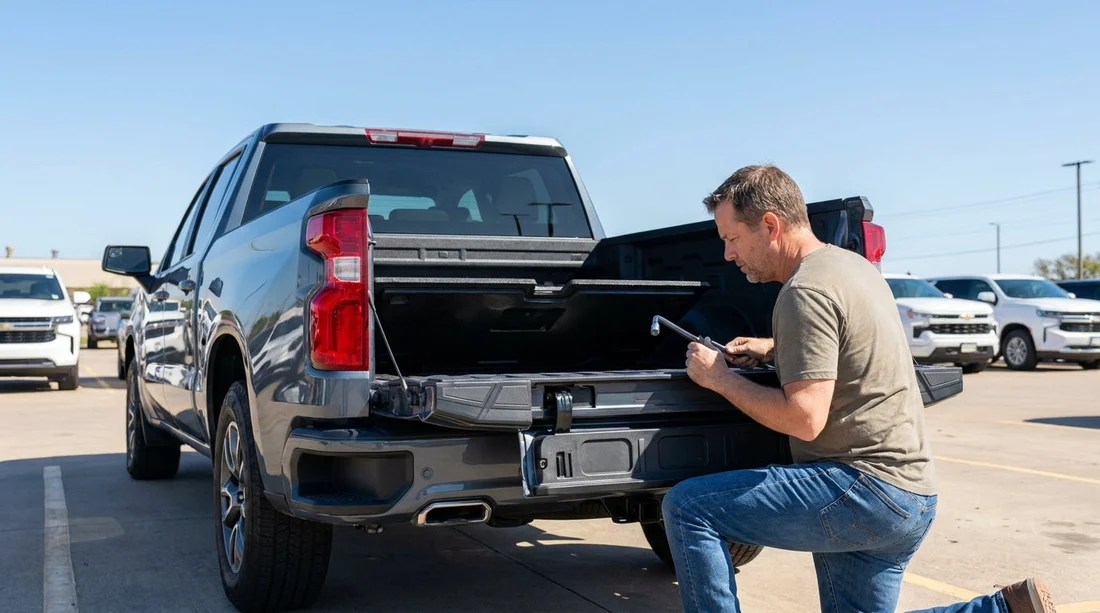
Quick Summary:
- Confirm a working spare key or key card is provided.
- Locate the spare wheel, verify inflation, and check tyre condition.
- Ensure jack, wrench, tow hook, and wheel-lock key are present.
- Check assistance details, safe jacking points, and warning gear locations.
In Texas, a flat tyre or a misplaced key can turn a simple car hire pickup into a long delay, especially if you are driving between cities, heading out to hill country, or arriving late at night. Before you leave the lot, spend a few minutes confirming two things that are easy to overlook, the spare key and the tyre kit. This quick check protects you from being stranded, helps you avoid damage charges, and makes it more likely you can continue safely if something goes wrong.
Even if you never plan to change a tyre yourself, you still need to know what equipment the vehicle has and what the rental company expects you to do. Some vehicles have a full-size spare, some have a space-saver, and some have no spare at all, using sealant and an inflator instead. Likewise, some modern cars use proximity keys that are expensive to replace, and a missing spare key can lead to towing, lockout fees, and time lost.
If you are organising travel beyond Texas, you may also see similar pickup processes at major airports. For example, policies and vehicle types can vary when collecting through pages such as car rental at Atlanta airport or car rental in Miami. The checklist below keeps you covered regardless of where you collected the car.
Spare key checks: what to confirm before you leave
1) Verify you actually received a spare. Ask whether the rental includes one key or two. Some rentals only hand over one key, others provide a spare key fob, a valet key, or an emergency blade key. Whatever the arrangement, confirm it matches the paperwork and that you understand what you have been given.
2) Test that the key works. Do not assume. Lock and unlock the car, start the engine, and check remote functions. If it is a push-button start, ensure the key is recognised reliably and that any “key not detected” warnings do not appear. If you are given two keys, test both. A weak fob battery can fail suddenly, and it is far easier to swap cars or batteries at the lot than later on.
3) Check for an emergency key blade and how to use it. Many fobs include a hidden metal key to open the driver’s door if the fob battery dies. Ask where the mechanical key slot is, as some cars hide it under a cover on the handle. Also confirm how to start the car if the fob battery is dead, many vehicles have a specific spot to press the fob against the start button or steering column.
4) Confirm any alarm or immobiliser quirks. If the car has an aftermarket alarm or unusual locking behaviour, note it. Some cars auto-lock when you walk away, others do not. If you will be swapping drivers, agree a habit that prevents keys being locked in the boot or left in the cabin.
Tyre kit checks: spare wheel, tools, and safety gear
1) Determine what “spare” the car has. Open the boot and look under the floor. You might find a full-size spare, a space-saver spare, or a tyre inflator kit with sealant. If there is no spare wheel, confirm the inflator kit is complete and within date, as sealant can expire. Knowing this matters, because a sidewall puncture often cannot be sealed, and you may need roadside help instead.
2) Inspect the spare tyre’s condition and pressure. A spare that is flat, cracked, or heavily worn is not reliable. Look for visible damage, check the tread, and if possible confirm pressure with a gauge. Space-savers commonly require higher pressure than regular tyres, and they can sit underinflated for months if not checked.
3) Find the jack, wheel wrench, and any adapters. Make sure the jack is present and not broken or rusted, and locate the lug wrench. Crucially, check for a wheel-lock key if the wheels use locking nuts. Without that small adapter, you cannot remove the wheel at all. Also look for the tow hook if the car includes one, it can be useful if the vehicle needs to be pulled a short distance safely.
4) Identify the correct jacking points. Many cars have marked jacking points along the sill. Using the wrong location can bend panels or damage battery packs on some hybrids and EVs. If you are unsure, check the owner’s manual in the glovebox or the in-car screen. If the manual is missing, ask staff before you drive off.
5) Check for essential warning equipment. Confirm you have hazard lights, and look for a reflective triangle if supplied. While not always mandatory in the US, a triangle improves safety if you stop on the shoulder, particularly on faster Texas roads. Also note whether the vehicle has a tyre pressure monitoring system warning light currently on, if it is illuminated at pickup, report it immediately.
This approach applies to most car hire pickups across the country, even if the vehicle mix changes by location. Larger family vehicles or vans might have different storage for tools, which is common in listings like van hire in Georgia, and some airport fleets prioritise inflator kits rather than full spares, as you might see via car rental at Fort Lauderdale airport.
If something is missing or faulty, what to do
If you discover there is no spare, the spare is flat, the jack is missing, or a wheel-lock key is not included, raise it before you leave. This is much easier to resolve at the counter or in the pickup bay than roadside. Ask for another vehicle or for the missing parts to be supplied, and ensure the notes are added to your agreement. If the spare key is missing but the contract says two keys, get that corrected too.
If you are already on the road and encounter a puncture, choose safety first. Pull well off the lane, activate hazards, and assess whether changing the tyre is safe where you are. On busy Texas interstates, it may be safer to call roadside assistance rather than attempt a wheel change on a narrow shoulder.
FAQ
Do Texas rental cars always come with a spare tyre? Not always. Some vehicles have a space-saver spare, others have a sealant and inflator kit, and some have neither and rely on roadside assistance.
What is the most commonly missing item in the tyre kit? The wheel-lock key is a frequent problem. Without it, you cannot remove locking wheel nuts, so always confirm it is present before leaving.
If the key fob battery dies, can I still open and start the car? Usually yes. Many fobs include a hidden metal key for the door, and most push-start cars have a backup starting method using the fob placed near a sensor point.
Is it okay to drive long distances on a space-saver spare in Texas? It is not recommended. Temporary spares have speed and distance limits, and Texas highways often run at higher speeds, so use it only to reach a tyre shop.
Should I change the tyre myself or call roadside assistance? If conditions are unsafe, such as heavy traffic or a narrow shoulder, call roadside assistance. If you do change it, use correct jacking points and warning lights.





























































































