


Quick Summary:
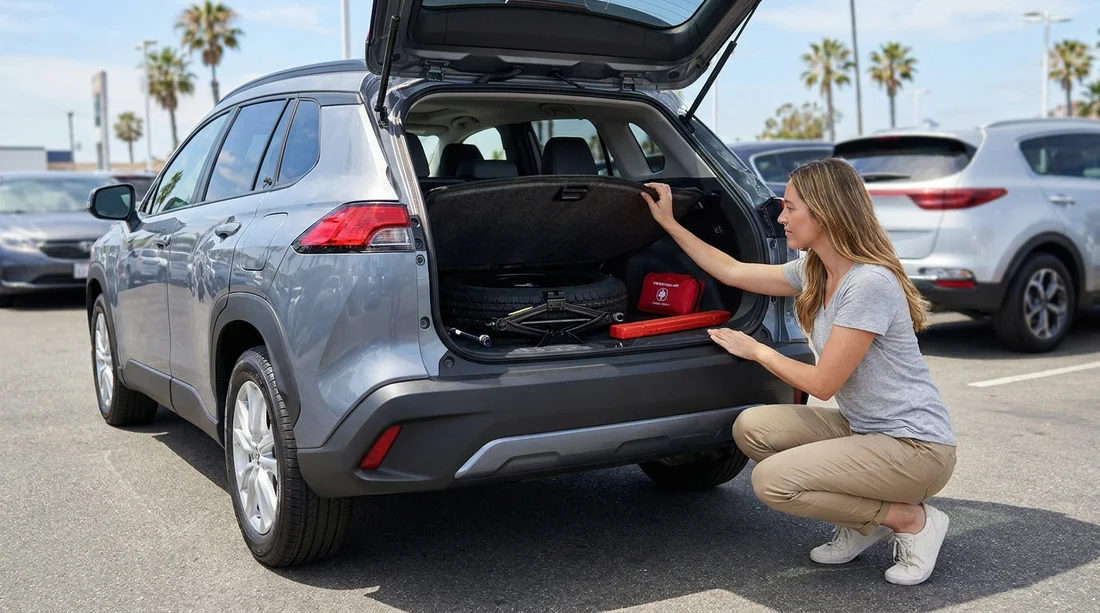
- Expect a spare tyre or repair kit, plus jack and wheel wrench.
- Check for reflective warning triangles and first-aid kits, usually not supplied.
- Confirm roadside assistance numbers, and photograph any existing damage at pick-up.
- Pack your own torch, phone charger, water, and basic medications.
Picking up a car hire in California is often quick, but safety and emergency readiness is best handled before you leave the lot. US rental fleets typically prioritise legal roadworthiness and basic breakdown equipment, not the kind of emergency kit you might assume is standard in some other countries. Use this counter-to-car checklist to confirm what is supplied, what is optional, and what you should bring yourself.
If you are collecting at a busy airport desk, such as car hire at San Francisco SFO or car hire at Santa Ana SNA, it helps to know what to look for so you can be on the road without surprises.
What is typically supplied with a California rental car
Spare tyre or tyre repair kit (often). Many vehicles still carry a compact spare, jack, and wheel wrench. However, an increasing number of newer cars have a tyre inflator and sealant kit instead, and some have neither in an easily accessible place. Open the boot, lift the floor panel, and confirm what you have before you drive away. If your trip includes remote areas or long motorway stretches, consider whether a real spare is important for your peace of mind.
Jack and basic wheel tools (if a spare is provided). If the car has a spare, it usually includes a jack and a wrench. Check that the tools are present and look serviceable. It is worth ensuring you can locate the tyre key if the wheels have locking nuts. If the kit is missing, tell the desk before leaving.
Owner’s manual or quick-start guide (sometimes digital). Some fleets keep a paper manual in the glovebox, others rely on an in-car screen. Before pulling out, identify how to turn on the hazard lights, open the fuel door, and access any hidden towing eye cover. This matters in minor incidents when you need to act quickly.
Basic registration and insurance documents (as required). You should have proof of registration and evidence of financial responsibility available in the vehicle. The format varies by company. If you are unsure where these documents are stored, ask at the counter so you are not rummaging around during a traffic stop.
Standard safety features built into the vehicle. Modern rentals commonly include ABS, airbags, reverse camera, and electronic stability control, but do not assume advanced driver assistance is present. If lane keeping or adaptive cruise control is important to you, confirm the exact model or feature set rather than relying on a vehicle category description.
Items people expect, but are usually not included
First-aid kit. A first-aid kit is not typically supplied with US rentals. If you want plasters, antiseptic wipes, and any personal medication, pack them or purchase locally after arrival.
Warning triangle and high-visibility vest. These are common requirements in parts of Europe, but not standard in California rentals. If you break down at night, hazard lights are essential, but a reflective triangle can add an extra layer of visibility. If you want one, you will likely need to provide it yourself.
Fire extinguisher. Not a typical inclusion. If you are driving in hot conditions or through wildfire-prone areas, an extinguisher can be reassuring, but you should not expect it at pick-up.
Emergency food, water, blankets, or roadside flares. Rental companies generally do not stock consumables or personal-comfort items. Even within California, distances can be deceptive, and traffic delays can be long. Pack for your specific route, especially if you plan to drive into desert areas or mountains.
Portable phone charger cables and mounts. You may find USB ports, but do not rely on having the right cable, a 12V adapter, or a cradle for navigation. Bring your own to avoid distracted driving.
Counter-to-car checklist: what to ask and what to inspect
1) Confirm roadside assistance and what it covers. Ask which number to call for a flat tyre, dead battery, or lockout, and whether assistance is included in your rate or an optional add-on. Some issues may be treated as driver responsibility, depending on the circumstances, so it is worth clarifying before you leave.
2) Locate the hazard lights and check they work. Before exiting the lot, press the hazard button and verify all indicators flash. It is a small step, but it matters if you need to pull over quickly.
3) Check tyres, including the spare. Walk around and look for visibly low pressure or sidewall damage. If there is a spare, verify it is present and appears inflated. A compact spare is still useful, but only if it is not flat.
4) Inspect lights and mirrors. Quick checks: headlights, brake lights, and indicators. Adjust mirrors and seat before moving. If any light is out, report it immediately.
5) Photograph existing damage and the fuel level. Take clear photos around the vehicle, including wheels and bumpers, plus the dashboard showing mileage and fuel. This creates a time-stamped record and reduces disputes later.
6) Understand the fuel type and refuelling method. Petrol grades in the US are labelled differently and diesel pumps are less common. Also, some cars have capless fuel fillers that can confuse first-time users. Ask if you are unsure, especially if you are collecting after a long flight.
For travellers collecting in Orange County, you may see a wide mix of vehicle types. If you are choosing a specific category, such as budget car hire at Santa Ana SNA, check the boot space for your kit, because smaller cars can have limited room once luggage is loaded.
What to pack yourself for California driving
Phone charging and navigation essentials. Bring a charging cable that matches your phone, plus a 12V adapter if needed. Download offline maps for areas with poor signal. Hands-free laws are enforced, so a simple dashboard mount can help you keep your eyes on the road.
Light and visibility. Pack a compact torch. If you break down at night, finding the jack point or reading a tyre label is far easier with proper light.
Hydration and heat management. Keep water in the car, especially if driving inland where temperatures rise quickly. Sunglasses and sun cream are not “emergency” items until you are stuck in traffic for an hour in full sun.
Comfort and warmth for varied climates. Coastal evenings can be cool even when daytime is warm. A light layer or compact blanket is helpful if you are waiting for assistance.
Basic first aid and personal medication. Include plasters, antiseptic wipes, pain relief you tolerate well, and any prescription medication. If anyone has allergies, keep antihistamines accessible.
A simple tyre pressure gauge. Even with tyre pressure monitoring, a small gauge helps you confirm a slow leak. Many petrol stations have air, but the equipment can be unreliable.
Special notes for SUVs, vans, and longer trips
Know where the spare is stored. On SUVs and vans, the spare may be under the vehicle, inside the cargo area, or mounted elsewhere. Ask for a quick explanation if it is not obvious. For larger vehicles such as van hire in San Jose SJC, access can require a tool that you should confirm is included.
Plan for battery and key fob issues. Key fob batteries can fail unexpectedly. Ask what to do if the fob stops working, and whether there is a physical key hidden inside. This is particularly relevant if you will be making many stops on a family road trip.
Allow extra stopping distance and avoid shoulder stops if possible. If you need to pull over, try to exit at the next safe area rather than stopping on a narrow shoulder. California freeways can be fast and busy, and visibility is a major safety factor in breakdown situations.
FAQ
Do California rental cars come with a first-aid kit? Usually not. Most car hire vehicles in California do not include a first-aid kit, so bring your own basics or buy one locally.
Will my rental car have a spare tyre? Sometimes. Some cars have a compact spare with jack and tools, while others provide an inflator and sealant kit. Check the boot before leaving.
Are warning triangles or reflective vests provided at pick-up? Typically no. They are not standard inclusions in California rentals, so pack them if you prefer extra roadside visibility.
What should I do first if I break down? Move to a safe location if possible, turn on hazard lights, and call the roadside assistance number provided with your rental paperwork.
Should I inspect the car at the desk or at the vehicle? Inspect at the vehicle. You can check tyres, lights, tools, and existing damage more accurately there, then report issues before you drive off.





























































































