


Quick Summary:
- Ask whether your California car hire includes a spare, donut, or inflator kit.
- Confirm the kit location, and check it is complete before leaving.
- Verify roadside assistance terms, call-out fees, and puncture exclusions in writing.
- Consider your route, night driving, and remote areas before you decline.
Punctures are one of the most common disruptions on a road trip, and they can be more stressful when you are driving an unfamiliar vehicle. In California, rental fleets are a mix of newer cars designed without full-size spares, SUVs with space-saver spares, and models that rely on a tyre inflator kit. That is why it is worth confirming what you will actually receive before leaving the counter or car park. The practical question is not only “spare or no spare”, but also whether you are expected to fit it yourself, whether the kit is usable, and what the rental company’s roadside assistance will do if the tyre cannot be repaired.
If you are arranging car hire in California through Hola Car Rentals, the best approach is to treat puncture readiness as a quick checklist item, similar to fuel policy and mileage. It only takes a minute to ask the right questions, but it can save hours on the shoulder of a freeway or in a remote park. For travellers collecting at major airports, such as through Los Angeles LAX car rental options, the vehicle you are assigned may change at the last moment, so the correct time to confirm is after the specific vehicle is allocated.
What rental cars in California typically come with
There is no single rule across all manufacturers and rental classes, but there are clear patterns:
Many modern cars do not carry a full-size spare. Instead, you may find a space-saver donut, a tyre inflator kit with sealant, or nothing beyond roadside support. Hybrids and some EVs are especially likely to prioritise battery space over a spare wheel well.
A jack and wheel wrench are not guaranteed. If the car has a spare, it often includes tools, but tools can go missing between rentals. You should confirm the jack, wrench, and locking wheel nut key (if fitted) are present.
Roadside assistance exists, but it varies. Some agreements include basic help, but charges can apply depending on cause and whether you purchased an additional roadside plan. This is where the counter conversation matters.
Spare tyre vs inflator kit, which is better?
A spare tyre is usually the most flexible option. It lets you continue even when the tread is damaged or a puncture is too large for sealant. A donut spare is still useful, but it comes with speed and distance limits, and it may be unsuitable for long desert stretches in hot weather if you need to drive far to reach a tyre shop.
An inflator kit is designed for simple tread punctures. The sealant can fail if the hole is large, the tyre has been driven flat, or the damage is on the sidewall. Sealant can also complicate repairs, as some tyre shops prefer replacing the tyre after sealant use. If your trip includes isolated areas, long highway drives, or late-night arrivals, relying only on a sealant kit can add risk.
The best choice depends on your tolerance for delays and where you will drive. If you are sticking to dense urban corridors, an inflator kit plus reliable roadside support may be acceptable. If you are driving the Big Sur coast, inland mountain routes, or long distances between towns, a spare can be the more comfortable option. Travellers picking up in tech corridor hubs, for example via San Jose SJC car rental, often plan day trips that quickly reach less serviced areas, so it is smart to confirm puncture gear up front.
What to confirm at the counter, and what to check at the car
Before you drive off, get clear answers to five points. Ask them politely, but be specific, and request that the answer applies to the exact vehicle you are taking.
1) Does this vehicle have a spare, and what type? You are listening for “full-size”, “donut”, or “inflator kit only”. If it has an inflator kit, ask whether sealant is included and in date.
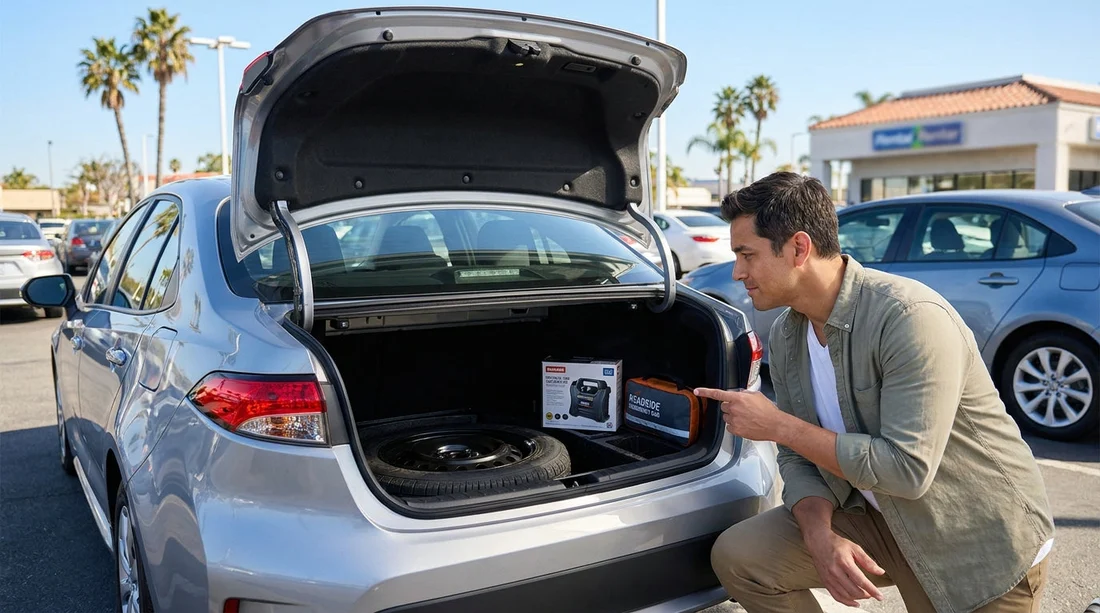
2) Where is it stored, and is access straightforward? Some spares are under the boot floor, others are mounted beneath an SUV, and some kits are tucked into side compartments. Knowing the location helps you spot missing equipment quickly.
3) Are the tools present and complete? Confirm the jack, wheel wrench, tow hook (sometimes needed for recovery), and any locking nut key. If anything is missing, request a different car or have the missing item documented.
4) What does roadside assistance do for punctures? Ask whether they will tow you, swap to a spare, or send a service vehicle. Then ask about fees, exclusions, and what happens if the tyre is unrepairable.
5) What are your responsibilities if you use the spare or sealant? Some companies require you to report the incident, swap the spare back at a service location, or avoid certain repairs. Clarify whether you should go to an approved tyre shop or call first.
Once at the car, take two minutes to verify what you were told. Open the boot, lift the floor, and visually confirm the spare or kit is there. If you are collecting during busy periods, such as holiday weekends, you want to resolve missing items before you are on the freeway. This is especially relevant at high-volume airport desks, including Santa Ana SNA airport car rental, where vehicles can be turned around quickly.
When you should strongly consider requesting a spare
Even if an inflator kit is typical for your vehicle class, there are scenarios where you should seriously consider asking for a car with a spare, if available.
Long-distance itineraries. If you are driving between cities and covering hundreds of miles, delays matter more, and tyre shops may be sparse late at night.
Remote or mountainous routes. Some scenic drives have limited mobile signal, fewer service stations, and reduced towing availability. A spare can turn a major problem into a manageable stop.
Travelling with children or tight schedules. If you need predictability for nap times, flights, or reservations, reducing the chance of an hours-long delay is worthwhile.
Large vehicles and loads. If you are in an SUV, minivan, or moving more luggage, you may be farther from tyre shops and less able to comfortably wait roadside. For bigger vehicles, check whether boot space is affected by spare storage, and plan luggage accordingly. If you are comparing people-carrier options, minivan rental in San Jose listings can help you judge typical vehicle types and cargo expectations.
Practical tips if a puncture happens anyway
If you get a warning light or feel vibration, reduce speed and find a safe place to stop. Continuing to drive on a soft tyre can destroy it, which may turn a repairable puncture into a replacement and additional fees. Take photos of the tyre and any dashboard warnings, and contact the rental provider or roadside number listed in your agreement.
If you use a donut spare, obey the posted speed limit on the tyre and keep distances short. If you use sealant, remember that it is usually a temporary measure to reach a tyre shop. Tell the shop sealant was used, and follow the rental company’s guidance on repair approval.
FAQ
Do rental cars in California usually have a spare tyre? Many do not. It is common to find a space-saver donut or an inflator kit instead of a full-size spare, so it is worth confirming for your specific vehicle.
Can I request a different car if there is no spare? You can ask, and sometimes another vehicle in the same class or a different class will have a spare. Availability varies by location and fleet mix on the day.
Is an inflator kit enough for most punctures? It can work for small tread punctures, but it may fail for larger holes, sidewall damage, or tyres driven flat. It is best seen as a temporary measure to reach a tyre shop.
Will roadside assistance replace the tyre for free? Not always. Some plans cover basic help, but fees and exclusions can apply depending on what you purchased and how the damage occurred, so confirm details before departing.
What should I check in the boot before leaving the lot? Confirm the spare or inflator kit is present, and check for the jack, wheel wrench, and any locking wheel nut key. Missing tools are easier to solve before you drive away.





























































































