


Quick Summary:
- Pull over safely, reduce cabin heat fast, prioritise hydration and shade.
- Try non-damaging checks, fan settings, recirculation, and condenser airflow.
- Record dashboard readings, photos, and timestamps to support a swap.
- Contact support early, request a like-for-like replacement, keep receipts.
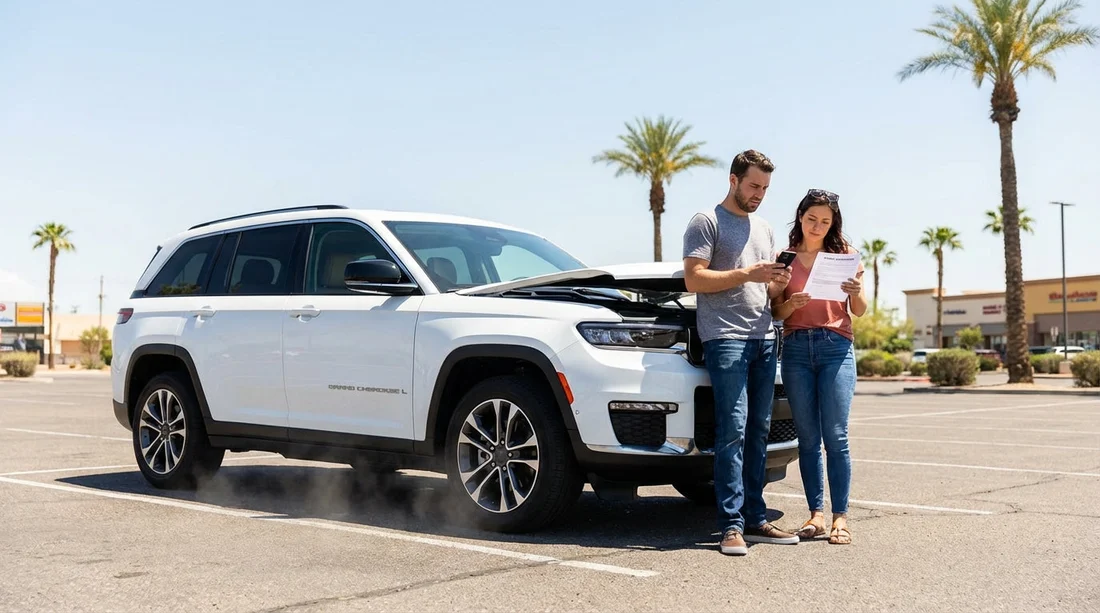
Las Vegas summer heat can push vehicles hard, especially when you are stuck in traffic with intense sun and high road temperatures. If the air conditioning in your car hire stops cooling, treat it as a safety issue first, then a mechanical issue second. Heat exhaustion can come on quickly, and a hot cabin can affect driver concentration. The good news is that many apparent air-con failures are caused by settings, airflow restrictions, or heat soak that can be diagnosed quickly without touching anything that might cause damage.
This guide covers a practical heat safety checklist, quick diagnostics you can do safely at the roadside, and how to document the fault clearly so a no-fee vehicle swap is easier to approve. If you arranged your Las Vegas pickup through Hola Car Rentals, it also helps to have your booking details ready from the start, for example from Las Vegas car rental or Las Vegas Airport car rental.
1) Heat safety checklist, what to do immediately
1. Get to a safe stopping place. Signal early, move to the right, and choose a shaded spot if available. If you are on a freeway, use the next exit rather than stopping on the shoulder unless you must.
2. Reduce heat load fast. Open all doors for 30 to 60 seconds to vent trapped heat. Then close the doors and use the fan on high with windows slightly open for a minute. This quickly flushes superheated air without relying on the air-con.
3. Protect people first. Give priority to children, older passengers, anyone with health conditions, and pets. Offer water, loosen tight clothing, and move everyone into shade. If anyone shows confusion, faintness, severe headache, or stops sweating, seek urgent medical help.
4. Avoid idling in extreme heat unless needed. If you are waiting for assistance and the cabin is dangerously hot, idling may be necessary, but keep an eye on the temperature gauge and warning lights. If the engine starts to overheat, switch off and focus on shade and hydration.
5. Use sun protection and improvisation. Windshield shades, towels, or jackets draped over the side windows help. If you have a reflective emergency blanket, it is very effective as a temporary sun barrier.
6. Plan your next move. If the air-con is not cooling within a few minutes after basic checks, assume you may need a swap. In Las Vegas, it can be safer to head to a staffed location rather than continue long distances without cooling.
2) Quick diagnostics that will not cause damage
You can do several checks without opening the refrigerant system, undoing parts, or adding DIY recharge cans. Avoid any action that involves releasing refrigerant, attaching gauges, or opening the system. Those steps can be unsafe and can complicate support decisions.
A. Confirm the settings are correct. Set temperature to the lowest setting. Turn the fan to high. Ensure air distribution is to the face vents, not demist or footwell only. Switch to recirculation, as it reduces the heat load by cooling already-cooled air.
B. Check if it is cooling but feels weak. In extreme heat, the system may be cooling slightly but not enough to be comfortable. Place your hand directly at the centre vent. If the air is only slightly cooler than outside, treat it as a fault worth documenting. If it is cold initially then warms at idle, that can point to airflow at the condenser or a fan issue.
C. Look for airflow restrictions at the front. Safely park, then inspect the grille area. Remove obvious debris such as plastic bags or heavy bug build-up if you can do so without tools and without touching hot components. A blocked condenser reduces cooling significantly at low speed.
D. Check engine temperature and warnings. If the temperature gauge is rising or you see a warning light, stop driving. Overheating can force the air-con to cut off to protect the engine. Document any warnings because it strengthens the case for a swap.
E. Listen for the compressor engaging. With the engine running, switch the air-con on and off. You may hear a click and a slight change in engine note when the compressor engages. No change can indicate a control issue, but do not keep cycling it repeatedly. Note what you hear and when.
F. Try raising engine speed briefly. While parked, shift to Park, apply the brake firmly, and gently raise revs to around 1,500 rpm for 10 to 15 seconds. If cooling returns only at higher revs, that suggests airflow or fan performance issues. Do not do this for long periods.
G. Check the cabin air filter symptoms. You cannot always access it easily, and you should not dismantle panels, but you can note symptoms. If airflow from vents is weak even on high fan, it could be a blocked cabin filter. Record that the fan is loud but airflow is low.
H. Know what not to do. Do not open the radiator cap. Do not add refrigerant from a store-bought can. Do not pour water into the engine bay. Do not continue driving long distances hoping it improves if occupants are overheating. Keep it simple and document everything.
3) If you must continue briefly, driving tactics to reduce heat
Sometimes you need to move the car to a safer location or to a staffed desk. If you have to drive without proper air-con, use these tactics.
Choose the shortest safe route. Aim for a shaded petrol station, a hotel porte-cochère, or a staffed rental counter. If your pickup was at the airport, heading toward the facilities listed under car rental at Las Vegas Airport may be safer than stopping on an exposed roadside.
Drive smoothly. Avoid hard acceleration that adds engine heat. Keep a steady pace to maximise airflow through the front condenser and radiator.
Use ventilation smartly. At low speeds, open windows slightly to exhaust heat. At higher speeds, you may find windows create buffeting and reduce comfort. Adjust as needed, but prioritise getting fresh air in.
Manage passenger comfort. Offer frequent water sips. Use damp cloths on wrists and neck. Take breaks indoors if possible, even a short stop can help.
4) Documenting the fault, proof that supports a no-fee swap
Clear documentation helps support teams understand the issue quickly and decide on a replacement. Your goal is to show that the air-con was not performing in normal use, in a way that created a safety concern in Las Vegas heat.
1. Take a short video of the cabin vents and controls. Record the climate panel showing low temperature, high fan, and recirculation. Then film your hand at the centre vent to show airflow and apparent temperature. Speak the time and location out loud.
2. Photograph the dashboard. Capture the temperature gauge, any warning lights, and the odometer. If the car has a digital outside temperature display, photograph that too.
3. Capture a timestamp and location. Use your phone’s location services or take a picture of a nearby sign. If you can safely do so, a screenshot of your map showing where you stopped is helpful.
4. Note the conditions. Write down approximate outside temperature, whether you were in traffic, and whether cooling failed at idle or while moving. Mention how long after start-up the air-con stopped cooling.
5. Keep receipts connected to the incident. If you bought water, paid for shaded parking, or needed a short rideshare to reach a counter while leaving the vehicle somewhere safe, keep receipts. Only do what is necessary and reasonable, and document why.
6. Do not reset anything. Avoid disconnecting the battery or pulling fuses. These actions can erase clues and complicate diagnosis.
5) Asking for a swap, what to say and what to expect
When you contact support, be concise and factual. Explain that the air-con stopped cooling in extreme heat, you performed basic setting checks, and it remains unsafe to continue. Offer to share photos and video. If you need a like-for-like vehicle, state passenger count and luggage needs.
If you hired a larger vehicle, such as a people carrier, mention it early so the replacement matches capacity. It can help to reference the category you arranged, for example from minivan hire in Las Vegas. If your booking references a specific partner desk, keep that information to hand as well, such as details associated with Enterprise car rental in Nevada.
What a no-fee swap usually depends on: the issue is not caused by misuse, you reported it promptly, and you can show the fault clearly. In extreme heat, poor cooling can be treated as a safety concern, which often speeds up the decision.
What to bring to the counter or handover: your driving licence, rental agreement, photos and video on your phone, and notes of when the problem started. If you had to stop and wait, mention how long, and whether any warnings appeared.
Inspect the replacement car before leaving. Start it, set the air-con to cold, and confirm it cools at idle and while moving. Check that you have the correct fuel level and that any pre-existing marks are recorded, just as you would at pickup.
6) Preventing repeat issues in Las Vegas heat
Even with a healthy system, Las Vegas heat can make cooling feel slow for the first few minutes. These habits reduce strain and improve comfort.
Pre-vent the cabin. Before driving off, open doors briefly to dump hot air. This reduces the load on the system.
Use recirculation once initial heat is out. Recirculation is more efficient after the cabin temperature drops slightly.
Park strategically. Choose shade, use a windshield sunshade, and consider turning the vehicle so the sun hits the rear rather than the windscreen when possible.
Do not block vents. Keep bags away from lower vents and avoid hanging items that restrict airflow.
Watch the engine temperature. If you are climbing grades or stuck in stop-start traffic, keep an eye on the gauge. An overheating engine can reduce air-con performance.
FAQ
Is it safe to keep driving if the air-con stops working in Las Vegas? It depends on passenger health, traffic, and distance. If the cabin becomes dangerously hot or anyone feels unwell, stop in a safe place and seek help rather than continuing.
What quick checks can I do without risking damage? Confirm maximum cold, high fan, and recirculation, then check airflow at the vents, look for grille debris, and note any engine temperature warnings. Avoid any refrigerant DIY.
What evidence is most useful when requesting a vehicle swap? A short video of the controls and vent airflow, photos of the temperature gauge and warning lights, outside temperature display if available, plus timestamps and location notes.
Can extreme heat alone make air-con feel like it has failed? Yes, heat soak can make initial cooling slow, especially after the car has been parked in sun. If it does not improve after a few minutes of correct settings and driving airflow, treat it as a fault.
Will a swap usually be free if the air-con failure is confirmed? Policies vary, but prompt reporting, clear documentation, and avoiding DIY interventions help show it is a mechanical issue rather than misuse, supporting a no-fee replacement.





























































































