


Quick Summary:
- Check the windscreen and mirror area for an E‑ZPass tag.
- Look for a toll device pouch, switch, or barcode label.
- Ask the counter how tolls post, and what daily fees apply.
- Photograph the transponder number and rental agreement toll section.
In Pennsylvania, toll roads, bridges, and tunnels often use E‑ZPass lanes or all electronic tolling. That means you may not see a cash booth, but tolls can still be charged to your rental agreement. Before you set off, it helps to do two things: confirm whether an E‑ZPass transponder is physically in the vehicle, and confirm what billing method your rental company will use if you drive through toll points.
If you are arranging car hire around Philadelphia, you may collect at the terminal and be on a tolled road within minutes. For location options, you can compare pick-up points such as car rental at Philadelphia Airport (PHL) or a city pick-up like car rental in Philadelphia. Either way, the checks below apply before you leave the car park.
Where to look inside the car for an E‑ZPass transponder
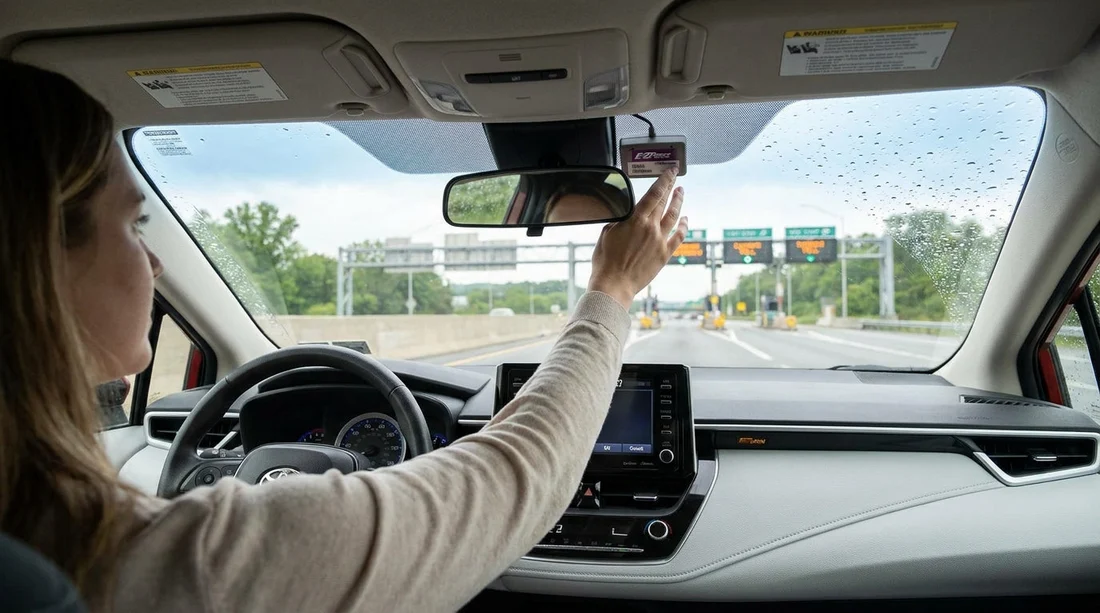
Start with a quick scan of the front windscreen. Most transponders are mounted high on the glass, centred behind the rear-view mirror, or slightly to the passenger side. It may be a small plastic box, sometimes black, grey, or white, often with a visible ID or barcode label. In some cars it is in a clip or bracket, and in others it is stuck to a mounting strip.
Next, check the top edge of the dashboard near the windscreen. Some fleets keep the tag in a sleeve or pouch stored in the glovebox, centre console, or door pocket, particularly if they want drivers to choose whether to use it. If you find a pouch, look for wording like “toll pass”, “E‑ZPass”, “transponder”, or a device with a serial number. Do not remove adhesive-mounted tags from the glass, because that can damage the unit or trigger replacement fees.
Finally, check the sun visors and the area around the mirror for any printed fleet instructions. Rental companies sometimes place a small sticker explaining whether the car is equipped, and how charges will be handled if you drive through toll points without cash lanes.
How to confirm toll billing options at the counter
Finding a transponder in the car does not, by itself, tell you how you will be billed. The most important part is confirming the rental company’s toll programme rules for that specific agreement. Before you accept the keys, ask the staff member to point out the toll section on the rental agreement and clarify three items: whether the car is enrolled in a toll service, what the service fees are, and what happens if you do not opt in but still use toll roads.
Ask whether the transponder is active for your rental period. A unit can be physically present but not assigned to your agreement, or it may only be billable through the rental company’s system. If you have your own E‑ZPass, ask whether you are allowed to use it instead, and whether the in-car device must be placed in a shielded pouch or turned off. Do not assume you can mix both, double billing is a common problem when two accounts capture the same trip.
If you are hiring a specific vehicle type, ask if the toll arrangement differs. For example, larger vehicles can have different toll classifications on some facilities. When comparing options like SUV hire in Philadelphia or van rental in Philadelphia, confirm whether toll class is automatically handled by the transponder and what happens if the toll system reads your number plate instead.
What exactly to record before you drive off
Take two quick photos with your phone before leaving the lot. First, photograph the transponder as installed, ensuring the serial number or barcode (if visible) is legible. Second, photograph the relevant toll section of your rental agreement on screen or paper. If a charge is disputed later, those two images help you show what device was in the car and what you agreed to at collection.
Also note whether the car has a toll tag pouch, and whether the device was inside it or mounted to the glass. A transponder that is blocked, flipped, or left in the glovebox may not be read, which can push the toll into plate-based billing and extra fees.
Common signs the car is set up for tolling, even if you cannot see a tag
Sometimes you will not find a clearly mounted unit, yet the car may still be enrolled in a toll system. Look for these clues: a small rectangular “shadow” on the windscreen where a device used to sit, a bracket behind the mirror with no tag attached, or a label stating the vehicle participates in an electronic toll programme. Some fleets use plate-based tolling where cameras capture the number plate, so the absence of a tag does not guarantee you can avoid electronic charges.
If you cannot locate any device, return to the counter or booth attendant before exiting. Ask them to physically show you where the toll equipment is, or confirm in writing that there is no transponder and how tolls will be billed if you use toll roads.
FAQ
How can I tell if the E‑ZPass transponder is active for my rental? The surest method is the rental agreement toll section and the counter’s confirmation. A device can be present but billed only through specific programme terms tied to your contract.
What if there is no transponder visible on the windscreen? Check the glovebox and centre console for a toll tag pouch or device. If you still cannot find one, ask staff to confirm whether tolls are transponder-based or plate-based.
Can I use my own E‑ZPass in a rental car in Pennsylvania? Sometimes yes, but you must prevent the rental car’s device from being read as well. Ask the counter how to disable or shield the in-car transponder to avoid double billing.
What should I photograph before leaving the car park? Photograph the transponder (or its bracket area) and the toll section of the rental agreement. These records help resolve billing questions after your trip.





























































































