


Quick Summary:
- Hand-control adapted vehicles are not available through Hola in Florida.
- Choose a car class with easy entry, higher seating, and wide doors.
- Request any special assistance early, availability depends on the supplier.
- Bring your disabled parking permit and confirm local parking rules.
Accessibility needs vary widely, so the most helpful approach for car hire in Florida is to understand what can usually be arranged, what cannot, and what you can do to reduce risk before you arrive. Hola works with major rental suppliers at popular Florida locations, but adaptation options are not unlimited and can differ by provider, fleet and counter team.
The key point upfront is clarity. If you require a vehicle with hand controls fitted, Hola does not offer hand-control vehicles in Florida. That means customers who need hand controls should plan an alternative solution, such as travelling with their own portable equipment where legally permitted and accepted by the supplier, or arranging specialist mobility transport. For all other mobility-related preferences, you can often improve comfort by selecting the right car class and preparing a short, specific request for the counter.
If you are comparing locations, you can review pickup points and car categories on Hola’s Florida pages such as Avis car hire in Florida (MIA) and car hire at Fort Lauderdale (FLL). These pages help you narrow down where you are collecting, which matters because larger airport fleets can offer more choice on the day.
What accessibility-related requests may be possible
While Hola cannot guarantee modifications, some accessibility-related requests may be possible depending on the supplier, the station, and the vehicles available at pickup. Think in terms of practical comfort and ease of use rather than structural vehicle conversions.
Vehicles that are easier to get in and out of. Many travellers find that a compact SUV, standard SUV, or people carrier provides a higher hip point, wider door opening, and a more upright seating position. These features can reduce the amount of bending and twisting required. If you use a walking aid or have limited knee flexibility, choosing a higher-seating class is often the single most effective decision you can make before reserving.
Automatic transmission. In Florida, automatics are common, but it is still wise to ensure your chosen class is automatic if you cannot drive a manual. This is not an adaptation, but it is accessibility-critical for many drivers.
Space for mobility equipment. If you travel with a folding wheelchair, rollator, crutches, or additional medical equipment, luggage space becomes the accessibility issue. A standard saloon can be workable for small folding items, but a larger boot or a vehicle with a square tailgate opening can make loading safer. For family travel to theme parks, larger groups often look at multi-passenger options such as van rental near Disney Orlando (MCO), where capacity and easy access can be as important as price.
Adjustable seats and steering. Most modern rentals have adjustable seats, headrests, and steering wheels, but the range differs. If you need particular adjustability for comfort or pain management, selecting a mid-size or full-size category often improves the likelihood of better seat support than the smallest economy cars.
Help at the counter. If you have a hidden disability, reduced stamina, or difficulty standing for long periods, it may be useful to request assistance when you arrive. Outcomes depend on staffing and local procedures, but letting the supplier know early can help them plan.
What is not available: hand controls and specialised conversions
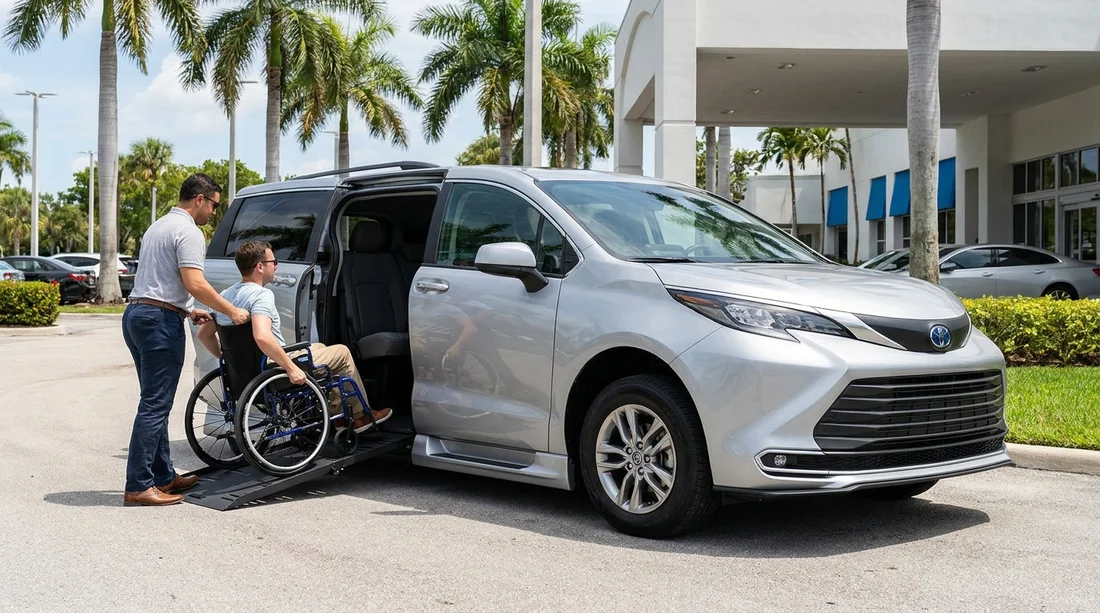
For avoidance of doubt, Hola does not provide hand-control adapted vehicles for car hire in Florida. In addition, highly specialised conversions, such as wheelchair-accessible vehicles with ramps or lowered floors, are typically not part of standard airport rental fleets.
If you require a ramp, lift, transfer seat, left-foot accelerator, spinner knob, or other dedicated adaptation, you should treat that as a specialist mobility booking rather than mainstream car hire. Standard rental providers also have safety and liability rules around customer-fitted equipment. Even if you own portable adaptations, you should expect that permission may be required and that the supplier can decline if they consider it unsafe for the vehicle.
The practical takeaway is to focus on selecting a vehicle class that reduces the need for adaptation, and plan your trip assuming you will be using an unmodified automatic vehicle unless you have confirmed otherwise directly with the supplier.
How to choose a suitable car class before reserving
Because adaptation options are limited, choosing the right category becomes your main accessibility tool. Here are evidence-based ways to pick a class that supports comfort and independence.
Prioritise entry height over badge size. A compact SUV can be easier to enter than a low saloon, even if it is not much bigger overall. Look for descriptions that imply higher seating and a taller body style.
Plan for doors and parking bays. Florida car parks can be tight, especially in busy areas. If you need wider door opening space for transfers or for lifting equipment, a larger vehicle can help, but only if you can still park comfortably. Sometimes a mid-size SUV strikes the best balance.
Match boot access to your equipment. A rollator may fit in a small boot, but repeated lifting at an awkward angle can cause strain. If you want a flatter load lip and a taller opening, consider an SUV or minivan category. Larger people-movers listed on pages like minivan hire in Coral Gables (GBL) can be useful if you also need room for additional passengers.
Consider your driving confidence. Bigger vehicles often mean easier access but can be more challenging in city traffic. If you will be driving in busy zones like Miami, you might prefer a slightly smaller SUV and allow extra time for manoeuvres.
Think about heat and fatigue. Florida heat can worsen fatigue or certain conditions. A newer vehicle class may provide stronger air conditioning performance and features like remote locking, which can reduce stress during frequent stops.
How to make an effective accessibility request
If you have a specific need, be ready to describe it in functional terms rather than technical conversion language. Counter teams respond best to short, concrete requests that they can match to a car on the lot.
Useful details include: whether you need higher seating for transfers, whether you require a larger door opening, whether you are carrying a folding wheelchair, and how many pieces of luggage you must fit. If you need extra time at pickup due to mobility issues, allow a buffer in your travel plan, especially at peak arrival periods.
Also, set expectations. Even when a request is noted, suppliers typically reserve by vehicle class, not by exact make, model, or trim. That means the aim is not a particular car, but a category that makes it more likely you will be comfortable.
If you are collecting near Miami Beach, you can compare what is offered at different pickup options using car hire for Miami Beach (MBC). Different pickup environments can affect walking distances, shuttle steps, and queueing, all of which matter for accessibility.
Documents, permits, and practical travel tips in Florida
Driving licence and eligibility. Ensure the driver’s licence is valid and accepted in the United States, and keep any relevant medical or disability documentation you may need for your own peace of mind. Rental teams typically focus on licence validity and payment, rather than disability status.
Disabled parking permits. If you use a disabled parking permit, bring it with you and display it correctly. Parking rules can vary by city and car park operator, so confirm the local signage. Accessible bays at attractions can fill quickly, so arriving earlier can make parking less stressful.
Pick-up and return timing. If standing for long periods is difficult, try to plan pickups outside peak arrival waves where possible. If you expect fatigue after travel, consider whether you can add a second driver who meets rental requirements.
Fuel and rest stops. Build in breaks, especially for longer drives between South Florida and Orlando area attractions. Comfortable pacing can be a bigger accessibility factor than the vehicle itself.
FAQ
Does Hola offer hand-control adapted car hire in Florida?
No. Hand-control vehicles are not available through Hola in Florida, so you should plan an alternative solution if you require them.
Can I request a higher vehicle to make entry easier?
Yes, as a preference. Choosing an SUV, minivan, or higher-seating class can improve comfort, but specific models cannot be guaranteed.
Will the rental car definitely fit a folding wheelchair or rollator?
Not always. Capacity depends on the car class, passenger count, and luggage, so consider a larger boot or people carrier category.
Can the supplier provide extra help at pick-up?
Sometimes. Assistance can depend on staffing and location procedures, so it is best to share your needs clearly and early.
Is it possible to add a second driver if I get tired?
Often, yes. Additional drivers are usually allowed if they meet licence and age rules, but fees and conditions can vary by supplier.





























































































