


Quick Summary:
- Car hire deposits often exceed tap limits, so chip insert is required.
- Bank fraud systems may decline tap after travel, prompting chip verification.
- Some Miami terminals force chip for first use, offline, or fallback.
- Carry the physical chip card, matching ID, and a backup payment option.
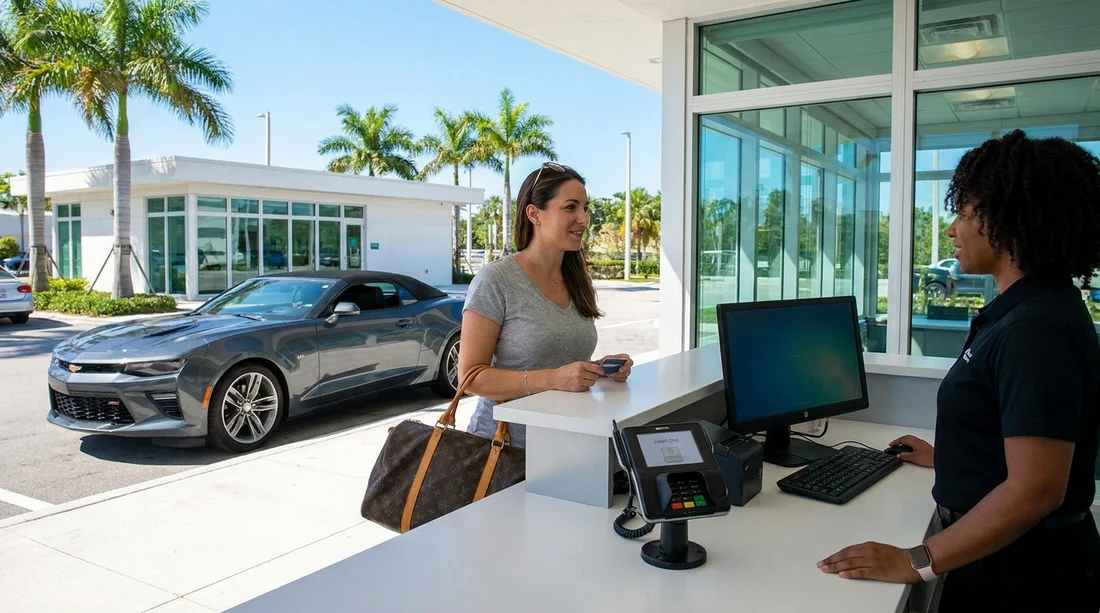
Arriving for car hire pick-up in Miami, you might expect a simple contactless tap to handle the payment and deposit. Instead, the terminal beeps, the screen shows “insert card”, or the tap is declined even though your credit card works elsewhere. This is common, and it does not necessarily mean there is anything wrong with your account.
Car rental payments behave differently from everyday retail purchases. The transaction often includes a pre-authorisation for a security deposit, extra verification steps for “card present” rules, and the need to meet the rental company’s fraud-prevention requirements. Those factors can make contactless less reliable than chip-and-PIN or chip-and-signature, especially right after you land in Miami.
If you are collecting at the airport, the environment matters too. High customer volume, rapid staff turnover, and terminals that must follow strict payment configuration can all lead to a tap being rejected and a chip insert being requested. For pick-ups around the city, the same payment rules still apply. If you are comparing locations, see the practical pick-up notes for car hire in Miami (MIA) and airport and Brickell car hire.
1) Tap limits and deposit amounts can exceed contactless rules
One of the most frequent reasons a contactless tap fails at car hire pick-up is the deposit. Many rentals require a pre-authorisation that is higher than a typical shop purchase. Contactless transactions are often subject to tighter limits, either set by the terminal, the card network, the merchant category, or the issuing bank. Even if your bank allows high-value contactless in supermarkets, it may still apply stricter rules for vehicle rental deposits.
Also, some terminals are configured to request chip for higher-value transactions regardless of bank settings. When the total authorisation includes the estimated rental plus a deposit, the terminal may automatically prompt “insert card” to obtain the more secure chip verification. If you are planning a larger vehicle or a longer rental, the authorisation can climb quickly. That is one reason people collecting an SUV or van can see more tap failures than expected, particularly when a larger hold is placed.
2) “Card verification” and anti-fraud checks favour chip-and-PIN
Car hire is a high-risk category for fraud, so payment providers build in extra controls. A tap is fast, but it provides fewer verification signals than a chip insert where the terminal can request stronger authentication. Your bank may decide that a contactless attempt at a rental counter looks unusual, especially if you have just arrived in Miami and your recent transactions were in the UK or elsewhere.
Travel can trigger risk scoring. A rental counter transaction may happen shortly after you connect to US mobile networks, use an airport ATM, or make a hotel payment, all of which can create a pattern your issuer treats cautiously. When that happens, the issuer can decline the tap but approve a chip transaction, because the chip flow provides a different authentication path and more detailed transaction data.
Some banks also require periodic “cardholder verification” using chip-and-PIN after a series of contactless transactions. Even if your last few taps were fine, the next one can be forced to chip, and a rental counter is exactly the sort of place where that prompt becomes visible.
3) Terminal configuration, network connectivity, and “fallback” behaviour
Not every payment terminal behaves the same way. Rental desks may use terminal settings that prioritise chip insert first, and treat contactless as optional. In practice, that means staff may present the terminal in a way that expects chip, or the terminal may prompt insert after a tap attempt even when the card is valid.
Connectivity matters as well. If the terminal cannot confidently complete an online authorisation, it may reduce reliance on contactless and request chip instead. Busy periods at Miami locations can coincide with brief network congestion. While this is usually resolved quickly, it can change how the terminal handles authorisation and verification.
“Fallback” is another common reason you will be asked to insert. If a tap attempt fails, the terminal can switch to chip to ensure the transaction completes with full card authentication. This does not mean your card is faulty, it is often a security feature designed to prevent repeated contactless attempts in higher-risk contexts.
4) Name matching and rental agreement requirements
Car hire counters typically require the payment card to match the main driver’s name on the rental agreement. That is easier to confirm when the card is physically inserted and the staff can check the embossed or printed details. Contactless can appear “too anonymous” for desk processes that rely on a visible card and ID check.
If your card is issued in a format where the name is on the back, or if you use multiple cards via a digital wallet, staff may still request the physical card and a chip insert to confirm ownership. In some cases, a contactless payment from a phone can be declined even if the underlying card is valid, because the rental process requires the physical card present for deposit and liability reasons.
5) Online pre-authorisations are not the same as counter deposits
Many travellers assume that if they prepaid online, the counter payment should be simple. However, at pick-up there can still be a separate pre-authorisation for incidentals or a deposit, even when the rental cost is already covered. That new authorisation is the part most likely to fail on contactless.
It is also common for the counter to run the authorisation slightly differently than a retail sale. The transaction type can be flagged as a pre-authorisation rather than a purchase, and some issuers treat that more cautiously for contactless. Chip insert is the most universally accepted method for these holds.
If you are planning to pick up in a busy neighbourhood, the process can be similar to airport desks. For a city-centre comparison, note how pick-up requirements can differ between car rental in Brickell and coastal locations such as Enterprise car rental in Miami Beach.
How to prepare for a smoother pick-up in Miami
The best preparation is simple: assume contactless might not be accepted for the deposit, even if the rental desk accepts tap for small purchases. Bring the physical credit card you intend to use, make sure it has a working chip, and be ready to insert it. If your card uses PIN in the UK, confirm you know it, as some US terminals still request verification depending on configuration.
Before travel, consider notifying your bank that you will be hiring a car in Miami. While many banks claim this is no longer required, it can still reduce the chance of automated fraud declines when your first US transaction is a high-value authorisation. Also check your card’s available credit limit. A deposit can temporarily reduce available credit even though it is not a charge.
Carry a backup payment method in case the first card triggers security blocks. A second credit card in the same driver’s name can save time, particularly after a long flight. If you only have a debit card, be aware that policies and acceptance can vary and a credit card is often preferred for deposits.
Finally, keep your documents consistent. Ensure your driving licence and passport match the name on your card, and bring any additional documentation your rental requires. When a tap fails, the quickest route is usually to insert the card and complete the verification step, rather than trying multiple contactless attempts that can look like suspicious behaviour to the issuer.
FAQ
Why does the terminal accept my tap in shops but not for car hire? Shops usually run standard purchase transactions, while car hire often runs a higher-value pre-authorisation for a deposit. Banks and terminals may apply stricter contactless rules for that transaction type.
If my contactless tap is declined, does that mean my card is blocked? Not necessarily. The issuer may decline the contactless method but still approve a chip insert, especially if it wants stronger authentication for a rental deposit.
Will using Apple Pay or Google Pay avoid the chip requirement? Sometimes it helps for small purchases, but many rental desks still require the physical card for the deposit and to match the main driver. Digital wallets can be refused even when the underlying card is valid.
How much credit limit should I have available for the deposit? It varies by vehicle type, rental length, and policy, but you should expect a hold that can be several hundred dollars. Keep enough available credit so the hold plus any other travel spending does not trigger a decline.
What is the quickest fix at the counter if my tap fails in Miami? Insert the physical chip card, follow the terminal prompts, and avoid repeated contactless attempts. If it still fails, call your bank immediately or use a backup credit card in the same name.

























































































