


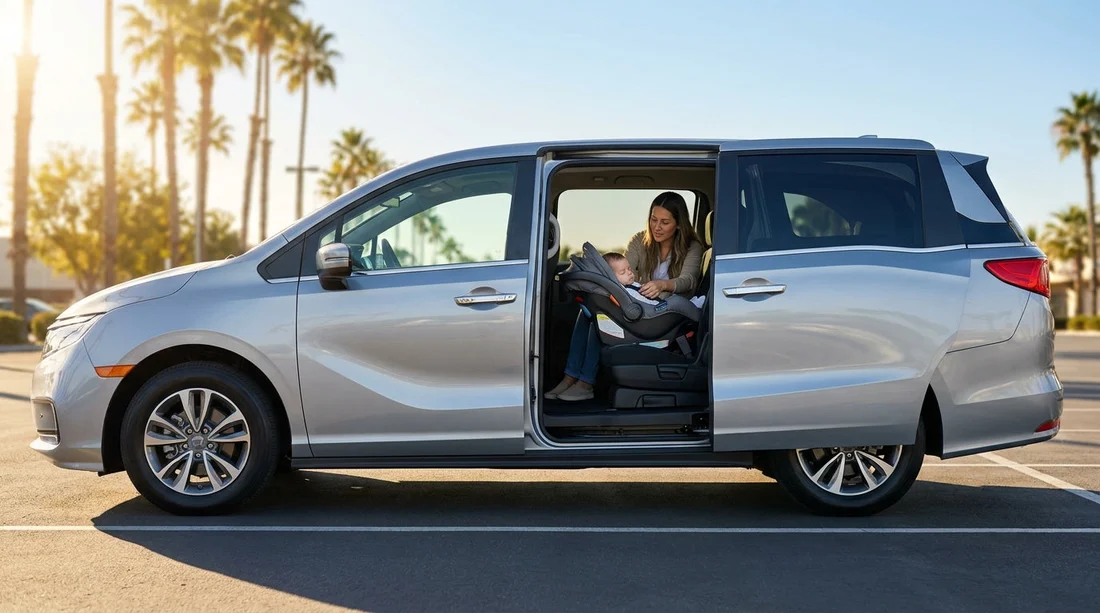
Quick Summary:
- In California, keep under-2s rear-facing unless they exceed seat limits.
- Book an infant carrier or convertible seat matched to weight and height.
- Confirm installation method, LATCH or seat belt, fits your rental car.
- At pickup, check expiry date, labels, harness fit, and recline angle.
Travelling with a baby or toddler in California often means relying on car hire, whether you are landing in Los Angeles, touring the coast, or visiting family inland. The confusing part is not just choosing a child seat type, it is making sure the seat you reserve is appropriate for a child under 2, and that it will install correctly in a US rental vehicle.
California law generally requires children under 2 to ride in a rear-facing child restraint. There are limited exceptions when a child exceeds the rear-facing height or weight limit set by the seat manufacturer, or if the child is in a rear-facing seat in the back seat and all rear seats are already occupied by other children under 7. In practice, for most families with one child under 2, your safest and simplest choice is a rear-facing seat that fits your child’s measurements.
Rear-facing vs forward-facing for under-2s
Rear-facing seats support the head, neck, and spine during a crash by distributing forces across the seat shell. This is why paediatric safety guidance strongly favours rear-facing for as long as your child fits the seat’s rear-facing limits. For a child under 2 in California, rear-facing is also the compliance default, so it reduces legal and safety guesswork.
Forward-facing seats use a harness to restrain the torso and rely more on the child’s neck strength. They can be appropriate for older toddlers who have outgrown rear-facing limits, but for most under-2s they are not the first choice. If your child is close to 2 and unusually tall or heavy, you may need to compare the rear-facing limits carefully before assuming forward-facing is allowed or suitable.
When arranging California car hire, the key decision is not simply rear-facing versus forward-facing, it is whether the specific seat you will receive supports rear-facing for your child’s current weight and height.
Which seat type should you reserve for a child under 2?
Rental companies usually categorise child seats in broad groups. Names vary, but these are the common options and what they typically mean.
Infant-only seat (infant carrier)
This is a dedicated rear-facing seat with a carry handle and a separate base, designed for babies and smaller toddlers. It usually fits newborns and younger infants up to a stated weight or height. If your child is still within infant-only limits, this can be the easiest option to carry through an airport and to achieve a good recline for smaller babies.
However, many children outgrow infant-only seats well before age 2, often due to height. If you have a tall child, verify the height limit before selecting this category.
Convertible seat (rear-facing and forward-facing)
A convertible seat is often the most practical option for under-2s on US trips because it supports rear-facing for higher weights and heights than infant-only seats. For many toddlers, this is the only way to stay rear-facing while still fitting properly.
When you reserve a convertible seat for car hire, confirm that you will receive a model that allows rear-facing for your child’s measurements. Some convertibles have generous rear-facing limits, others are lower. Because rental fleets can vary, you should be ready to check the sticker on the seat at pickup.
What to check when reserving child seats for US car hire
Child seats are often requested during the reservation process, but the details that matter most are your child’s current weight and height, and the expected seat category. Before you travel, note your child’s measurements in both metric and imperial, because US labels use pounds and inches.
If your trip starts at a major airport, the car class availability can differ by location. For instance, families picking up near Los Angeles may compare options around car hire at LAX, while Northern California itineraries may begin with car hire at San Francisco SFO. These pickup points often have high turnover, so allow extra time to inspect the seat before driving away.
Rear-facing installation checks, what matters at the counter
Once you receive the seat, look for the manufacturer label and the instruction stickers. You are checking four essentials.
1) Expiry date and condition. Car seats have an expiry date, often six to ten years after manufacture. Confirm the seat is not expired, has no cracks, and the harness webbing is not frayed or twisted.
2) Rear-facing limits. Verify the rear-facing weight and height limits, plus any rules about head position, such as “top of head must be at least one inch below the top of the shell”. If your child is close to the limit, do not guess.
3) Recline angle. For rear-facing seats, correct recline helps protect the airway, especially for babies. Many seats have an angle indicator. If you cannot achieve the allowed recline in your rental car, you may need to try a different seating position or request another seat model.
4) Tight installation. Whether you use LATCH (lower anchors) or the vehicle seat belt, the seat should not move more than about one inch side-to-side or front-to-back at the belt path. This is a quick, practical test you can do in the car park before you leave.
LATCH vs seat belt in US rentals
Most modern US vehicles have LATCH anchors in the rear seats, but not every seating position has anchors, and some vehicles restrict which positions you can use. The anchors also have weight limits. Because your child plus car seat can exceed the LATCH limit as toddlers grow, you may eventually need to use a seat belt installation even if anchors are available.
If you are planning a larger vehicle for family luggage, you might review SUV rental at San Francisco SFO options, since extra cabin space can make rear-facing installation easier and more comfortable on longer drives.
Where should the seat go in the car?
The safest position is generally the back seat. Many child safety experts prefer the centre rear seat when it has an appropriate belt and allows a secure installation, because it is furthest from side impacts. However, the best position is ultimately the one where you can install the seat tightly and correctly every time. If the centre seat does not allow a stable installation, use an outboard rear seat instead.
Whatever you decide, do not drive away hoping it will be “good enough”. Correct orientation, correct limits, and tight installation are the baseline for safe car hire travel with an under-2 in California.
If you are flying into Southern California and want to confirm pickup details in advance, you can compare Enterprise car hire at Santa Ana SNA options, and decide whether collecting away from LAX better suits your plans.
For families starting in the Central Valley, it can also help to check car hire at Sacramento SMF for vehicle size availability before you commit to a rear-facing seat category.
FAQ
Q: Is rear-facing legally required for a child under 2 in California? A: Generally yes. California requires children under 2 to ride rear-facing, unless they exceed the rear-facing height or weight limits of their seat, or specific rear-seat occupancy exceptions apply.
Q: Should I reserve an infant seat or a convertible seat for a 20-month-old? A: Often a convertible seat is the better match because many 20-month-olds are close to outgrowing infant-only height limits. Choose the option that supports rear-facing within your child’s current weight and height.
Q: What should I check on the rental car seat before leaving the lot? A: Confirm the seat is not expired or damaged, verify rear-facing limits, set the correct recline angle, and ensure it is tightly installed with minimal movement at the belt path.
Q: Can I use LATCH in a US rental car? A: Usually yes, but not all seating positions have anchors and there are weight limits. If needed, a secure seat belt installation is also acceptable and commonly used.
Q: Is the middle rear seat always the best place for the child seat? A: It can be, if you can achieve a tight, correct installation there. If the centre position does not install securely, choose a rear outboard seat where the fit is stable and compliant.

























































































