


Quick Summary:
- Pay-later car hire is usually charged at pick-up, not online.
- Expect a refundable authorisation hold on your credit card first.
- Bring a valid credit card in the main driver’s name.
- Prevent delays by matching names, limits, documents, and arrival times.
Pay-later car hire is popular in Florida because it lets you secure a vehicle without paying the rental cost upfront. The key detail is timing, when you are actually charged, and what your card is used for before the final charge goes through. If you know what to expect, you can avoid long counters, declined transactions, and last-minute changes to your plans.
In most pay-later cases, Hola does not take the main rental charge at the time you make the booking. Instead, the rental counter processes payment when you collect the vehicle in Florida. What you might see earlier is a card verification or a temporary pre-authorisation at pick-up, which can look like a charge but is typically only a hold.
If you are collecting at a busy hub such as Miami Airport (MIA) or Orlando Airport (MCO), getting the payment step right can make the difference between a smooth handover and a lengthy delay, especially during weekends and holiday periods.
So, when will Hola charge your credit card for pay-later?
With a pay-later car hire booking, the usual timeline looks like this:
1) At online booking: Typically no rental charge is taken for pay-later. You may receive an email confirmation and the supplier will expect you to pay at the counter. If your booking includes any pre-paid items, those would be clearly shown at checkout, but the core idea of pay-later is that the rental cost is settled when you arrive.
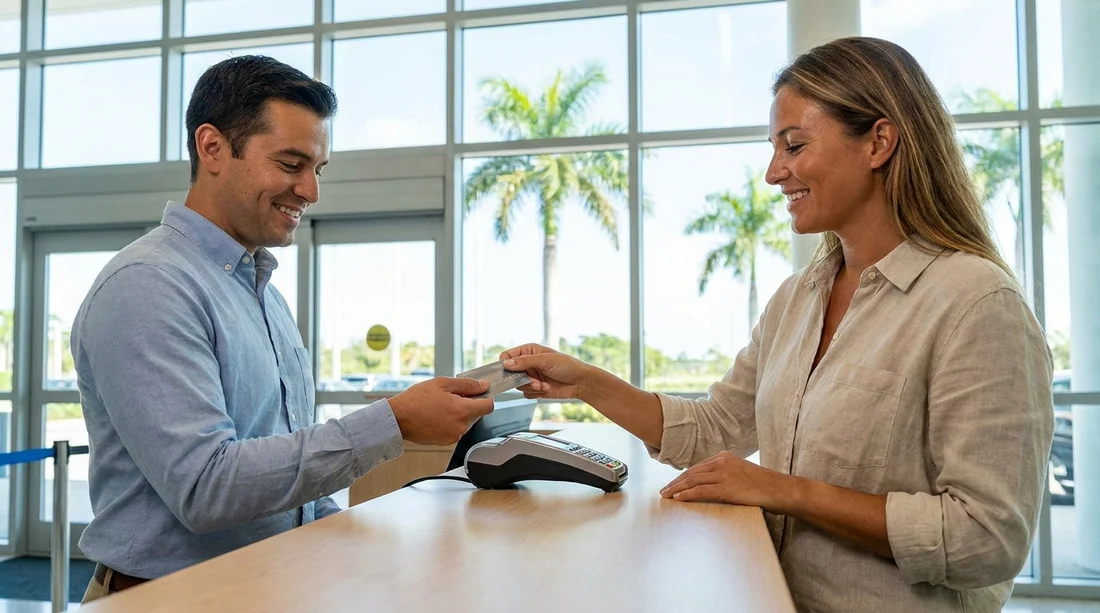
2) At pick-up in Florida: This is the point where the credit card is normally used in two ways. First, the desk may place a pre-authorisation hold for the security deposit, and then they will charge the rental cost (plus any taxes, fees, and chosen add-ons) either immediately or after the hold is confirmed. In practice, many travellers see the hold appear first, then the purchase transaction posts shortly after.
3) During the rental: Additional charges can be added if you opt in to extras at the counter or later, such as an additional driver, toll products, or upgraded cover. These may be charged immediately or reflected in the final bill.
4) At return: If everything is as agreed, the final invoice is completed and any unused portion of the deposit hold is released. If there are post-rental items, such as tolls processed later, those may appear after return depending on the toll programme used in your area.
Why a credit card is required at pick-up
A credit card is mainly required because the supplier needs a reliable way to cover the deposit and any potential post-rental costs. In Florida, that can include tolls, traffic-related fees, fuel differences, late return time, or damage not covered by your chosen protection options.
The deposit is not the same as the rental price. It is a temporary authorisation that reduces your available credit until it is released. Even if you have enough money in your bank account, a debit card can behave differently and may be accepted only under stricter conditions, or not at all, depending on location, supplier, and vehicle type.
This matters in high-demand areas where vehicle categories are popular and deposits can be higher. For example, if you are planning a family trip and need more space, consider how the deposit may differ for larger vehicles like those listed on van rental in Downtown Miami pages, where capacity and insurance preferences can influence the required hold.
Understanding the pre-authorisation hold, what you will see on your statement
At pick-up, most suppliers run a pre-authorisation to confirm the card is valid and to set aside the deposit amount. On your banking app, this can appear as “pending”, “authorised”, or “reserved funds”. It is not a completed purchase, even though it reduces your available limit.
Release time is controlled by your bank, not only the rental desk. After return, the supplier sends the release, but some banks take several working days to reflect it. This is a common reason travellers think they were charged twice, when one entry is a pending hold and the other is the actual rental charge.
Holds can vary by vehicle and cover level. If you select a larger vehicle or a premium category, the deposit can increase. If you change category at the counter, the deposit may be recalculated. Where you collect can also matter, for instance a city location such as Doral (DRL) may have different operational patterns than an airport desk.
What can cause payment delays at the counter
Most payment problems are preventable. The desk agent needs to match your booking details with your documents and confirm the card can cover both the rental and deposit. Delays commonly happen when any of the following applies:
Name mismatch: The credit card should be in the main driver’s name. If your booking is under one person and the card belongs to another, the supplier may refuse it or require a driver change, which can take time and may affect pricing.
Insufficient available credit: Remember you need headroom for the deposit plus the estimated rental cost. If your limit is tight, a pending hotel deposit or another travel hold can push you over the edge and lead to declines.
Card type restrictions: Some suppliers restrict prepaid cards and certain debit cards. Even with a debit card, you might be asked for extra ID, return travel proof, or additional deposits. If you want fewer surprises, a standard credit card is usually the most straightforward option for car hire in Florida.
Declines due to travel security: Banks can block a transaction that looks unusual, especially an overseas card used for a large authorisation in the US. It helps to notify your bank you are travelling, and ensure your phone can receive verification prompts if your bank uses them.
Arriving late: If you arrive outside your expected window, availability can change. The desk may need to rework the booking, and that can alter the estimated cost and the deposit amount, which then affects the authorisation.
Does pay-later mean the price can change?
Pay-later generally means you are paying at pick-up, not that the agreed rate is guaranteed to fluctuate. However, the final amount can change if you modify the booking, upgrade the vehicle, extend the rental, add drivers, add equipment, or choose optional products at the counter. Taxes and mandatory local fees are usually included in the quoted total, but any counter-added items can change what is charged.
If you are comparing options for specific suppliers, the deposit and payment process can still be similar even when the desk brand differs. For example, if you are collecting around central Florida, you may be looking at options such as Hertz at Orlando Airport, where the same general pay-at-counter logic applies, but the exact deposit and card rules can vary.
FAQ
When exactly will my card be charged on a pay-later booking? In most cases, you will be charged at pick-up in Florida. You may first see a pre-authorisation hold for the deposit, then the rental charge posts as a separate transaction.
Will Hola take any money before I travel? Pay-later usually means no rental charge is taken at the time of booking. Your confirmation should show whether any items are pre-paid, but the main payment is normally handled at the counter.
Is the deposit a real charge, and when is it released? The deposit is typically a temporary authorisation, not a completed charge. After you return the car, the supplier releases it, and your bank may take several working days to reflect the release.
Can I use a debit card instead of a credit card at pick-up? Sometimes, but debit card acceptance depends on the supplier, location, and vehicle type. A credit card in the main driver’s name is the most reliable way to avoid delays.
What is the most common reason pay-later payment fails at the desk? The most common issues are insufficient available credit for the deposit, or a name mismatch between the main driver and the payment card.

























































































