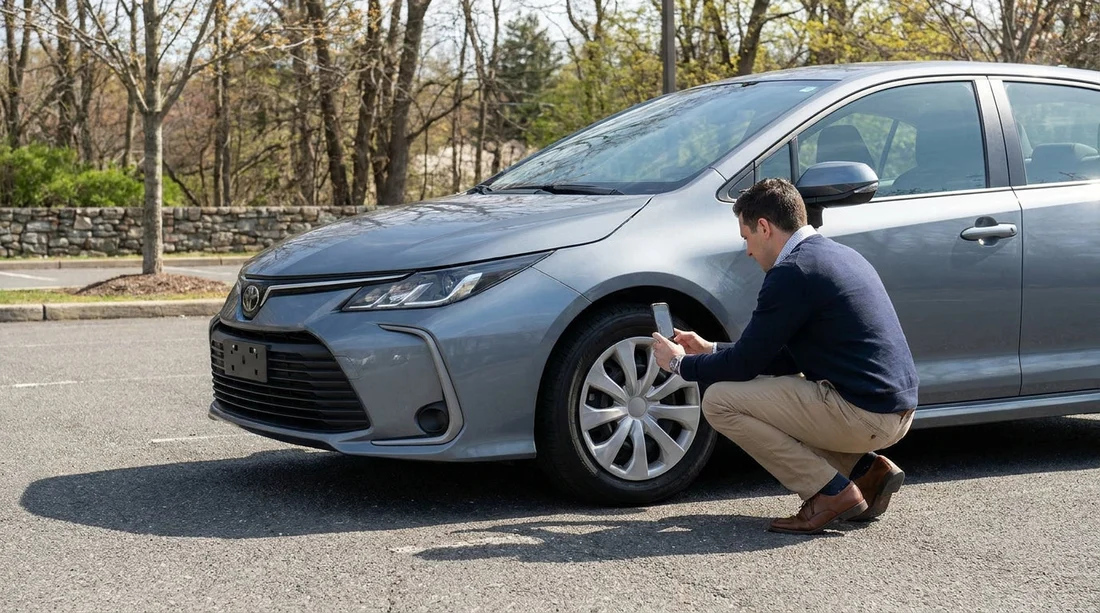
Quick Summary:
- Photograph every tyre and wheel clearly, including tread and valve area.
- Record sidewall cuts, bulges, cracks, and any scuffs before driving.
- Check tread wear is even, and note any low sections.
- Log rim scuffs, bent edges, missing caps, and any warning lights.
Before you roll out of the lot, tyres and wheels are among the easiest areas for misunderstandings on a damage report. For car hire in Pennsylvania, a quick, methodical walkaround can help you spot safety issues and document pre-existing wear that might otherwise be blamed on you. The goal is not to become a mechanic, it is to record visible condition clearly enough that there is no debate later.
This checklist focuses on what to look for, how to describe it on the report, and what photos to take. It applies whether you are collecting at an airport counter or a city location, including pick-ups linked from pages like Philadelphia airport car rental or Philadelphia car rental.
Start with a slow, four-corner tyre and wheel walkaround
Walk clockwise around the vehicle, inspecting one wheel at a time, front left to rear left to rear right to front right. Don’t rush. If the vehicle is an SUV or minivan, tyres can be larger and wheel edges easier to kerb without noticing, so it is worth being especially thorough. If you are comparing vehicle types, you can also browse category pages such as SUV rental in Philadelphia or minivan hire in Philadelphia.
Use your phone torch if lighting is poor. If the car is parked where the wheels are turned, ask to straighten the steering or gently move the car a few feet, so you can see the full tread and both sidewalls. If you are not allowed to move it, photograph what you can and write “limited access to inner sidewall at pick-up” on the report.
Tyre tread: document depth, wear pattern, and damage
Tread condition is both a safety concern and a common point of dispute. You do not need specialist tools, but you do need clear photos and a simple description.
What to check: Look for noticeably low tread, bald patches, or tyres that look close to the wear bars. Check for uneven wear, such as more wear on one shoulder, feathering, or cupping. Those patterns can suggest alignment or suspension issues that you did not cause.
What to record on the damage report: Note the tyre position and the issue, for example “Front right tyre, outer shoulder wear heavier than inner” or “Rear left tyre, tread low near wear markers”. If one tyre looks newer or more worn than the others, record that too, it helps show the set is mismatched.
Sidewalls: cuts, bulges, cracking, and curb rash
Sidewall damage is important because it can be dangerous and it is easy for a rental company to attribute it to an impact. Pennsylvania roads can include potholes, broken edges and construction zones, so you want the starting condition written down.
What to check: Look for bulges or bubbles (a sign of internal damage), cuts or gashes, deep scuffs, cracking or dry rot, and any area where cords look exposed. Also inspect the inner sidewall as much as possible, because that is where rubbing and pothole impacts sometimes show up.
What to record: Use clear, neutral language: “Rear right tyre, sidewall scuffed 2 inches, no cord visible” or “Front left tyre, small crack network near rim edge”. If there is a bulge, do not accept the car until it is resolved, write it on the report and ask for another vehicle.
Tyre pressure and dashboard warnings: note what you see
Many cars show tyre pressure in the instrument cluster. If a TPMS warning light is on at pick-up, document it immediately. A warning might simply mean the tyres need air, but it can also indicate a puncture or sensor fault.
What to check: Look for a TPMS light on start-up that stays on. If the car provides individual pressures, screenshot the display. Also scan the tyres for obvious under-inflation, such as a flattened bottom edge or a tyre that looks lower than the rest.
What to record: “TPMS warning illuminated at pick-up” and, if available, “display shows FL 28 psi, FR 35 psi, RL 34 psi, RR 34 psi”. Do not guess numbers. If you cannot access the tyre pressure display, just record the warning and take a photo of the dashboard.
Wheel rims, hubcaps, and alloys: mark scuffs, bends, and missing parts
Wheel damage often happens from kerbs. It is also one of the most frequently charged items because scuffs can be subtle and easy to miss during return inspections.
What to check: Inspect the full rim edge for gouges, scuffs, and chipped paint. Look for bends or flat spots on the rim lip. Check that the hubcap is present and seated properly if the car has hubcaps. Make sure the centre cap is not missing on alloy wheels.
What to record: Be specific about position and size: “Front left rim, 3 inch kerb rash at 7 o’clock” or “Rear left hubcap scratched, still secure”. If a rim looks bent, do not accept the vehicle, ask for a swap and ensure the report notes “rim appears bent” with a photo.
Spare tyre, jack, and tyre inflator kit: confirm what is included
Not every rental vehicle has a full-size spare, some have a space-saver spare or an inflator kit. You are not typically responsible for prior missing equipment, but it is far better to document it before you need it.
What to check: Open the boot and locate the spare or kit. If there is a spare, confirm it is present and not obviously flat. If there is an inflator kit, check that the sealant bottle and hose are there and appear unopened.
Pennsylvania-specific driving realities to keep in mind
Potholes, frost heaves, and road works are common in many parts of Pennsylvania, especially after winter. Those conditions can cause sidewall bulges or rim bends quickly. If you have documented the starting condition, you are in a better position if a tyre later fails or if a return inspection focuses heavily on wheels.
If you are collecting in the Philadelphia area and comparing suppliers, Hola Car Rentals also provides information pages for major brands, including Enterprise car rental in Philadelphia and Avis car rental in Philadelphia. Regardless of provider, the same tyre documentation habits apply.
When to refuse the car or request a different vehicle
Some issues are not just “note it and go”, they are safety-related.
Do not drive off if you see a sidewall bulge, exposed cords, a deep cut, a visibly bent rim, or a tyre that looks severely under-inflated with a warning light. Ask for a different vehicle and ensure the defect is recorded first, so it is not assigned to you.
FAQ
What tyre condition should I always photograph before starting my car hire? Photograph each tyre’s tread, both visible sidewalls, and the full rim face. Add close-ups of any scuffs, cuts, bulges, or uneven wear.
Is a small rim scuff worth writing on the damage report? Yes. Even light kerb rash can lead to charges if it is noticed at return. Note the wheel position and take a clear close-up with a wider orientation photo.
What if the tyre pressure warning light is on when I collect the car? Photograph the dashboard warning and record it on the report before leaving. If the car shows individual pressures, take a screenshot of those readings too.
How can I describe tyre wear without measuring tread depth? Record what you can see: “near wear bars”, “outer shoulder worn”, or “uneven wear across tread”. Pair the note with a sharp tread photo taken straight on.
Should I check the spare tyre or inflator kit on a rental? Yes. Confirm whether a spare or inflator kit is present and photograph it. If anything is missing or looks unusable, note it on the report before you drive off.