


Quick Summary:
- Choose compact for easiest kerbside parking and tight multi-storey turns.
- Pick midsize if you need bigger boot space without oversized width.
- Avoid full-size SUVs if you plan frequent downtown garages and meters.
- Check boot litres and rear-seat fold, not just passenger count.
Los Angeles is a city of short hops and sudden bottlenecks, where the right car size can make parking, lane changes, and garage ramps far less stressful. For most travellers, the best choice for car hire is not the biggest vehicle you can afford, but the smallest class that still fits your people and luggage. That balance depends on three practical factors: exterior dimensions, boot space, and the type of parking you will use most.
LA’s driving pattern is also mixed. You might do a freeway run from LAX to Hollywood, then spend the evening circling for a kerbside space in Koreatown, then squeeze into a multi-storey garage near Santa Monica. Each situation punishes excess length and width in different ways, especially when you add large turning circles and limited visibility.
If you are collecting at the airport, it helps to compare car classes before you arrive, because “compact” and “midsize” labels can cover several models. The vehicle you receive will vary, but class-level dimensions stay similar. For pick-up options and class availability around the terminals, see car rental at Los Angeles Airport (LAX) and Los Angeles LAX car rental.
LA parking realities that affect car size
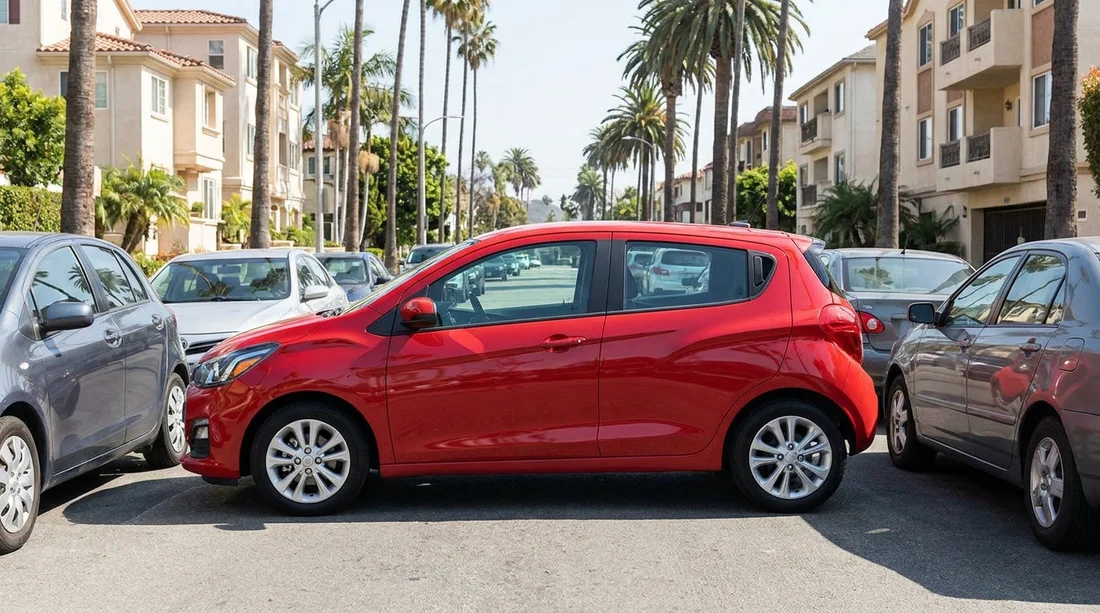
In Los Angeles, you will typically encounter three kinds of parking: kerbside metered spaces, surface lots, and multi-storey garages. Kerbside spaces can be short, uneven, and positioned near driveways, loading zones, or red kerbs. Length matters here, because a long rear overhang can leave you hanging into traffic even if you “fit”.
Multi-storey garages add different constraints. Tight spiral ramps and sharp turns penalise wide vehicles and long wheelbases. You may also see narrow lane markings and close-set concrete pillars, which makes door opening and low-speed manoeuvring more difficult in full-size cars and larger SUVs.
Surface lots are usually easiest, but busy beaches, popular restaurants, and event venues can turn them into a slow crawl where smaller cars slip through gaps faster. The takeaway is simple: if you expect to park in garages or on the street daily, prioritise compact dimensions first, then comfort.
Car class comparison: dimensions, boot space, and best use
Below are realistic, class-level ranges you can use when choosing car hire for city driving in Los Angeles. Exact measurements vary by model, but the ranges are consistent enough for planning.
Mini and economy: easiest to place, limited luggage
Typical size: about 3.6 to 4.2 metres long, 1.65 to 1.78 metres wide. Boot space: roughly 200 to 350 litres, sometimes less if you have four adults.
This class is the simplest for parallel parking and the least intimidating in tight garages. If you are staying mostly in central neighbourhoods and travelling light, it is hard to beat. The trade-off is boot height and depth, which can struggle with large suitcases or bulky pushchairs. On freeways, economy cars are fine, but you may notice more cabin noise and less relaxed overtaking.
Best for: solo travellers, couples, short trips, and frequent street parking.
Compact: the LA sweet spot for most travellers
Typical size: around 4.2 to 4.5 metres long, 1.75 to 1.82 metres wide. Boot space:
Compact cars often deliver the best blend for Los Angeles. They remain easy to position in kerbside spaces, yet they have enough cabin and boot room for two adults plus luggage, or three adults with careful packing. They also tend to have a tighter turning circle than midsize saloons, which helps in older garages and crowded lots.
Best for:
Midsize: better boot and comfort, slightly harder to park
Typical size:Boot space:
Midsize works well if you want a calmer freeway ride, more rear legroom, or a larger boot for several suitcases. The cost is manoeuvrability. Extra length makes parallel parking more demanding, and larger turning circles become noticeable in compact garages. If your LA plan includes day trips plus hotel parking or large lots, midsize is a comfortable upgrade without going fully large.
Best for:
Full-size saloons and large SUVs: comfort first, parking second
Typical size:Boot space:
These vehicles feel stable and spacious, but they are not the easiest match for dense LA neighbourhoods. Width is the common complaint, especially when you are threading through tight garage lanes or opening doors next to another car. Large SUVs also have higher loading lips, which can make heavy suitcases more awkward than expected.
Best for:
Minivans and people carriers: space for groups, plan your parking
Typical size:Boot space:
For families and groups, a minivan can be the most practical option, not because it is easy to park, but because it keeps everyone and their bags in one vehicle. Sliding doors can be helpful in tight bays, but the vehicle footprint still demands larger spaces and calmer manoeuvres. If you will be in downtown garages daily, you will work harder than you would in a compact.
If your group travel is centred around airport pick-ups and day trips, it can still be a sensible car hire choice. For options in this class, compare van hire in California (LAX) and minivan hire at Santa Ana (SNA).
How to choose the right size in three steps
1) Start with parking, not passengers. If you will park on the street or in multi-storey garages most days, choose economy, compact, or at most midsize. If your accommodation includes a large lot or valet service, you can move up a class with fewer compromises.
2) Match boot space to your real luggage. A common mistake is selecting by seat count alone. Two large suitcases plus two carry-ons usually fits comfortably in a compact hatchback or midsize saloon, but four large suitcases can push you into midsize or a larger boot design. If you are bringing camera gear, strollers, or beach items, prioritise a deeper boot or split-fold rear seats.
3) Consider your typical route. Freeways reward stability and comfort, while neighbourhood errands reward compact size. If your plan is mostly city attractions with short drives and lots of stops, a compact car hire often feels quicker overall, even if it is not the most powerful.
Practical LA tips that make any car easier to live with
Use parking assist features when available. Rear cameras and sensors reduce stress in tight garages. If two classes are similar in price, choosing the one more likely to include parking sensors can matter as much as a few inches of length.
Know your vehicle’s width. Drivers often underestimate width, not length, when scraping mirrors or hesitating on ramps. Before your first garage, glance at the spec sheet or estimate by how much space you have between lane lines.
Plan for loading, not just parking. Some streets have limited stopping zones, so a smaller car that loads quickly can be more convenient than a big boot that forces you to shuffle bags in traffic.
Think about where you will store bags. If you will leave luggage in the car between stops, a boot with a covered cargo area is more discreet. Avoid leaving items visible on seats in any vehicle class.
Recommended car sizes for common LA itineraries
Downtown, Hollywood, Koreatown, and frequent restaurants: compact is usually ideal, with economy workable if you pack light. You will appreciate the smaller turning circle and easier parallel parking.
Beach days, Santa Monica, Malibu, and lots of paid lots: compact or midsize works well. Paid lots are easier than street parking, but spaces can still be narrow at peak times.
Family theme parks and day trips: midsize for a small family with luggage, or a minivan for larger groups. Focus on boot volume and ease of loading.
Road trip beyond LA: midsize is a comfortable baseline. Compact also works if you will still spend several days in the city and want easier parking.
FAQ
What is the best car class for city driving and parking in Los Angeles? For most travellers, a compact class offers the best balance of easy parking, decent boot space, and comfortable freeway driving.
Is an SUV a bad idea for Los Angeles city parking? Not always, but larger SUVs are wider and often harder in tight garages and kerbside spaces. If you want SUV seating height, consider a smaller crossover class.
How much boot space do I need for two people in LA? Two adults with two medium suitcases usually fit in a compact boot. If you have two large suitcases plus extras, a midsize saloon boot is often easier.
Will I get the exact model I chose when arranging car hire? Typically you select a vehicle class, not a specific model. Use class ranges for length, width, and boot litres to judge fit.
Does picking up at LAX affect what size I should choose? It can, because airport itineraries often mix freeways with dense neighbourhood parking. If you are uncertain, compact is a safe default for LA unless you have group luggage needs.

























































































