Quick Summary:
- Inspect windscreen edges and driver sightline for chips and spreading cracks.
- Photograph damage with timestamps, plus the plate, mileage, and location.
- Test wiper sweep, washer spray, and listen for chatter or skipping.
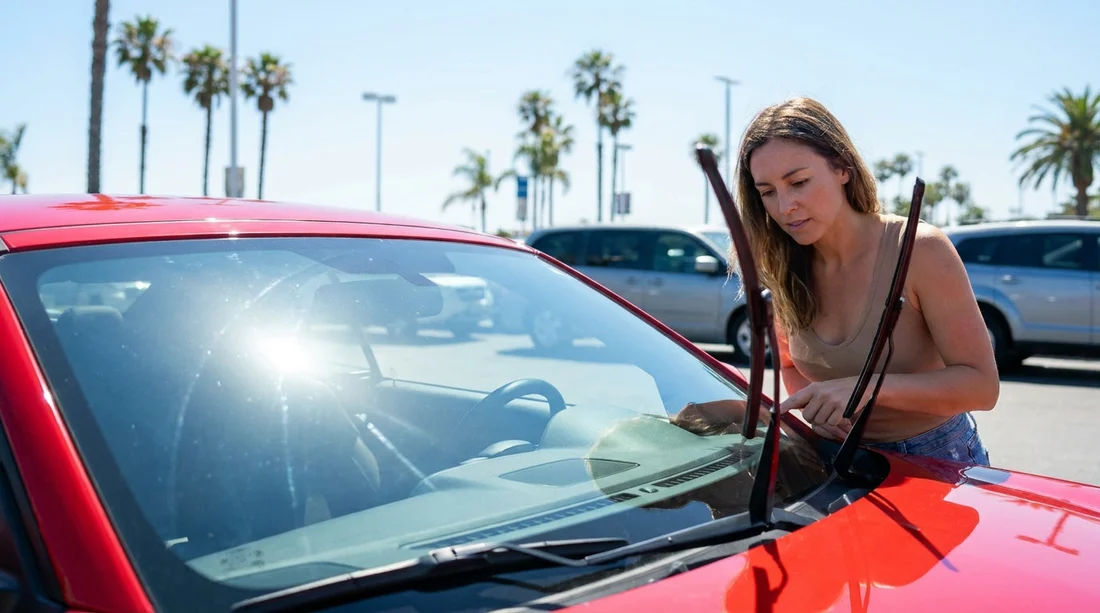
- Get existing defects noted on paperwork before leaving the car park.
At pick-up, the windscreen and wipers are easy to overlook because you are focused on paperwork, fuel policy, and getting on the road. In California, where you might quickly hit bright sun, coastal fog, or gritty freeway spray, small windscreen defects and worn blades can become a safety issue, and potentially a returns dispute. A counter-side checklist helps you spot problems early, document them properly, and get them recorded while it is still simple to do so.
This guide is written for car hire pick-ups across California, including airport locations where lighting can be harsh and the car park can be busy. If you are collecting around Los Angeles, for example via car hire California LAX or Hertz car rental California LAX, it is worth slowing down for a three minute check before you merge into fast traffic.
1) Windscreen walkaround: where to look first
Start outside the vehicle. Stand a couple of metres in front and look across the glass at a shallow angle. This makes chips and fine cracks catch the light. Then move to the driver side corner and do the same. Prioritise these zones:
Driver’s line of sight: Any chip or crack roughly in the area swept by the driver’s wiper and directly in front of your eyes is the highest priority. Even minor damage can refract sunlight at sunrise or sunset and become distracting.
Windscreen edges and corners: Damage near the perimeter can spread faster because the glass is under more stress. Pay close attention to the bottom edge where grit collects and where wiper arms can occasionally strike if misaligned.
Area around the rear-view mirror and sensors: Many cars have camera housings and driver assistance sensors near the top centre of the windscreen. Look for cracks, moisture, or cloudy areas that might affect these systems.
Previous repairs: Look for circular “bullseye” repair marks. A repair is not necessarily a problem, but you want it documented so you are not blamed for an old fix.
2) Chips vs cracks: what to document and why
In practical terms, document anything you can see without trying to measure it precisely. You are not diagnosing glass, you are establishing condition at handover.
Chips: Note their location using simple references like “lower passenger side” or “near top centre by mirror”. Chips can be small but still count as damage, especially if they sit in the driver’s swept area.
Cracks: Any line, even hairline, deserves a photo. Cracks can spread with temperature changes, rough pavement, or closing doors hard. In California, a car can go from a cool coastal morning to a hot inland afternoon quickly, which can stress existing damage.
Pitting and sandblasting: Some windscreens have widespread tiny pits that make nighttime headlights flare. This can be hard to photograph, but you can still note “noticeable pitting causing glare” and take a short video angled to the light.
3) How to photograph windscreen condition so it stands up later
Photos are most helpful when they are easy to interpret. Use this approach:
Take wide, then close: Start with a full front view showing the whole windscreen and the number plate. Then take medium shots showing the damage area relative to a corner or the mirror. Finally, take close-ups that show the chip or crack clearly.
Use focus and contrast: Tap the screen to focus on the damage. If your phone struggles, move slightly so reflections help reveal the defect. Avoid heavy zoom, it can blur detail.
Capture context: Take a photo of the mileage and fuel gauge on the dash as part of your general pick-up set. While not windscreen-specific, it helps tie the photo set to that exact vehicle and moment.
Include pick-up location cues: A shot that includes the car and a recognisable part of the car park can help show you documented it at pick-up, not later on the road.
If you are arriving through Northern California hubs such as car hire Sacramento SMF or car rental airport Sacramento SMF, you may be picking up in covered parking. Step into brighter light if possible, because chips can disappear under flat lighting.
4) Wiper blades: check condition before you even switch them on
Before testing, do a visual check with the wipers off.
Rubber edges: Look for splits, missing chunks, or sections that have lifted away from the blade. A blade can look fine from a distance but be torn at one end.
Blade alignment: Blades should sit evenly along the glass. If one end is not contacting the windscreen, it may skip or leave an unwiped arc.
Wiper arms: Ensure arms are seated and not bent. A bent arm changes pressure and causes chatter.
Windscreen contamination: Sap, oily film, or gritty dust can cause streaking that feels like a blade problem. If the windscreen is dirty, note it and consider cleaning before judging blade performance.
5) Functional wiper test: what to listen and look for
Once you have done the visual check, do a quick functional test while still parked.
Washer spray coverage: Activate washers and see if both jets spray and hit the main viewing area. Weak spray can be a blocked nozzle or low fluid.
Low and high speeds: Run both speeds. Watch for missed bands, streaks, or areas where the blade lifts.
Chatter or judder: A rapid vibration sound or stuttering motion indicates poor contact, hard rubber, or contamination. It reduces visibility during sudden rain or spray from lorries.
Return position: Wipers should park neatly at the base. If they stop mid-screen, that is a fault worth recording.
In dry weather you might hesitate to run wipers on a dry screen. Use the washer fluid so you do not drag the blade across dust. A single quick test can reveal a worn blade that would otherwise surprise you later in fog or coastal mist.
6) Getting issues recorded at the counter, without friction
If you spot chips, cracks, or wiper issues, aim to have them recorded immediately. Be factual and specific. Mention location and type of defect, and ask for the condition report to be updated or for written acknowledgement. If staff offer to reassign a different vehicle, weigh that against your schedule, sometimes swapping cars is faster than debating whether a chip was “pre-existing”.
Keep your own records even if they say it is “already in the system”. Systems vary, and a clear photo set plus written notes reduces ambiguity later.
7) If you discover a problem after leaving the lot
Sometimes you will notice a crack only when sunlight hits at the right angle, or you discover wipers smear once you hit freeway spray. If that happens, stop somewhere safe, take photos immediately, and contact the rental provider as soon as practical. The key is timing and documentation. A message sent shortly after pick-up, paired with photos, supports that the issue was not caused later in your trip.
8) A simple pre-drive checklist you can repeat every time
Before you drive off, pause and run through: windscreen edges, driver sightline, sensor area, wiper rubber condition, washer spray, and a quick wipe test. This routine is quick, and it is especially worthwhile when collecting in busy airport lots where cars turn around fast and minor defects can be missed.
FAQ
Should I accept a rental car if there is a small windscreen chip? You can, but photograph it clearly and have it noted on the condition report before leaving. Chips near the driver’s line of sight or near an edge deserve extra caution.
What windscreen damage is hardest to spot at pick-up? Fine cracks at the edges, light pitting that causes glare, and chips hidden by reflections. Checking from multiple angles in brighter light helps.
How can I tell if streaking is from dirty glass or worn wipers? Use washer fluid and wipe once. If streaks repeat in the same bands, the blades or arm pressure are likely the issue rather than surface dirt.
Is it worth testing the washers even in dry California weather? Yes. Washer jets and fluid are essential for clearing dust and freeway grime. A blocked jet is common and easy to miss until visibility drops.
What evidence is most useful if there is a dispute later? A set of time-stamped wide and close photos showing the windscreen, the damage location, the number plate, and a brief note that the issue was reported at pick-up.