


Quick Summary:
- Ask the rental firm’s pet policy, and confirm any cleaning fee triggers.
- Use a secured crate or harness, never let pets roam freely.
- Protect seats with covers, towels, and a boot liner to reduce hair.
- Inspect and document interiors at pick-up, and clean before return.
Travelling with a pet can be one of the best parts of a California road trip, but it adds a few extra rules and practical checks when you are using car hire. In most cases, rental companies do allow pets, but they expect the vehicle to be returned in a clean, undamaged condition. That sounds simple until you consider shedding, muddy paws, drool, claws, and the occasional accident, all of which can result in cleaning charges or downtime fees if the car needs extra preparation for the next customer.
This guide sets out what to expect when travelling with pets in a rental car in California, how to reduce the risk of fees, and what to confirm before pick-up so there are no surprises when you return the vehicle.
Are pets allowed in car hire vehicles in California?
There is no single California law that bans pets in rental cars. Instead, the “rules” are mainly contractual, meaning they come from the rental agreement and the supplier’s conditions. Many suppliers allow pets, but they may restrict pets in specific vehicle categories, or they may specify that you are responsible for any additional cleaning or damage.
If you are collecting from a busy airport location, it can be helpful to check the practicalities in advance, including vehicle type and interior materials. For example, if you are flying into the Bay Area and comparing options for car hire at San Francisco SFO, you may want to prioritise a vehicle with easy-clean surfaces and good boot space for a crate. Similar thinking applies if you are picking up further south and reviewing car hire in San Diego, where beach sand plus pet hair can be a difficult combination if you do not protect the upholstery.
Common pet policy expectations you should assume
Even when pets are permitted, most suppliers expect a few basics. First, pets should not be left unattended in the vehicle. Heat can build up quickly in California, and leaving an animal in a parked car can create safety, welfare, and liability issues. Second, the driver remains responsible for safe vehicle operation, which means your pet should not obstruct your view, interfere with steering, or distract you.
Third, any sign of damage from chewing, scratching, or soiling is typically chargeable. Finally, excessive hair, odours, or stains can be treated as a cleaning issue, even if there is no “damage” as such. These expectations are not unique to one city, whether you are collecting from San Jose SJC or elsewhere in the state, so it is best to plan as if cleaning standards will be strict.
Cleaning fee risks, what triggers them, and how to avoid them
The most common financial risk when travelling with pets in a hire car is a post-return cleaning fee. Suppliers may apply a standard cleaning charge or a variable fee depending on the level of soiling and the time needed to prepare the vehicle for the next rental. Triggers commonly include heavy pet hair embedded in fabric, muddy paw prints on headliners or door panels, strong odours, visible stains, and evidence of fleas or ticks.
To reduce the risk, treat cleanliness as a project from day one, not something you think about at the end. Bring a lint roller, pet wipes, and a small handheld vacuum if you have space. If you do not, plan a quick stop at a self-service car wash with vacuums shortly before return. Also, keep a towel by the door for wiping paws after hikes or beach walks, and consider limiting your pet to one area of the car to contain hair.
It also helps to choose a vehicle style that matches your pet. A larger boot area can keep a crate stable and away from seats, and can be easier to vacuum. If you are considering a bigger vehicle category, see what to expect with an SUV rental in California LAX, where boot space, rubber mats, and higher ride height can make pet travel more manageable.
Safe travel basics, crates, harnesses, and seat covers
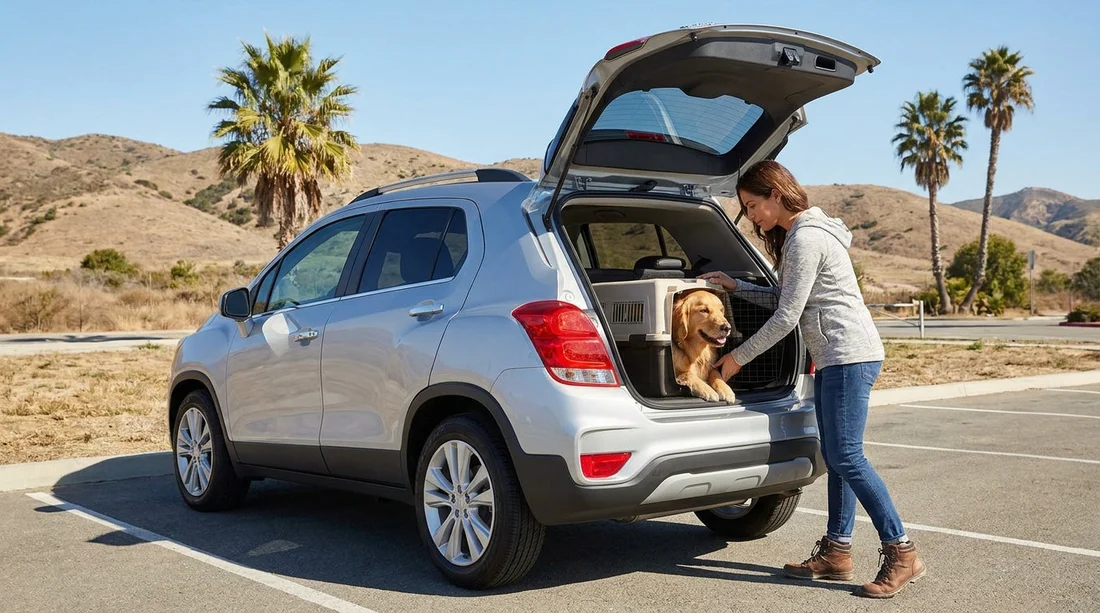
For safety, your pet should be secured. The safest option for most dogs is a well-ventilated crate secured in the boot area or on a rear seat with the seatbelt routed through crate attachment points. If a crate is not practical, use a crash-tested harness attached to a rear seatbelt. For smaller pets, a secured carrier is usually best. Avoid placing pets in the front passenger seat, because airbags can cause severe injury.
Seat covers and barriers are your best defence against hair and scratches. A hammock-style rear seat cover protects both the seat base and the back of the front seats. Add a boot liner if your pet rides in the cargo area. Bring a couple of old towels as backups, especially for wet weather or beach days. If your pet is prone to chewing, do not leave loose straps or plastic edges within easy reach.
What to confirm before pick-up, to protect your deposit
The most useful “rule” to follow is to confirm the supplier’s policy before you collect the keys, and to document the car’s condition clearly. Here is what to check and why it matters.
1) Pet policy and fee wording. Ask whether pets are permitted, and if so, whether there are restrictions by vehicle class. Then confirm how cleaning is assessed, whether there is a fixed pet cleaning fee, and what conditions trigger it. If the terms say “additional cleaning may apply”, ask what “additional” means in practice, such as visible hair on seats or odour.
2) Interior condition at pick-up. Do a slow walkaround and a detailed interior check before you drive off. Photograph existing stains, scuffs, or pet hair. Look at the boot, rear seats, and door panels, which are the most likely areas to be disputed later. If you notice odours or hair from a previous renter, report it immediately so it is noted.
3) Mat set and cargo cover. Confirm that floor mats are present and that the boot area has the cover or liner it should have. Missing mats can make it harder to keep the car clean and could lead to wear claims if carpets get muddy.
Return-day checklist to reduce disputes
Before returning the car, remove all pet items, shake out seat covers, and vacuum. Wipe down door sills and window edges where nose marks collect. If your pet has been in the boot, lift the liner and check for hair in corners. Do a final smell check, because odour can be a reason a supplier flags additional cleaning even when the car looks fine.
At the return location, keep your photos from pick-up available, and take a few new ones after cleaning, especially of the areas your pet used. This can help if there is a later query about cleanliness or damage.
FAQ
Can I bring a dog in a rental car in California? Usually yes, but it depends on the supplier’s rental terms. You are typically responsible for any damage and any extra cleaning needed after transporting your dog.
Will I be charged a pet fee automatically? Some suppliers charge no automatic fee, but may charge if the vehicle needs additional cleaning. Always confirm the policy wording, and assume heavy hair or odour can trigger charges.
Do I need to use a crate or harness for my pet? Rental agreements rarely mandate a specific restraint, but safe driving expectations apply. Using a secured crate or a seatbelt harness reduces distraction and can prevent injuries in sudden stops.
How can I prevent pet hair from causing a cleaning fee? Use a rear seat cover or boot liner, keep your pet to one area, and vacuum before return. A lint roller and pet wipes during the trip also make a big difference.
What should I photograph at pick-up if I am travelling with pets? Photograph rear seats, door panels, boot area, and any existing stains or hair. Then take return photos after cleaning, focusing on the same areas for easy comparison.

























































































