


Quick Summary:
- Full-to-full is usually cheapest when you can refuel near return.
- Prepay fuel suits tight schedules, but unused fuel is often wasted.
- Check the agreement for refuelling fees, taxes, and service charges.
- Photograph the fuel gauge and keep receipts to contest billing.
When arranging car hire in Florida, the fuel policy you pick can change the true cost of the rental more than many travellers expect. The two most common options are prepaid fuel and full-to-full. Both can be fair in the right circumstances, but they work differently, and the small print matters.
Florida driving often involves long highway stretches, busy airport returns, and variable traffic around Miami, Fort Lauderdale, Orlando, and Doral. Those real-world factors influence whether you will benefit from paying for fuel in advance, or whether you are better off returning the vehicle with a full tank.
If you are comparing pick-up points, it helps to check the local context for where you are collecting and returning. For example, returning near Fort Lauderdale Airport (FLL) can be straightforward for refuelling, while city returns in busy areas such as Downtown Miami may add time pressure that makes prepaid fuel feel tempting.
What “full-to-full” actually means
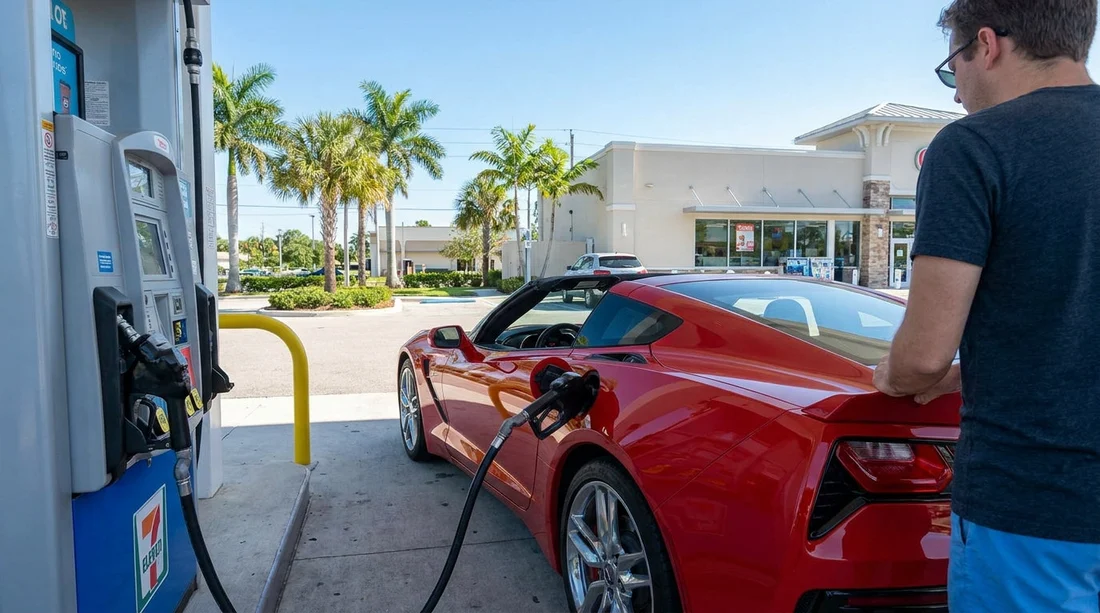
With full-to-full, you receive the vehicle with a full tank (or close to it), and you agree to bring it back full. You pay for the fuel you use, at the pump, on your own card. In most cases, this is the simplest and cheapest approach because you are buying fuel at market prices and only for what you actually consume.
The main risk is logistical, not financial. If your return is early, traffic is heavy, or you cannot find a convenient petrol station, you might end up returning slightly under full. When that happens, the rental company typically charges for the missing fuel at a higher per-gallon rate, and may also add a refuelling service fee.
Full-to-full tends to work best when you can plan a final refuel within 5 to 10 miles of the return location and keep the receipt. Many travellers like it because it is easy to audit: you know what you bought, and you can match the gauge to your receipt time.
What “prepay fuel” usually means in practice
Prepay fuel is often described as paying upfront for a full tank. You then return the car at any fuel level, sometimes even empty, without further fuel charges. This can reduce stress if you know you will be rushing to return the vehicle, or if you expect to drive a lot and do not want to think about refuelling at the end.
However, prepaid fuel only saves money if you return the car close to empty. If you bring it back with a quarter, half, or three quarters of a tank, you have effectively paid for fuel you did not use. Refunds for unused fuel are not typically offered under standard prepaid options.
Prepay can also hide a price premium. The per-gallon rate used to calculate the prepaid amount may be higher than local pump prices, and taxes or fees may apply. The agreement should tell you the fuel price per unit, and whether there is any service element included.
Typical cost differences, in plain terms
In Florida, fuel prices vary by area and season, but the pattern is consistent: pump prices are usually lower than rental refuelling rates. With full-to-full, you are paying local market price and only for what you burn. With prepaid, you are paying for a full tank whether you burn it or not.
That said, if you are doing a long itinerary, perhaps collecting near Doral and driving extensively, a prepaid tank can be closer to fully used. In those cases, prepaid is less likely to waste money, particularly if you can realistically return near empty and you are comfortable with that margin.
Which option suits your Florida trip?
Full-to-full is usually best if: you can plan a final refuel, you want maximum transparency, you are watching costs closely, or you are returning at a time when petrol stations will be open and accessible.
Prepay fuel may suit you if: you expect to drive a lot and can return close to empty, you have a very tight return schedule, or you strongly prefer convenience over optimising cost.
Vehicle type can also influence the decision. Larger vehicles often have larger tanks, so the upfront prepaid amount is higher, and so is the potential waste if you bring it back with fuel remaining. If you are travelling with family and using a people carrier, see how the tank size affects your risk of unused fuel, especially with minivan hire in Florida.
What to check on the agreement before you leave the counter
Fuel disputes are one of the most common areas of frustration with car hire. Before you drive away, check the fuel policy wording, the fuel price and units, and any refuelling service fee for returning slightly under full.
Also confirm the fuel level at pick-up matches the paperwork, and ask what proof is accepted if you need to contest a charge. In practice, a receipt from a station near the return point shortly before drop-off is strong evidence.
If you are renting through a branded partner location, the exact process and fee structure can differ. For example, the desk rules and charges may not be identical between providers, such as Payless car rental in Florida and other operators, so it is worth reading the policy line-by-line rather than relying on assumptions.
Practical tips to avoid fuel charges and wasted time
Refuel a little earlier than you think. Aim to fill up 10 to 15 miles from the return point, not right next to it, where prices can be higher and queues longer.
Keep the receipt and take photos. Photograph the pump display, your receipt, and the dashboard gauge with the engine on. If a charge appears later, you have clear evidence.
Know your route to a petrol station. Before drop-off day, save a nearby station on your map app. Airport loops can be confusing when you are already low on fuel.
Do not chase “perfect empty”. If you choose prepaid fuel, trying to return on fumes can backfire if you hit traffic. Running out of fuel can create towing costs and penalties that dwarf any savings.
So, which should you choose for car hire in Florida?
For most trips, full-to-full is the better-value default because it aligns what you pay with what you use, at local pump prices. Prepay fuel is mainly a convenience product. It can be sensible when your schedule is tight and you are confident you will use nearly a full tank, but it often costs more once you factor in unused fuel and the effective per-gallon rate.
The deciding factor is not just price, it is predictability. If you prefer cost control and transparency, pick full-to-full and plan the final refuel. If you prefer simplicity at return and accept the trade-off, prepaid fuel may reduce stress, provided the agreement’s fuel price and rules look reasonable.
FAQ
Is full-to-full always cheaper than prepaid fuel in Florida? Not always, but it often is. If you prepay and return with fuel left, you usually lose that value. Full-to-full lets you pay pump prices for only what you use.
What happens if I return a full-to-full car slightly under full? Typically you are charged for the missing fuel at a higher rate than local stations, and you may also pay a refuelling service fee. The exact amounts are listed in the agreement.
Can I get a refund for unused fuel on a prepaid option? In many standard prepaid policies, no. You are paying for the convenience of returning at any fuel level, so unused fuel commonly is not refunded. Check the policy wording before accepting it.
How can I prove I refuelled before returning the car? Keep the fuel receipt from a station near the return location, and take a clear photo of the fuel gauge at drop-off. These two items usually resolve most disputes.
Does vehicle size affect which fuel policy is best? Yes. Bigger vehicles often have larger tanks, increasing the prepaid amount and the potential waste. If you are unsure, full-to-full is usually the safer choice for cost control.

























































































