


Quick Summary:
- Check whether your car hire rate already includes roadside help.
- Confirm what still triggers charges, especially keys, fuel, and tyres.
- Compare counter pricing with your card, insurer, and membership cover.
- Decide based on distance, timing, and comfort handling breakdowns in Texas.
Roadside assistance is one of the most common add-ons offered at the counter when you pick up a rental car in Texas. It sounds simple: if something goes wrong, help comes to you. In practice, the value depends on what is actually included, what is excluded, and whether you already have similar cover through other sources.
This guide breaks down what roadside assistance typically covers for car hire in Texas, what it usually does not cover, and a clear way to decide whether it is worth adding on the day. If you are collecting at a major hub such as Dallas DFW or heading into the city after landing, the same principles apply.
What roadside assistance typically covers for rental cars
Roadside assistance sold by rental companies is designed to handle common, non-collision problems that stop the vehicle from moving safely. Coverage names vary, but the typical inclusions look similar across Texas locations.
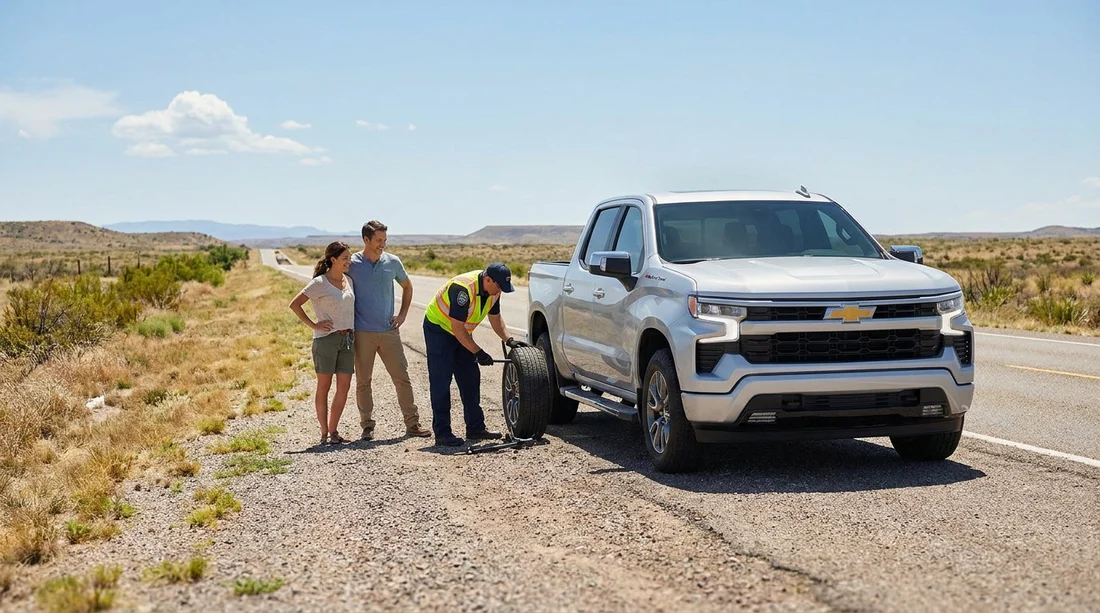
Flat tyre help is often included as a service, meaning someone can come out to fit a spare or help get you rolling again. However, the fine print matters: some plans cover the call-out but not the replacement tyre, and some only assist if the spare is usable and present.
Jump-starts for a dead battery are usually included as a straightforward dispatch of a technician. This can be inconvenient to solve on your own, particularly at night or in unfamiliar areas.
Lockout assistance often includes sending help if keys are locked inside the car. The main caveat is whether the plan covers all lockouts, or only those that do not require key replacement. If a key fob is lost entirely, different charges can apply.
Fuel delivery is frequently included as an emergency service. Many plans cover bringing a small amount of fuel so you can reach a station, but you still pay for the fuel itself, and sometimes a service fee applies unless the plan explicitly waives it.
Towing for mechanical breakdowns is commonly part of roadside assistance. If the car becomes undriveable due to a mechanical fault, towing to an approved facility or back to the rental location is typically arranged.
What roadside assistance often does not cover
The most expensive misunderstandings come from assuming roadside assistance works like full insurance. It is usually a service package, not a promise that everything becomes free.
Collision-related towing is often excluded. If you have an accident, towing and recovery may fall under damage coverage options, your personal insurance, or a claims process, rather than roadside assistance.
Damage to tyres, wheels, or undercarriage is not always covered. A plan may help you change a tyre, but it may not cover the cost of a new tyre if yours is damaged by a pothole.
Lost keys and key replacement is a major exclusion or limitation. Many plans cover unlocking the car if the keys are inside, but they do not cover replacing a missing key fob, which can be costly. Ask specifically about lost keys versus locked-in keys.
Waiting time and alternative transport is not guaranteed. Roadside assistance may send help, but it does not necessarily cover taxis, hotels, or lost time. If you have a tight schedule, the true cost is the disruption, not just the roadside fee.
Texas-specific factors that can make it more valuable
Texas is large, and many visitors underestimate drive times. The longer and more spread out your itinerary, the more helpful a predictable roadside process can be.
Long-distance driving between cities increases exposure to tyre problems, battery issues, and unexpected warning lights. If your trip involves multiple cities, roadside support can feel more worthwhile than it would on a short urban break.
Heat stress on vehicles is real in Texas, especially in summer. Batteries can weaken, and cooling systems work harder. A jump-start or tow arranged through the rental provider can reduce hassle when you are far from a familiar service centre.
Airport pick-ups and late arrivals can also influence the decision. Collecting after a delayed flight may leave you dealing with an issue outside typical business hours. For travellers landing at Dallas, options vary by supplier, such as those you might compare via Payless at Dallas DFW or Dollar at Dallas DFW.
Vehicle type and passenger needs matter. If you are transporting children, elderly relatives, or a lot of luggage, a quick, managed response is more valuable. For bigger groups using people carriers, the inconvenience of a breakdown can multiply. For example, travellers considering a larger option through minivan hire in Texas often prioritise uptime and simpler support.
How to decide before signing at pick-up
Use a quick checklist so you can make a clear choice at the counter without second-guessing later.
1) Ask for the exact name of the product and the included services. “Roadside assistance” can mean different things. Confirm whether it covers tyre service, jump-starts, lockouts, fuel delivery, and towing.
2) Ask what you still pay for. The best question is, “In which situations would I still be charged?” Get clarity on tyre replacement, lost keys, fuel cost, and any dispatch fees.
3) Confirm how help is requested and response expectations. Ask whether service is 24/7 and how towing destinations are determined, so you know what to do if something happens away from the airport.
4) Match the decision to your itinerary. Longer drives, late-night arrivals, and remote routes increase the value. Short, central trips reduce it.
Bottom line for car hire in Texas
Roadside assistance can be worth adding at the counter for car hire in Texas when you are driving long distances, arriving late, travelling with passengers who would struggle during a delay, or when you do not have reliable alternative cover. It is less compelling when your credit card or insurer already includes similar services, or when your driving is short and local.
The smartest approach is to decide based on exclusions, not the headline promise. Ask what you still pay for, especially tyres, keys, and fuel. If the remaining costs and hassle still feel too high for your trip, the add-on may be worthwhile.
FAQ
Does roadside assistance cover a flat tyre on a rental car in Texas? It often covers sending help to change a tyre, but it may not cover the cost of a replacement tyre or wheel damage. Confirm whether you would still pay for parts or a dispatch fee.
If I run out of fuel, will roadside assistance make it free? Usually not. Many plans will deliver a small amount of fuel, but you typically pay for the fuel itself, and sometimes a service charge applies depending on the terms.
Is towing included with rental car roadside assistance? Towing for mechanical breakdowns is commonly included, but towing after an accident is often handled differently. Ask whether collision-related recovery is excluded and where the car would be towed.
What is the difference between lockout help and lost key cover? Lockout help usually means unlocking the car when keys are inside. Lost keys can mean key replacement and reprogramming, which is often excluded or charged separately.
Should I add roadside assistance if I already have a credit card benefit? Only if your card benefit clearly applies to rentals in the US and offers comparable services. If you cannot confirm coverage details, the rental plan can provide certainty and a single point of contact.

























































































