


Quick Summary:
- Map your full route, then flag every tolled bridge, lane, and road.
- Use toll authority calculators to price each segment by date and time.
- Compare toll-by-plate fees versus pass programmes offered with your rental.
- Budget for bay crossings and optional express lanes, plus admin charges.
When you plan a California road trip with a car hire, tolls can be the cost you least expect, because the state uses a mix of tolled bridges, express lanes, and cashless toll roads. The good news is that you can estimate toll costs accurately before you pick up the keys, as long as you forecast your route in enough detail and understand how toll collection works for rentals.
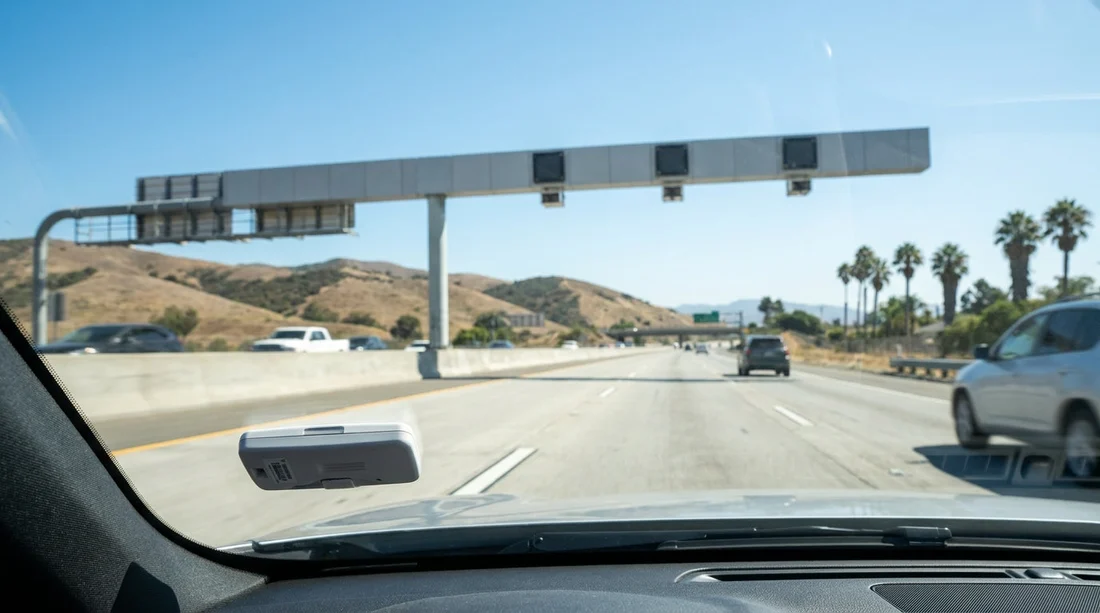
California tolls are not one single system. The Bay Area has toll bridges and express lanes, Orange County has toll roads, and parts of Los Angeles and the Bay Area have pay-to-use express lanes that can change price based on traffic. Many facilities use number plate billing and do not accept cash. That matters for car hire because the method you choose, toll-by-plate through the rental, or a pass-style programme, can change the final cost once service fees are included.
Start by deciding the main places you will drive and where you will collect the car. If you are picking up near San Francisco, the typical toll exposure is Bay Bridge crossings and possible express lanes. For travellers arriving via San Francisco SFO, simply driving into the city and back can include a bridge toll depending on your direction of travel. If you are arriving in Southern California, toll roads are common around Irvine, Newport Beach, and the routes that bypass traffic inland. A pick-up at Los Angeles LAX often pairs with trips that may include express lanes on major freeways or toll roads on the way towards Orange County.
Step 1: Build a route that matches how you actually drive
The most reliable toll estimate starts with a realistic route plan. In mapping apps, do not just set “California” as the destination, build the exact sequence, airport to hotel, hotel to attractions, day trips, and your return leg. Add likely diversions, such as a beach day, a theme park, or a stop in wine country. Then review the route for tolled assets.
To find tolled segments, use two checks. First, in your mapping app, enable toll roads and compare the “avoid tolls” route with the fastest route. If the route changes, you have identified at least one tolled segment. Second, zoom in on the route and look for labels such as “toll road”, “express lanes”, “FasTrak”, or named bridges. Create a quick list of every tolled item you may use: specific bridges, toll roads, and express lanes corridors.
Step 2: Identify which pricing model applies to each toll
Once you have the list of toll facilities, classify them into three pricing types, because estimation depends on the type.
Fixed-price tolls include most toll bridges. They normally have a set charge per crossing, sometimes with a carpool discount or a different rate if you use a transponder linked to an account. Estimating these is straightforward: crossings multiplied by the posted rate.
Distance-based toll roads charge based on entry and exit points. This is common on Orange County toll roads. The estimate depends on where you join and leave the toll road, so you must know your interchanges.
Dynamic-price express lanes can change price in real time, based on traffic. These are the hardest to forecast precisely. For planning, you can estimate a range by checking typical peak and off-peak costs, then budgeting towards the higher end if you expect commuter-hour driving.
Step 3: Use the official calculators, then sanity-check totals
For each toll bridge or toll road you may use, use the relevant toll authority’s calculator or rate table and price the trip by the correct entry and exit points, date, and approximate time. If the facility is an express lane with dynamic pricing, use published ranges or recent typical prices and assume peak rates for weekday mornings and evenings.
As you total the costs, separate them into “certain” and “optional”. Certain costs are fixed bridge crossings you know you will take. Optional costs include express lanes and any toll road that has a reasonable free alternative. This helps you keep a conservative budget while still understanding the likely maximum if you choose the fastest routes.
Step 4: Understand how toll payment works with a rental car
This is the step many travellers skip, and it is where unexpected charges usually appear. In California, many toll facilities are cashless. That means the system reads the number plate or a transponder. With a rental, there are typically two ways tolls get paid.
Toll-by-plate through the rental means the toll authority invoices the rental company, and the rental then charges you for the toll plus any associated administrative charges. This can be convenient if you use very few toll facilities, but it can become expensive if fees apply per day of use or per toll event.
Pass-style programmes are optional toll products offered by some rental brands. These may involve a daily charge for the days you use tolls, sometimes plus the tolls themselves, or they may bundle certain tolls. The terms vary, so the key is to compare your estimated toll spending with the likely programme fees for your rental period.
If you are collecting in Orange County via Santa Ana SNA, this comparison is especially worthwhile, because the local toll road network can add up over multiple days. Likewise, travellers starting around Silicon Valley through San Jose SJC may face a combination of bridges and express lanes, where the number of chargeable events matters as much as the toll rate itself.
Step 5: Compare “tolls only” versus “tolls plus fees” before pick-up
Your forecast should produce two totals.
Total A: Expected tolls. This is the sum of the toll authority charges you calculated from official rates and typical express lane prices.
Total B: Expected tolls plus rental-related fees. To build this, read the toll policy for the specific rental you are considering and apply it to your usage pattern. If fees apply per day that you use tolls, estimate how many days you will trigger tolling. If fees apply per toll event, count likely events from your route list. Then add the fees to Total A.
This creates a like-for-like comparison between toll-by-plate and a pass-style programme. For example, if your planned driving includes one bridge crossing on one day, toll-by-plate may remain the lower-cost option. If you plan multiple days using a toll road network, a pass-style programme could be better value even if its daily fee looks high at first glance.
Putting it all together: a simple pre-trip toll forecast checklist
To estimate California tolls in advance for a car hire trip, build your real itinerary route, list every tolled bridge, road, and express lane, then price each item using the toll authority’s published rates or typical ranges. Finally, convert “tolls” into “what I will pay” by adding the rental’s toll handling method and any administrative charges, then compare that to any optional pass-style programme offered before you collect the vehicle. With that workflow, you can budget confidently and decide when paying a toll is truly worth it.
FAQ
Are California toll roads cashless? Many are cashless, especially bridges and major tolled corridors. Expect number plate billing or transponder-based payment rather than cash booths.
Can I avoid tolls completely on a California road trip? Often, yes. Most regions have free alternatives, although they may take longer. Use your mapping app’s “avoid tolls” option and compare travel times.
Why can a rental car toll cost more than the posted rate? The posted rate is the toll authority charge. With car hire, the rental company may add administrative charges or daily programme fees on top.
How do I estimate express lane charges that change with traffic? Treat them as a range. Check typical peak and off-peak prices where available, then budget for peak pricing if you will drive during weekday commuter hours.
Should I choose toll-by-plate or a pass-style programme? It depends on how many tolled days and toll events you expect. Estimate tolls first, then add the rental’s fees for each option to see which total is lower.

























































































