


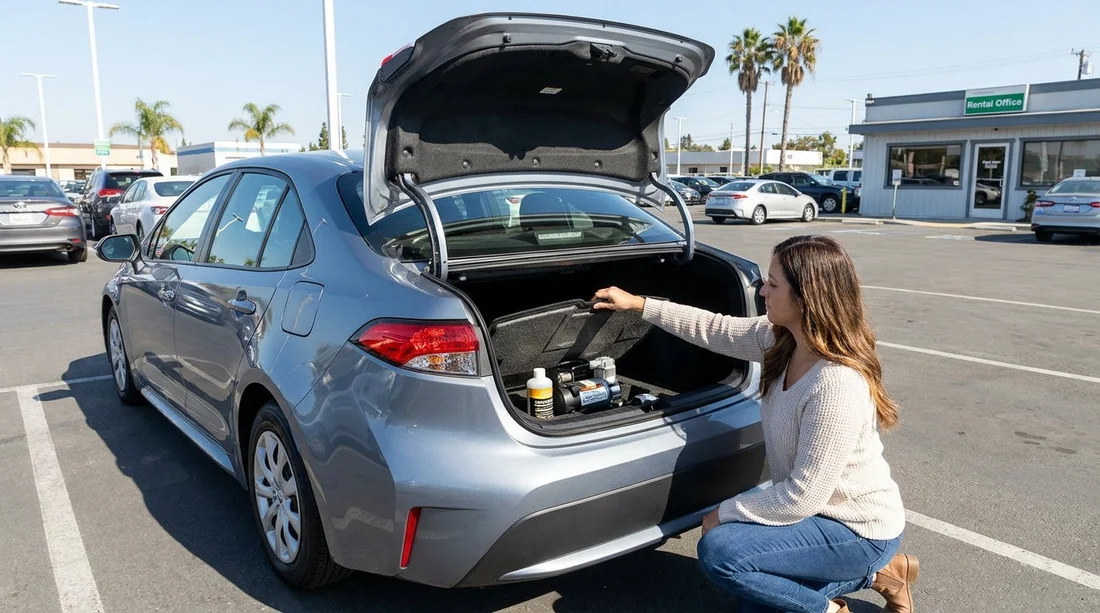
Quick Summary:
- Check the boot and underfloor tray for a spare or inflator kit.
- Confirm roadside assistance details and tyre rules in your paperwork.
- Ask what happens if no spare is supplied after a puncture.
- Photograph the kit, tools, and tyre condition before leaving the lot.
If you are arranging car hire in California, it is sensible to ask one practical question before you drive off, will the vehicle include a spare tyre, or will it have an inflator kit instead. The short, realistic answer is that you can get either, and sometimes neither in the traditional sense, depending on the vehicle type, manufacturer design, and rental company policy.
Modern cars are increasingly delivered without full-size spares, and many rental fleets mirror that trend. Some vehicles have a temporary space-saver spare, some have a sealant and compressor kit, and some rely on run-flat tyres plus roadside assistance.
Why many California rental cars do not have a traditional spare
In California, rental fleets commonly include newer models where the manufacturer has removed the spare wheel to reduce weight, improve fuel economy, and free boot space. That is particularly common with compact cars, hybrids, and some SUVs. Instead, you may find an inflator kit that includes a small compressor and a tyre sealant bottle. Other vehicles may be fitted with run-flat tyres designed to drive a limited distance at reduced speed after losing pressure.
None of these options is automatically better for every situation. A spare lets you get moving quickly if you are comfortable changing a wheel. An inflator kit can be faster for a small tread puncture, but it may not work for sidewall damage, a large tear, or a tyre that has come off the rim. Run-flats can help you reach a safe place, but you still need a replacement tyre, and continuing too far can destroy the tyre.
What to check on the vehicle before leaving the rental location
The most reliable way to set expectations is to physically check the car at pick-up. Do this before you exit the lot, because once you leave, you may have fewer options if the kit is missing or incomplete.
1) Look for a spare tyre location. Open the boot and lift the floor panel. Many cars store a temporary spare under the boot floor. Some SUVs store it underneath the vehicle. If you see a spare, confirm it is inflated and that the wheel looks undamaged. If it is a space-saver, note any speed or distance limitations printed on the tyre.
2) If there is no spare, look for an inflator kit. Check the underfloor tray or side compartment. A typical kit includes a 12V compressor and sealant. Confirm the compressor power lead and hose are present, and check whether the sealant is within its expiry date if shown on the bottle.
3) Check for the tools you would need. A spare wheel is only useful if you also have a jack, a wheel wrench, and often a towing eye or locking wheel nut key if the wheels have security nuts. Some vehicles have a jack but no wrench, or vice versa.
If you are collecting from a busy airport location, it helps to know your pick-up point in advance, such as Los Angeles LAX or San Francisco SFO, so you can allow a few minutes to inspect the car without feeling rushed.
What to confirm on paperwork and at the counter
Even if you see a spare or inflator kit, you still need to confirm what the rental company expects you to do after a puncture, and what costs might apply. Policies vary, and your rental agreement is the best guide.
Ask whether tyre damage is covered. Basic agreements often treat tyres as the driver’s responsibility unless you have added a protection package that includes tyres and wheels. Do not assume that collision coverage automatically includes punctures.
Confirm roadside assistance details. Many rental companies provide a number to call for help, but not all assistance is free. Ask what happens if you get a puncture in a remote area, whether towing is included, and whether you should call the rental company before arranging a repair yourself.
These questions matter whether you are picking up in Southern California or the Bay Area. If your trip starts around Orange County, Santa Ana SNA is a common gateway, and the same check-in routine applies before you merge onto the freeway.
Spare tyre vs inflator kit, what each means for your trip
If you have a spare tyre: confirm it is usable, and check you have the jack and wrench. Be aware that many spares are temporary and have speed limits, often around 50 mph, and are intended only to get you to a tyre shop or back to a rental location.
If you have an inflator kit: read the instructions before you need them. Sealant typically works best for small punctures in the tread area. It usually will not help with sidewall damage, a split tyre, or a tyre that has been driven flat. After using sealant, you may be limited in speed and distance, and you should tell a tyre technician that sealant was used.
If you have run-flat tyres: look on the sidewall for run-flat markings. You may be able to drive a limited distance at reduced speed, but you should still contact roadside assistance and plan for replacement. Run-flats are not intended for normal driving once deflated.
Common scenarios and the safest next step
You notice a slow leak before leaving. Do not accept the vehicle hoping it will be fine. Return to the counter or the lot attendant and request a different car. Photograph the tyre and the dashboard warning light if it is illuminated.
You get a puncture on the road and the tyre is still holding some air. Move to a safe place off the roadway. Check your agreement for the correct assistance number, then follow the instructed process. If you have an inflator kit, only use it if the puncture is suitable and you understand the limitations.
You have a blowout or sidewall tear. Do not use sealant. Fit the spare if you have one and it is safe to do so, otherwise call roadside assistance.
You are unsure what kit you have. This is why the pre-departure check matters. If you are already on the road, stop somewhere safe and look in the boot, then call the rental company for guidance.
How to avoid surprises, especially with different vehicle classes
Vehicle type is a strong predictor of what you will find. Smaller cars and hybrids often come with inflator kits. Larger SUVs and vans may be more likely to include a spare, but it is not guaranteed. If your plans include heavy luggage, long motorway drives, or remote destinations, build time into pick-up for a careful check, and consider choosing a vehicle category where a spare is more common.
If you are picking up around the state capital, airport locations such as Sacramento SMF handle many vehicle classes. When you collect, you can quickly verify what is provided and ask the desk to note any missing items before you depart.
Finally, remember that a spare tyre or inflator kit is only part of the picture. Your real protection comes from understanding the rental terms, knowing who to call, and having evidence of the vehicle’s condition at pick-up.
FAQ
Q: Do all rental cars in California come with a spare tyre?
A: No. Many have an inflator kit or run-flat tyres instead, and availability depends on vehicle model and fleet policy.
Q: Where should I look to confirm if my hire car has a spare?
A: Check under the boot floor panel first. On some SUVs, the spare is mounted underneath the vehicle.
Q: If my rental has an inflator kit, will it fix any puncture?
A: Usually only small tread punctures. Sealant typically will not fix sidewall damage, blowouts, or tyres driven flat.
Q: Should I call the rental company before getting a puncture repaired?
A: Yes. Procedures vary, and calling first helps you follow the agreement and avoid non-reimbursable costs.
Q: What photos should I take at pick-up to protect myself?
A: Photograph each tyre sidewall and tread, plus the spare or inflator kit and tools, before leaving the rental location.

























































































