


Quick Summary:
- Assume New York car hire vehicles are strictly non-smoking at all times.
- Odour, ash, burns, or residue can trigger a cleaning charge.
- Fees vary by supplier, and can rise with ozone treatment time.
- Document the car at pickup and return to dispute unfair fees.
In New York, the practical answer to “can you smoke or vape in a rental car?” is almost always no. Most car hire agreements treat smoking and vaping as prohibited uses, even when local law might allow smoking in some private spaces. The reason is simple: smoke and vapour can leave persistent odours and residue that affect the next driver, and removing those smells can require specialist cleaning or time off the road.
This article explains what “no smoking” typically means, how odour evidence is assessed, and what kinds of cleaning fees can be triggered when a vehicle comes back smelling of cigarettes, cigars, cannabis, or e-cigarettes.
What “no smoking” usually means in New York car hire
When a supplier says the vehicle is non-smoking, it generally covers any act that introduces smoke, vapour, ash, or burnt residue into the cabin. That normally includes cigarettes, cigars, pipes, cannabis joints, and vaping devices. Some policies also treat heated tobacco products similarly because the smell can still linger in fabrics and vents.
Even if you only smoke with the windows down, smoke particles can settle into the headliner, seat foam, carpets, and the cabin air filter. Vaping may not leave ash, but it can still deposit sweet or chemical odours, and it can create a film on glass that is noticeable in bright light. From a supplier’s point of view, “I didn’t smoke much” is still a problem if the next customer complains.
If you are collecting a car near the city or flying in, it helps to read the supplier rules before arrival and plan smoke breaks away from the vehicle. If your trip starts around Newark, information on pickup locations and options is typically shown on pages like Newark car rental and car hire Newark, which can help you understand the rental setup before you travel.
How odour evidence is assessed at return
Cleaning charges are usually triggered by staff observations rather than laboratory testing. At return, an attendant may do a quick interior check, and if the vehicle is going straight back into circulation, a more detailed inspection may happen later when the car is cleaned.
1) Smell on opening the door. A strong, recognisable smoke odour when the cabin is first opened is often treated as evidence, because it suggests smoke has penetrated soft surfaces.
2) Visible signs. Ash in cupholders or door pockets, cigarette ends, burn marks on seats, headliner, or trim, and yellowing on interior plastics are all straightforward indicators.
3) Secondary indicators. A film on the inside of the windscreen, air fresheners used heavily to mask smell, or a cabin filter that reeks can support a cleaning decision.
4) Next-customer complaints. Sometimes the vehicle passes the first inspection but the next customer reports a smell, and a fee may follow if odour is confirmed.
Because odour assessment can be subjective, your best protection is documentation. Take clear photos of the interior at pickup and return, especially seats, floor mats, cupholders, and the headliner above the driver. If you notice any pre-existing smell at pickup, ask for it to be recorded immediately, or request another vehicle if available.
Typical cleaning fees and what drives the cost
Cleaning fees for smoking or vaping are not the same as a normal quick clean that is part of routine turnaround. The charge is usually labelled as a smoking penalty, specialist valeting fee, or odour removal fee. In the New York area, the amount varies by supplier, vehicle class, and the remediation needed, and it can be applied even if there is no physical damage.
Costs can increase when the supplier decides the car must be removed from availability for deeper treatment. Odour remediation may include shampooing upholstery, steam cleaning, wiping down plastics, changing the cabin air filter, and using an ozone machine. Ozone treatment can be effective, but it often requires time with the vehicle out of service, which is one reason fees can feel high.
Also note that cleaning fees are separate from damage. If there are burns in seats, melted trim, or a hole in the carpet, you may face repair or replacement costs in addition to any odour treatment. That is particularly relevant for families and groups using larger vehicles, where smoke damage in the rear rows can be expensive to put right. If you are comparing vehicle types for a trip, pages such as minivan rental New York JFK and SUV rental New Jersey EWR can help set expectations, but the non-smoking rule generally applies across all categories.
Vaping versus smoking, is it treated differently?
Many renters assume vaping is allowed because it does not create ash and can smell less like tobacco. In practice, most suppliers treat vaping the same as smoking for three reasons. First, lingering odour can still be present, especially with flavoured liquids. Second, residue can still settle on glass and plastics. Third, staff cannot easily verify what was vaped, and suppliers prefer a clear, enforceable rule.
That means a no smoking clause commonly covers vaping explicitly, or it is interpreted to include it. If your agreement is ambiguous, assume vaping is prohibited, because a charge is usually based on condition at return, not on proving which product caused the smell.
How to reduce risk of smoking or vaping fees
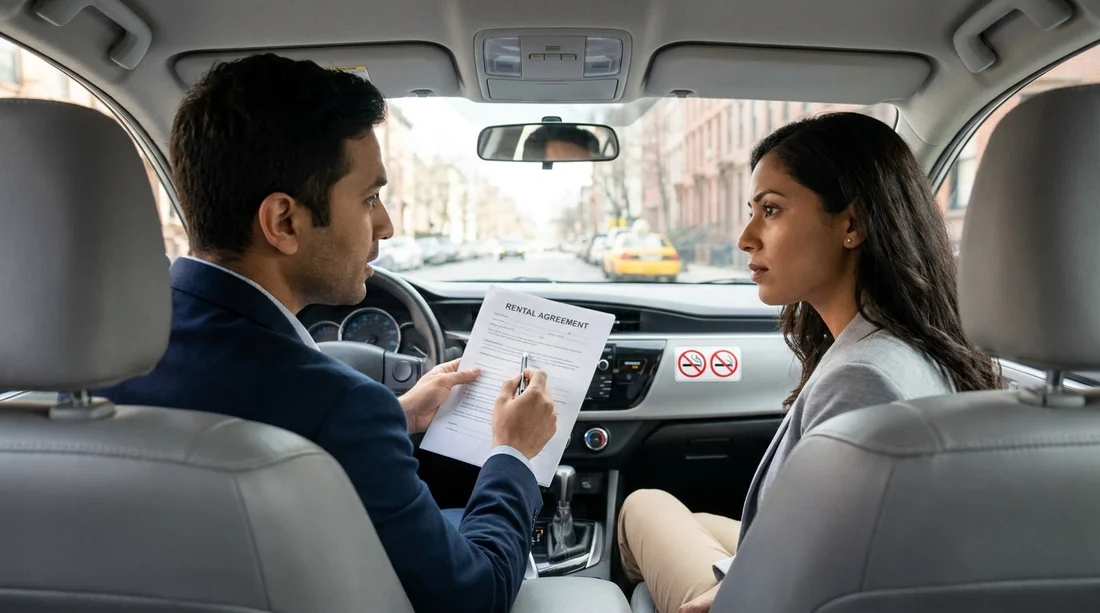
Check the rules before you drive away. Look for signage on the windscreen or dashboard, and read the prohibited uses section in your rental agreement.
Inspect and record condition at pickup. If there is any odour, ask for a note on the contract or exchange the vehicle. Photos help, but written notes are stronger because they show the supplier acknowledged the issue.
Keep evidence of return condition. Take time-stamped photos at the return area and keep any paperwork they provide.
Avoid masking products. If the car has a faint smell from a previous user, masking it with perfume can backfire. Ask for a vehicle swap rather than trying to cover the smell yourself.
What to do if you are charged and you disagree
If a smoking or vaping cleaning fee appears after your rental, act quickly. Ask the supplier for the basis of the charge and any supporting documentation, such as inspection notes, cleaning invoices, photos of ash or burns, or timestamps showing when the odour was confirmed. Compare those details with your return photos.
Be specific in your response. State that you did not smoke or vape in the car, attach your images, and point out any lack of physical evidence if that is the case. If the only evidence is subjective smell, ask how they distinguish between pre-existing odour and something that occurred during your hire, and whether a note was made at pickup.
FAQ
Can you smoke in a rental car in New York if the windows are open? Usually no. Most car hire contracts prohibit smoking anywhere in the vehicle, and open windows do not prevent odour and residue.
Is vaping allowed in a rental car if there is no ash? Typically it is not allowed. Suppliers often treat vaping the same as smoking because vapour can leave odour and film on surfaces.
What evidence is used to apply a smoking cleaning fee? Staff notes of strong odour, visible ash or cigarette ends, burn marks, and cleaning team confirmation are common forms of evidence.
How can I protect myself from being blamed for a pre-existing smell? Inspect at pickup, request a written note if there is any odour, and take dated photos at pickup and return.
Can a cleaning fee apply even if there is no damage? Yes. Odour removal can require specialist treatment and downtime, so fees may apply even without burns or stains.

























































































