


Quick Summary:
- Read the agreement for off-road and unpaved-surface restrictions before signing.
- Confirm whether county-maintained gravel roads are treated as permitted public roads.
- Check if damage cover excludes tyres, glass, underbody, towing, or recovery.
- Photograph tyres, wheels, lower panels, and windscreen before leaving the lot.
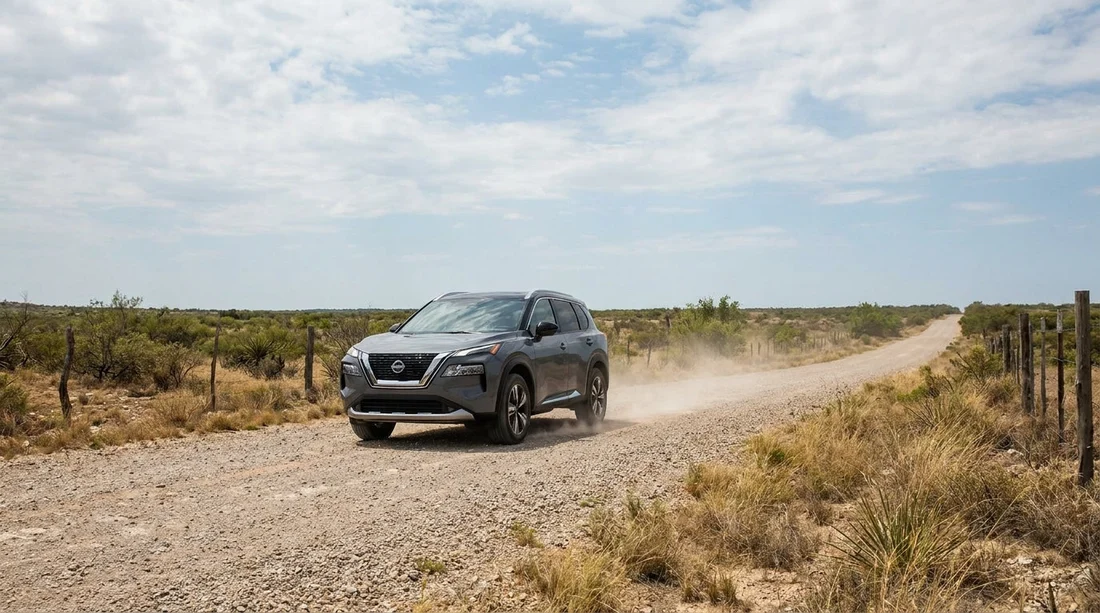
Gravel and unpaved roads are common in parts of Texas, from ranch access lanes to long stretches of county-maintained caliche. Whether you are allowed to drive them in a rental car depends less on the map and more on your car hire terms. Some agreements allow travel on public roads regardless of surface, while others restrict any use on unsealed roads, treat them as “off-road”, or exclude certain damage categories if you do.
The important point is that “allowed” can mean two different things: the agreement may not prohibit driving there, yet still exclude damage commonly caused by gravel, such as tyre sidewall cuts, chipped windscreens, or underbody impacts. Before you sign and again before you collect the keys, check the sections that define permitted use, prohibited use, and what protection products or damage waivers actually cover.
Why gravel-road rules vary in Texas car hire
Texas has a mix of road types: interstate highways, state highways, farm-to-market roads, and county roads that may be paved, chip-sealed, or unpaved. Rental companies write rules to manage risk, because unsealed surfaces statistically increase the chance of stone chips, punctures, and loss of control, especially in low-clearance vehicles.
Some providers focus on whether a road is publicly maintained. Others focus on the surface itself, meaning an unpaved but officially numbered county road could still be prohibited. Your job is to find which approach your agreement uses, because wording differs between brands, locations, and vehicle categories.
Where to look in your rental agreement, step by step
Start with the document you will actually sign or accept at the counter. Online summaries and marketing pages rarely include the operational restrictions that matter most. When you have the terms in front of you, scan in this order.
1) “Permitted use” or “Where you may drive”
Look for statements such as “public roads only”, “no off-road use”, or “no unpaved roads”. If it says “publicly maintained roads”, confirm whether that includes graded gravel county roads. If it says “paved roads only”, that is a clear surface restriction.
2) “Prohibited use” or “Restrictions”
This is where companies often define “off-road” to include dirt, gravel, beaches, trails, ranch roads, and construction areas. Pay attention to whether the restriction is about the act of driving there (a breach) or about responsibility for any resulting damage (a coverage exclusion). Either can be costly.
3) “Damage, loss, and exclusions”
Even when unpaved travel is not expressly banned, the agreement may exclude particular damage types that are more likely on gravel. Common examples include tyres, wheels, glass, roof, underbody, suspension, and towing. If your trip includes remote areas, towing exclusions matter because recovery can be expensive.
4) “Insurance or waiver products”
If you add a collision damage waiver or similar product, read the exclusions again. Many renters assume a waiver equals complete protection, but exclusions can remain in place. Confirm whether the waiver changes your liability for tyres, glass, or underbody, and whether it requires you to follow all use restrictions.
Typical gravel and unpaved-road exclusions to watch for
Car hire terms often list exclusions in practical language. These are the ones that most directly affect gravel travel in Texas.
Tyres and wheels
Tyre punctures, sidewall damage, and wheel dents can happen on sharp stone or corrugated surfaces. Many agreements make the renter liable for tyre and wheel damage regardless of fault. If your route includes long distances on unsealed roads, this is one of the biggest financial risks to clarify.
Windscreen and body stone chips
Loose gravel can chip paint and crack windscreens, especially when passing trucks. Some cover products include glass, others exclude it unless you buy a separate option. Read the definitions carefully: “glass” might include side windows but not the windscreen, or vice versa.
Underbody, sump, and suspension
Low-clearance vehicles can bottom out on ruts, washboards, or cattle guards. Underbody damage is frequently excluded because it is hard to verify how it occurred. If you are considering a larger vehicle, check category-specific terms via minivan hire Houston IAH or minivan hire El Paso ELP.
Towing and recovery
Some agreements exclude towing if the vehicle is stuck or damaged on an unpaved surface, even if the road is technically public. In rural Texas, a simple recovery can involve long-distance dispatch and significant charges.
Questions to ask before you sign and before you drive away
Because terms can be interpreted differently at the counter, ask direct questions and keep answers specific. Good questions are not “Can I drive on gravel?” but rather “Is a county-maintained unpaved road considered permitted use under this agreement?” If the answer is yes, follow up with “If a tyre punctures or the windscreen chips on that road, what does my cover include and exclude?”
Also confirm whether any restriction is location-based. An airport branch may have different guidance than a downtown branch. If you are picking up around Dallas, comparing operator terms can help, such as car rental Dallas DFW or Budget car hire Dallas DFW.
Finally, ask what happens if you accidentally take a short unpaved section to reach accommodation, a trailhead car park, or a worksite. Some agreements treat any breach as voiding waivers entirely, while others focus on the damage type and circumstances.
How to reduce risk if unpaved driving is permitted
If your agreement allows it, treat gravel as a higher-risk environment and drive accordingly. Keep speeds conservative, increase following distance to reduce stone strikes, and avoid overtaking on loose surfaces where the tyres can throw debris.
Before leaving the lot, take time-stamped photos of the tyres, wheels, lower bumpers, and windscreen. Do this again if you stop at a remote location where damage could occur unnoticed. If you hear a stone strike the glass, inspect it promptly, because small chips can become cracks with Texas heat and highway speed.
Choose your vehicle type realistically. A standard sedan might be fine for short, well-graded county roads in dry weather, while a low-slung car can struggle with ruts. Even with higher clearance, avoid water crossings and muddy tracks, “unpaved” is not the same as “safe in all conditions”.
What to do if you are unsure on the day
If you cannot get a clear answer at the counter, the safest assumption is that unpaved travel increases your exposure, even if it is not outright banned. Consider adjusting your route to stay on paved highways and farm-to-market roads, or choose destinations with paved access. If your plan depends on gravel access, ask the agent to point you to the exact clause in the agreement that permits it, then keep a copy of the terms you accepted.
If you are collecting in North Texas, airport pick-up terms can also matter for timing and documentation, see car hire airport Fort Worth DFW for location context and planning. The key is to leave the lot confident about what is permitted, and what you would pay for if something goes wrong.
FAQ
Are gravel roads automatically forbidden in Texas car hire? No. Some agreements permit public roads regardless of surface, while others ban unpaved roads or classify them as off-road. Always check the signed terms.
If unpaved roads are allowed, am I covered for damage? Not necessarily. Many terms still exclude tyres, wheels, glass, underbody, and towing, which are the most common gravel-related losses.
What wording should I search for in the agreement? Look for “unpaved”, “unsealed”, “gravel”, “off-road”, “publicly maintained roads”, “prohibited use”, and “exclusions” under damage and recovery sections.
Does a short private driveway to accommodation count as off-road? Often yes. Private roads, ranch tracks, and access lanes are frequently excluded even when they are well maintained, so confirm before you rely on them.
What evidence should I collect before driving away? Take clear photos of tyres, wheels, windscreen, and lower bodywork, and keep the rental condition report. This helps if damage is disputed later.

























































































