


Quick Summary:
- Buy labelled windscreen washer fluid, avoid dish soap and harsh additives.
- Choose bug-remover blends for Texas insects, keep sensors and cameras clear.
- Top up slowly using a funnel, wipe spills promptly from paintwork.
- Keep itemised receipt, product photo, and a timestamped dashboard warning photo.
A windscreen washer-fluid warning light in a Texas car hire can feel urgent, especially when highway bugs and dusty roads quickly reduce visibility. The good news is that topping up washer fluid is one of the simplest, cheapest fixes you can do yourself during a rental, and doing it carefully can prevent both safety issues and awkward conversations at return.
This guide covers three things renters actually need: what washer fluid is safe for modern cars with sensors and cameras, how to refill without spills or mistakes, and what proof to keep so you are not challenged for a minor consumable.
If you picked up your vehicle via car hire at Austin Airport (AUS), or you are driving between cities like Dallas, Houston, and San Antonio, the same principles apply. The only differences are the weather, the bug load, and how quickly you will burn through washer fluid on long interstates.
Why modern washer fluid matters for sensors and cameras
Many newer rental vehicles in Texas have driver assistance systems, such as forward cameras behind the rear-view mirror, rain or light sensors, and sometimes washer jets designed to spray precisely. While washer fluid itself does not directly “feed” these sensors, your windscreen cleanliness affects how well the systems see the road. If you use the wrong product, you can create smearing, residue, or foaming that makes visibility worse and can increase false warnings from camera-based features.
Also, some cars have hydrophobic coatings or acoustic windscreens that are more prone to streaking if you use high-residue products. That is why, for a car hire, it is best to keep it boring and compatible rather than trying aggressive home remedies.
What washer fluid to buy in Texas for a hire car
In the US you will typically see products labelled “windshield washer fluid” or “windshield wash”. For a rental, choose a mainstream, pre-mixed fluid from a petrol station, supermarket, or auto parts store. Look for these characteristics on the label:
1) Pre-mixed, ready-to-pour. Concentrates are fine if you know the correct dilution, but pre-mixed eliminates guesswork and reduces the chance of over-strong solution leaving haze.
2) Streak-free and ammonia-free. Ammonia can be harsh on certain plastics and can contribute to film. Most automotive washer fluids are ammonia-free, but check if you are unsure.
3) Bug remover formula. In Texas, bug splatter is a bigger issue than frost for much of the year. Bug remover blends help break down proteins and oils so you do not have to run the wipers repeatedly on a dry screen.
4) Season appropriate. In most Texas driving you can prioritise bug cleaning, but if you are heading to colder areas or travelling in winter, choose a fluid with freeze protection. Even if Texas is mild, your trip might not be.
5) Avoid “water only” and avoid improvised mixes. Plain water grows bacteria, smells, and can leave mineral deposits. Home mixes such as dish soap, vinegar, or glass cleaner are unpredictable, can foam, and can stain plastics. In a car hire context, they also look suspicious at return if a technician smells or sees residue.
If your rental is a premium model with advanced safety features, the safest choice is still a recognised windscreen washer fluid, pre-mixed, and streak-free. You do not need anything exotic for cameras. You need a clean screen and a fluid that does not smear.
What not to pour into a hire car washer tank
To protect the car and to protect yourself from disputes, avoid these common mistakes:
Do not use tap water. It can contain minerals that leave spotting, and it is hard to prove what was added later if there is a complaint.
Do not use dishwashing liquid. It foams heavily, can overwhelm the system, and leaves a film that worsens glare at night.
Do not use household window cleaner. Some contain additives not designed for automotive rubber or plastics, and the smell can raise questions at return.
Do not mix multiple fluids if you can avoid it. Mixing is not always harmful, but it can reduce cleaning performance or increase residue. If you must top up a half-full tank, stick to a standard washer fluid and avoid unusual scents or extreme formulas.
How to top up washer fluid without spills
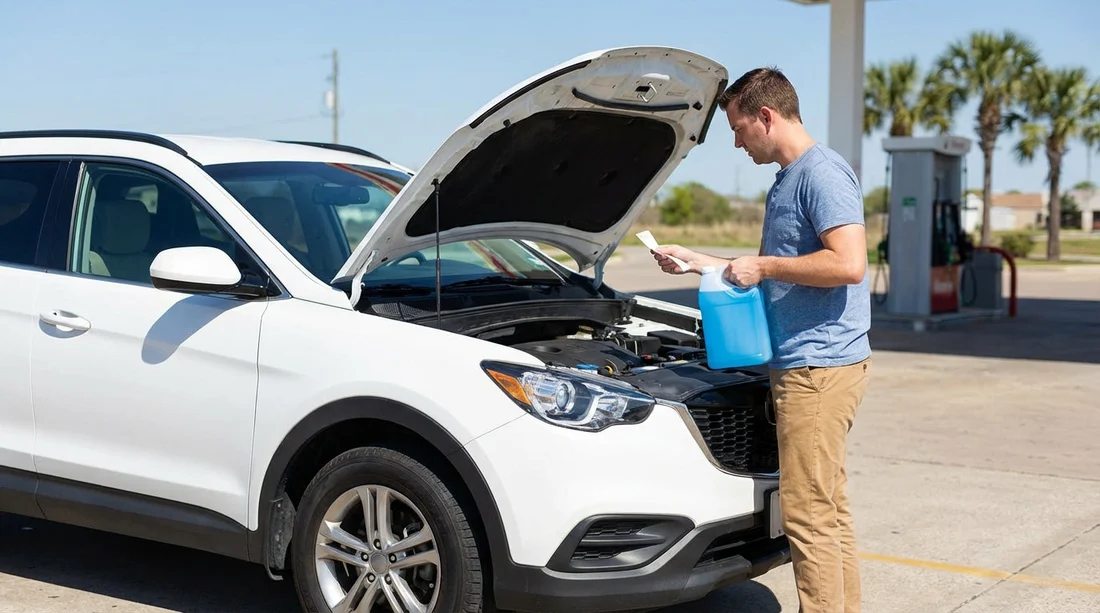
Most washer tanks are easy to access under the bonnet, but the filler neck can be awkward on some vehicles. Spills are usually cosmetic, but washer fluid can leave marks on paint if it dries, and it is slippery on engine plastics. Use this step-by-step approach:
1) Park safely and let the engine cool briefly. A flat surface helps you judge the fill level, and a cooler engine reduces the chance you rush or bump something hot.
2) Find the correct cap. Look for the windscreen and spray icon. Do not confuse it with coolant. Coolant tanks often have warning labels and pressurised caps. If you are not sure, check the manual in the glovebox or the sticker diagrams under the bonnet.
3) Use a funnel or a bottle with a spout. Many stores sell washer fluid with an integrated spout. A small funnel reduces splashing, especially in windy Texas parking lots.
4) Pour slowly and pause. The filler neck may take a second to drain into the tank. Slow pours prevent overflow.
5) Stop before the brim. You do not need to fill to the top. Add enough to clear the warning and give you a buffer for the rest of your trip.
6) Close the cap firmly. A loose cap can rattle or allow evaporation smells.
7) Wipe any drips. Keep a paper towel in the boot. Wipe the filler area and any paint splashes. If you spill on painted surfaces, rinse with a little bottled water and wipe dry.
8) Test the washers. Give a short spray and one wipe cycle to confirm it works and the warning light has cleared. If the light remains on, add a little more, as some sensors trigger at a low threshold.
If you collected your vehicle in San Antonio via car hire at San Antonio Airport (SAT), you may be driving into heavy insect areas at dusk. Refill earlier in the day so you are not doing it hurriedly at night.
Which washer fluid is best for Texas conditions
Texas driving can involve long, fast distances, strong sun, and frequent windscreen contamination. Here is how to match fluid type to what you are experiencing:
Highway bugs and grime. Choose bug remover fluid. Pair it with clean wiper blades and, if safe, a soft microfibre cloth for the outside of the screen at fuel stops.
Dust and pollen. Standard all-season washer fluid is fine, but avoid anything that leaves a waxy “shine” layer. Dust sticks to residues.
Hot sun and glare. Streak-free matters more than “extra strong”. Fluid that cleans without leaving film reduces glare, especially at sunrise and sunset.
Unexpected cold snaps. If temperatures could dip near freezing on your route, pick a fluid with freeze protection. Even if you do not expect snow, a freeze-rated blend protects the system.
For most car hire situations in Texas, a mainstream pre-mixed bug remover is the sweet spot: good cleaning, low risk, easy to explain if asked.
Receipts and proof to keep to prevent disputes at return
Washer fluid is typically considered a consumable, and a brief top-up is normal. However, disputes can happen if there is confusion about what was added, or if an agent notices residue, smells, or an unrelated issue and starts asking questions. The simplest protection is to keep clear, time-linked evidence.
Keep these items:
1) Itemised receipt. Ideally it shows the product name, store name, date, and amount. If it prints a generic line, write “washer fluid” on it and keep it with your rental paperwork.
2) Photo of the product label. Take a quick photo of the front and back showing it is windscreen washer fluid and any key claims such as pre-mixed and streak-free. This helps if the receipt is vague.
3) Timestamped photo of the dashboard warning. Take one when the warning appears, then another after topping up once the warning clears. This shows you addressed a low-fluid alert, not something else.
4) Photo of the washer reservoir cap area (optional). A quick image of the correct cap open can help show you did not touch coolant or brake fluid by mistake.
5) Payment record. If you paid by card or mobile pay, keep the transaction record until the rental is fully closed and any deposits are released.
Keep everything until you have the final receipt and the deposit is settled. If you rented through a location such as Alamo car rental at Dallas DFW, returns can be quick and busy. Having proof on your phone makes any questions easy to answer without stress.
What if the warning light stays on after topping up?
If you added a reasonable amount of washer fluid and the warning persists, do not keep pouring until it overflows. Instead:
Try a second short top-up, then run the washers again.
Check for leaks. Look under the front of the car for fresh wet patches, and check around the reservoir for obvious cracks.
Listen for pump operation. If you hear the pump but no spray appears, a nozzle could be blocked.
Report it with evidence. Take a photo of the warning and note the time and location. In most cases, it is a sensor threshold or a minor issue, but documenting it protects you from claims that you ignored a warning.
If you are travelling with luggage or a larger vehicle, you might be in a people carrier or van. Return processes can differ by location, for example at van rental at Houston IAH, so documentation is especially useful when the vehicle has higher utilisation and more wear.
Will you be charged for washer fluid in a car hire?
Usually, no. Topping up windscreen washer fluid is comparable to buying a small consumable for your own convenience and safety during the trip. Charges are more likely only if a problem occurs, such as contamination from an unsuitable liquid, evidence of overflow damage, or if someone mistakenly adds fluid to the wrong reservoir.
The best approach is to use the right product, add it carefully, and keep the receipt and photos. That combination makes it very hard for anyone to argue you acted improperly.
Return-day checklist for washer-fluid peace of mind
Before you hand the keys back, do a quick check:
Confirm the washer spray pattern is normal. A weak spray can look like “low fluid” even if the tank is full, because the nozzle is partially blocked.
Wipe the windscreen if it is dusty. A clean screen reduces the chance of staff thinking the washers were not working.
Keep your proof together. Receipt plus photos in one album or note makes it easy to show if asked.
Do not leave the bottle in the car unless you are sure it is welcome. Some renters prefer to keep it, but leaving liquids behind can be treated as lost property or trash. If you do leave it, photograph it in the cup holder with the label visible, so it is clear what it is.
FAQ
Can I use water instead of washer fluid in a Texas car hire? It is better not to. Water can leave mineral spots, encourage bacterial growth, and is harder to justify if any residue issue is raised at return.
Is bug remover washer fluid safe for camera-based safety systems? Yes, a normal automotive bug remover washer fluid is fine. The key is choosing a streak-free product and avoiding improvised soaps that smear the windscreen.
What is the single most important receipt to keep? Keep the itemised receipt showing date, store, and the washer fluid purchase. If the line item is unclear, also photograph the bottle label.
What if I accidentally spill washer fluid in the engine bay? Wipe it up promptly with paper towels, then rinse any paint splashes with a little water. Do not spray large amounts of water into the engine bay.
Do I need to tell the rental desk I topped up washer fluid? Usually not, but keep your receipt and photos. If the warning light was on near return time, mentioning it briefly alongside your proof can prevent confusion.





























































































