


Quick Summary:
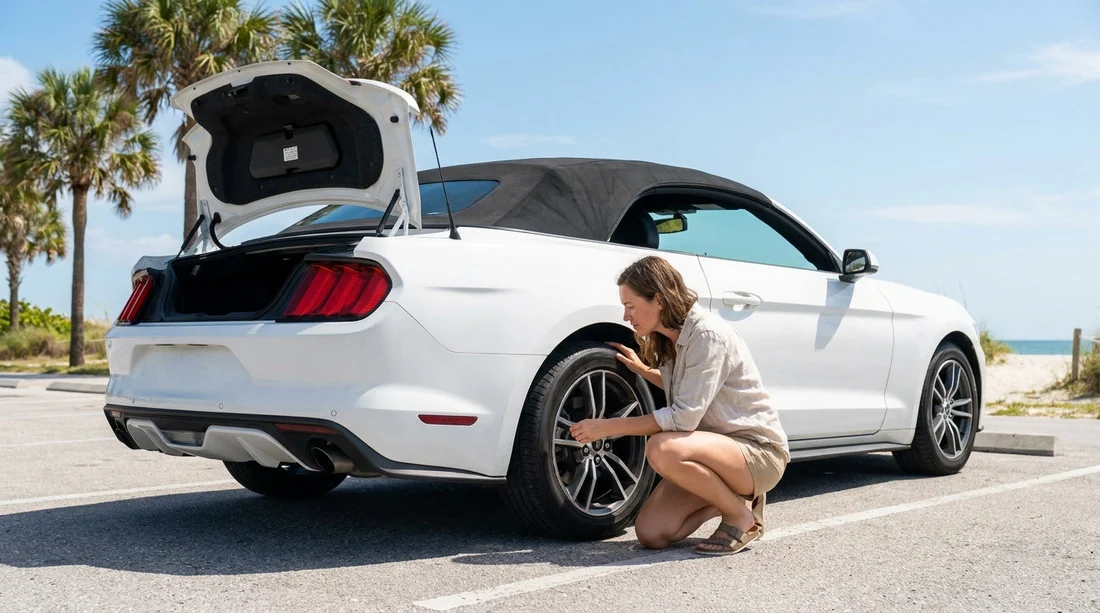
- Walk around and photograph each tyre and wheel, noting damage or low tread.
- Check the door label, then compare pressures with the dashboard display.
- Find the spare or inflator kit, and confirm all parts are present.
- Locate jack points, wheel-nut key, and roadside contact details before leaving.
Picking up a car hire vehicle in Florida is often quick, but tyres and puncture equipment are the items most likely to spoil the first hour of your trip if something is missing or unusable. Before you drive away from the airport or downtown location, take five to ten minutes to confirm the tyres are safe, the pressure is sensible, and the kit you would need for a puncture is actually in the car. These checks are practical, visible, and easy to document.
If you are collecting around Orlando, Miami, or Tampa, the combination of hot tarmac, heavy rain, and long highway miles makes tyre condition more than a formality. A borderline tyre can feel fine at low speed, then vibrate, pull, or lose grip when you hit an interstate ramp in a downpour. The goal is not to become a mechanic, it is to avoid leaving the lot with an obvious problem you could have spotted.
If you are comparing pick-up options, Hola Car Rentals has location pages such as car rental at Orlando MCO and car hire at Tampa TPA, which can help you plan the most convenient collection point for your itinerary.
1) Tyre condition checks you can do in two minutes
Start with a slow walk around the vehicle before you load luggage. Look at all four tyres, and do not forget the inside-facing sidewalls as much as you can see. You are checking for issues that are visible and unambiguous.
Sidewall damage: Cuts, bulges, or bubbles are a no-go. A bulge can indicate internal damage from a kerb impact, and it can fail without much warning. Also look for scuffing that has gone through to cord, or a chunk missing from the rubber.
Tread depth and wear pattern: You do not need a gauge. If the tread looks very shallow, or the wear is uneven (one edge far more worn than the other), flag it at the counter. Uneven wear can suggest alignment issues, which can cause the car to pull to one side at speed.
Objects in the tread: Nails and screws can sit in the tread and only start leaking later. If you spot something metallic, take a photo and ask for another vehicle. Avoid pulling it out yourself in the car park, it can turn a slow leak into a fast one.
Wheel condition: Scrapes on alloy wheels are common, but deep gouges or bent rims can contribute to slow leaks and vibration. Photograph any pre-existing damage, and make sure it is recorded in your check-out notes.
2) Tyre pressure checks that actually matter
Tyre pressure affects braking, grip in heavy rain, fuel use, and the chance of a blowout in Florida heat. The most useful approach is to check what the car says and what the car shows.
Find the correct pressure: Open the driver door and look for the tyre and loading label. It lists the recommended pressures for front and rear tyres, sometimes with a separate number for a fully loaded vehicle.
Check the dashboard readout: Many modern rentals have TPMS readings in the driver display. Compare each tyre’s pressure to the label. A small difference is normal, but one tyre clearly lower than the others can indicate a slow puncture. If the TPMS warning light is on, treat it as an immediate issue to resolve before leaving.
Do not rely on a quick kick: A tyre can be significantly underinflated and still feel firm to a foot tap. If the vehicle does not show pressures, ask the attendant where you can use an on-site air line before you exit.
Heat matters: Pressures rise as the tyres warm up. If one tyre is low when cold at collection, it will still be low relative to the others when hot on the highway. That imbalance is what you want to avoid.
3) Confirm whether you have a spare wheel or an inflator kit
Many Florida rentals do not carry a full-size spare. Some have a space-saver spare, and others have only a sealant and compressor inflator kit. Your job is to find out which you have, confirm it is complete, and make sure you could use it if needed.
Where to look: Open the boot and lift the floor panel. In SUVs, check under the rear cargo floor, in side compartments, or under the vehicle (some spares are mounted beneath). In some models, the inflator kit is in a foam tray rather than a wheel well.
If there is a spare: Confirm the spare is present, not visibly flat, and that the retaining bolt is secure. Also check for the jack and wheel brace, because a spare without tools is not helpful.
If there is an inflator kit: Confirm the compressor is there, the power connector fits the 12V socket, and the sealant bottle is present. Look for an expiry date on the sealant, expired sealant can fail to seal a puncture. Also check that the hose and valve connector are intact, not cracked or missing.
Know the limitation: Inflator kits are generally for small tread punctures, not sidewall damage or large tears. If you see sidewall damage at pick-up, you want a different vehicle, not a plan to use sealant later.
If you are selecting a vehicle type for family luggage, a larger boot can make access to the spare or kit easier. Options like minivan rental in Orlando MCO can be practical for long trips where you want clear access to storage and equipment.
5) The safety and documentation step people skip
Once you have checked the tyres and equipment, take 30 seconds to document what you found.
Photographs: Take clear photos of each wheel and tyre, including any curb rash, scuffs, or warning lights visible on the dash. Good photos include the car’s number plate or rental stock number in at least one shot, so it is easy to match later.
Get issues recorded: If you find low pressure, missing tools, a TPMS light, or obvious damage, return to the counter or attendant lane and ask for it to be recorded or the vehicle swapped. It is far easier before you exit than after you have joined traffic.
Know your roadside support plan: Ask where the contact details are kept, often on the rental agreement or inside the glovebox. Store the number in your phone before you drive off.
If you are collecting in Miami and expect tight parking or curb contact, SUVs can be more forgiving on visibility and kerb clearance, but still require the same tyre checks. Location pages like SUV rental in downtown Miami can help you match vehicle choice to your route without changing the basics of your inspection routine.
7) Florida-specific considerations: heat, rain, and long distances
Florida weather changes fast. Hot afternoons raise tyre temperatures, and sudden storms create standing water on highways. Good tyres with correct pressures help reduce hydroplaning risk and improve braking. Underinflated tyres can overheat during long interstate drives, particularly when the car is loaded with passengers and luggage.
Also remember that many trips involve toll roads and long stretches between exits. A slow leak discovered after you have left the rental facility can become an awkward stop on a narrow shoulder. That is why confirming the spare or inflator kit, plus the tools to use it, matters more than it might on a short city-only hire.
FAQ
Q: What is the single most important tyre check before leaving? A: Look for obvious damage and confirm no tyre is significantly lower than the others. A bulge, cut, or TPMS warning should be resolved before you drive away.
Q: If the car only has an inflator kit, should I be concerned? A: Not necessarily, but you should confirm the compressor and sealant are present, the sealant is in date, and you understand it may not fix sidewall damage or larger punctures.
Q: Do I need to check the spare tyre pressure too? A: Yes. A spare that is flat is effectively missing. If you can, confirm it looks properly inflated and ask staff for assistance if it appears low.
Q: What should I do if the locking wheel-nut key is missing? A: Report it immediately and request the correct key or a different vehicle. Without it, you may not be able to remove the wheel in a puncture situation.
Q: Is it worth taking photos even if everything looks fine? A: Yes. Photos create a simple record of tyre and wheel condition at pick-up, which helps avoid disputes and makes it easier to report any issue you found early.





























































































