


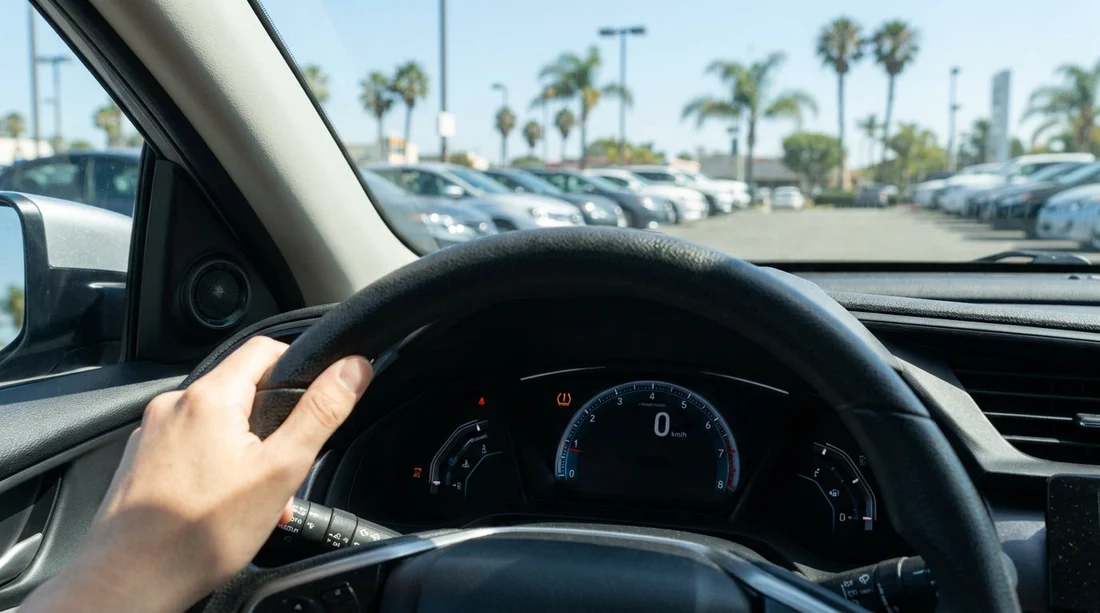
Quick Summary:
- Ask staff to measure and set all tyres to door-jamb PSI.
- Request a quick tread and sidewall check for damage or objects.
- Confirm whether TPMS needs a reset after inflation and a short drive.
- Photograph the warning light, tyre condition, and check-out paperwork before leaving.
Seeing a tyre-pressure warning light (TPMS) illuminated at rental car pick-up can feel like an immediate red flag, especially if you are about to drive long distances across California. The good news is that many TPMS warnings are caused by simple, fixable issues such as a temperature change, a slow leak, or tyres that were last set to the wrong pressure. The key is to slow down, ask for specific checks, confirm the correct pressures yourself, and document what you see before you leave the lot.
This guide focuses on what to do at the counter and at the vehicle, so your car hire starts safely and with fewer disputes later.
Why the tyre-pressure light might be on at pick-up
TPMS lights typically mean one or more tyres are below the recommended pressure, but there are a few common scenarios at California pick-up locations.
Temperature and altitude changes: Tyre pressure can drop overnight in cooler coastal air, then rise as you drive inland. A car moved from a warm garage to a cooler lot may trigger a warning even if the tyres are only slightly low.
Underinflation after cleaning or storage: Vehicles sometimes sit for a period, losing a few PSI naturally. If tyres were not topped up during turnaround, the light can appear.
Slow puncture or valve leak: A nail or a faulty valve stem can cause gradual pressure loss. This needs attention before you begin your trip.
Sensor or reset issue: After inflation, some cars need the TPMS reset or a short drive to relearn sensor readings. A persistent light may indicate a sensor fault.
What to ask staff to check before you accept the keys
Be specific with staff, because “the light will go off after you drive” is not always true. Ask for these checks in plain terms.
1) Measure each tyre with a pressure gauge. Request an actual reading for all four tyres, not just a visual inspection. If the vehicle has a compact spare, ask whether its pressure is checked too, since some cars monitor it.
2) Inflate to the manufacturer’s recommended PSI. The correct number is usually printed on the driver’s door jamb label (or inside the fuel flap on some models). Ask staff to set pressures to that label, not the maximum PSI on the tyre sidewall.
3) Inspect for damage and obvious leaks. Ask for a quick look at tread and sidewalls for cuts, bulges, or nails. If there is any sign of a slow puncture, request another vehicle rather than “topping up and hoping”.
4) Confirm whether a TPMS reset is required. Some vehicles have a TPMS reset button or an on-screen menu. Ask staff to perform the reset after inflation, or to confirm the proper procedure and when the light should extinguish.
If you are collecting from a busy location, you may find it helpful to read location-specific advice pages while planning, such as California LAX rentals or San Francisco SFO car hire, since pick-up layouts can affect how easily you can stop and recheck.
How to confirm safe tyre pressures yourself at the vehicle
Even if staff say it is fine, take two minutes at the car. You are not trying to second-guess anyone, you are making sure you drive away safely and with clear evidence of the car’s condition.
Step 1: Find the correct PSI. Open the driver’s door and locate the tyre and loading information sticker. Note the recommended pressure for front and rear tyres. Some vehicles specify different PSI front versus rear, especially SUVs and vans.
Step 2: Check the in-car pressure display if available. Many newer cars show individual tyre pressures in the dashboard menu. If it shows one tyre significantly lower than the others, treat it as a potential leak, even if the car drives normally at low speed.
Step 3: Do a quick visual walk-around. Look for a tyre that appears lower, unevenly worn, or damaged. Also check that valve caps are present, since missing caps can allow dirt and moisture into the valve core over time.
Step 4: Ask for a gauge reading if you cannot verify. If the vehicle does not show PSI, request that staff check each tyre with a gauge in front of you. It is reasonable to ask to see the readings if the warning light is on.
Step 5: Do not rely on tyre sidewall numbers. The sidewall shows the maximum safe pressure for the tyre, not what the vehicle should run day-to-day. The door label is the correct source for safe operating pressure.
What to document before leaving the lot
Documentation is your best protection if you later need to explain why you returned to the desk, requested a swap, or stopped to add air. Before you exit:
Photograph the dashboard with the warning light clearly visible. Take a wide shot showing the odometer and fuel level, plus a close-up of the warning symbol.
Photograph the door-jamb tyre pressure label. This shows what the vehicle requires, which matters if any dispute arises about “correct” pressure.
Photograph each tyre. A quick shot of each wheel and tyre sidewall helps show existing scuffs, bulges, or low-looking tyres at the moment of pick-up.
Get notes added to your check-out record. Ask staff to note that the TPMS light was on at pick-up and that pressures were checked and adjusted, or that a vehicle swap was provided. Keep a copy or screenshot of the final paperwork.
This is especially useful at high-volume hubs where car hire traffic is constant, including Budget at San Francisco SFO and San Diego airport area rentals.
When to insist on a different vehicle
Sometimes the correct move is not to troubleshoot, it is to decline that vehicle. Ask for a replacement car if any of the following apply:
The light flashes, then stays on. In many cars, a flashing TPMS light indicates a sensor system fault, not simple low pressure. You may not be able to verify tyre safety from the dashboard.
One tyre is repeatedly low after inflation. That suggests a slow puncture or valve issue. Even if it holds air for a short time, it can fail later on the motorway or in hot inland conditions.
You see sidewall damage, bulges, or cords. Sidewall damage is a safety risk and not something to “monitor”.
You are about to drive long distances immediately. If you plan to head from the coast towards hotter inland areas, deserts, or mountain passes, starting with a known tyre issue is not worth the risk.
If the light comes on shortly after leaving
If the TPMS light appears after you depart, treat it seriously but calmly.
Pull over safely as soon as practical. Avoid hard braking or sharp steering if you suspect a tyre is deflating.
Visually check the tyres. If any tyre looks low or damaged, do not continue driving.
If the car shows PSI, compare readings. A rapid drop in one tyre indicates a leak. If pressures are only 2 to 4 PSI low across all tyres, it may be a temperature shift, but you should still top up to the door label when safe.
Contact the rental provider for instructions. Follow their process for roadside assistance or a swap, and keep notes and photos. Avoid paying for repairs unless the provider authorises it, and keep receipts if you are told to purchase air or a puncture repair.
FAQ
Is it safe to drive if the tyre-pressure warning light is on at pick-up? It depends on the cause. Do not leave until pressures are measured and set to the door-jamb PSI, and tyres are visually checked for damage or punctures.
What PSI should the tyres be set to on a rental car? Use the manufacturer’s recommended PSI shown on the driver’s door jamb label. Do not use the maximum PSI printed on the tyre sidewall.
Can the TPMS light stay on even after the tyres are inflated? Yes. Some vehicles need a TPMS reset, and others require a short drive for the system to relearn pressures. If the light flashes or persists, ask for assistance or a swap.
What photos should I take to document the issue? Photograph the illuminated warning light with odometer visible, the door-jamb PSI label, each tyre sidewall and tread area, and your check-out paperwork showing the time and vehicle details.
Should I request a different car immediately? Request a replacement if you see tyre damage, one tyre is much lower than the others, the warning light flashes, or the pressure drops again after being set correctly.





























































































