


Quick Summary:
- Roadside cover usually helps with jump starts, tyres, towing, and lockouts.
- Confirm whether towing applies to breakdowns only, not accident damage.
- Ask about exclusions for fuel delivery, lost keys, and tyre replacement.
- Check service hours, call-out caps, and whether payment is reimbursed.
Roadside assistance can sound straightforward, but on a US rental it is often a separate product with its own rules, caps, and exclusions. Before you start your car hire in Pennsylvania, it helps to know what roadside usually includes, what it often does not, and which questions to ask at the counter so you do not discover surprises on the hard shoulder.
If you are picking up around Philadelphia International Airport, the specific terms can vary by supplier, vehicle class, and whether your rental is business or leisure. Hola Car Rentals listings, such as car hire at Philadelphia Airport (PHL), make it easier to compare base rates, but roadside assistance details still need confirming on the agreement you sign.
What “roadside assistance” typically includes
In most US rental agreements, roadside assistance is designed to get you moving again after common non-collision issues. It is usually focused on labour and call-out, rather than replacing parts. Coverage can be described as “Emergency Roadside Assistance”, “Roadside Plus”, or similar.
Jump start for a flat battery is one of the most common inclusions. If the car will not start because the battery is depleted, the provider typically sends a contractor to jump it. Some plans will also cover a battery replacement if the battery itself has failed, but that is less consistent and worth confirming.
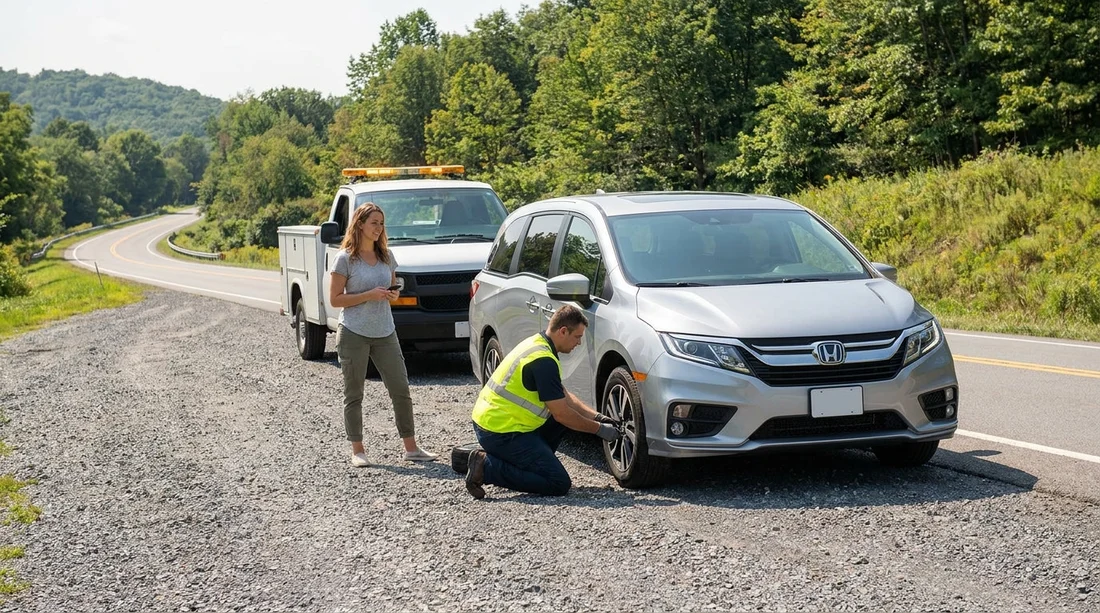
Flat tyre assistance often includes sending help to change the tyre using the spare, or towing if there is no usable spare. Whether the tyre itself is repaired or replaced at no cost depends on the rental company and the cause. Some treat punctures as wear-and-tear, others treat them as damage, and many exclude the tyre replacement even if they send someone to fit the spare.
Lockout service is commonly included when keys are locked inside the vehicle. This is usually limited to gaining access, not replacing lost keys. If the key fob is damaged or lost, that can become a chargeable incident involving replacement keys and reprogramming.
Towing for mechanical breakdown is often included, especially if the vehicle becomes inoperable due to a mechanical fault not caused by driver error. The key nuance is “breakdown” versus “accident”, and “mechanical fault” versus “damage”. Plans frequently cover towing to the nearest authorised repair location when the car cannot be driven safely.
What is commonly excluded, or charged even with roadside cover
This is where most drivers are caught out. Roadside assistance can mean “we will send someone”, but it does not always mean “you will not pay”. The exclusions below are common patterns, though the exact list depends on your supplier and the plan type.
Fuel delivery may be excluded or may include delivery but not the fuel itself. If you run out of fuel on the Pennsylvania Turnpike or in central Philadelphia, you could be paying for the fuel, the service, or both. Some plans treat it as driver negligence and exclude it entirely.
Tyre replacement is frequently not included, even if a technician changes a tyre or tows you. If the tyre is damaged beyond repair, you may pay for replacement, and possibly for related damage such as a wheel rim. Ask whether “roadside tyre service” is labour-only.
Lost keys and key fobs are a big cost risk. Many programmes cover lockout, but not lost key replacement, not key fob reprogramming, and not towing required to recover the key. For newer vehicles, replacement can be expensive and can cause long delays.
Damage-related towing can fall outside roadside assistance. If towing is required after a collision, curb impact, or underbody strike, the cost may fall under damage liability rather than roadside. This is why roadside assistance should be understood alongside your damage waiver or excess arrangements, not as a substitute.
Unpaved-road recovery can be excluded, especially if the vehicle is stuck in sand, mud, snowbanks, or off a maintained road. In Pennsylvania, winter weather can create recovery scenarios that are treated as “winching”, and winching is often limited or excluded.
Questions to ask at the counter before you drive off
Because wording varies, your best protection is asking clear, practical questions and getting the answers aligned to the contract. Keep your focus on what triggers a fee.
1) Is roadside assistance included in my rate, or optional? Some rentals bundle it, others sell it at the counter. Ask if declining it changes what you would pay for a call-out.
2) What events are covered: breakdown only, or also punctures and lockouts? Ask for the list in plain language, then verify it on the rental jacket or terms provided.
3) Are there caps, such as number of call-outs or dollar limits? Some plans have a maximum per incident or per rental. This matters if you are covering long distances around Pennsylvania.
4) Do I pay the provider directly, or do I pay upfront and reclaim? If a third-party tow company arrives, find out whether they will bill the rental firm or ask for your card at the roadside.
5) Which phone number should I call, and is it 24/7? Store the number on your phone before leaving the lot. Also ask whether they prefer you to call emergency services first for certain situations.
If you are comparing suppliers at PHL, pages such as car hire in Philadelphia (PHL) can help you narrow options, but the counter conversation is still essential for roadside specifics.
How roadside assistance interacts with damage protection
Roadside assistance is not the same as a collision damage waiver or theft cover. They address different problems. Roadside focuses on getting you moving after a minor incident or a breakdown. Damage protection focuses on who pays for vehicle damage, loss of use, admin fees, and sometimes towing after an accident.
A common grey area is a puncture. Roadside might send help, but damage protection determines whether the tyre itself is charged to you. Another grey area is towing after you hit a kerb and damage the suspension. That may be treated as damage, even if the only service required is towing.
If you are hiring a larger vehicle, check whether any special rules apply. For example, with SUV rental at Philadelphia (PHL), confirm whether roadside recovery differs by vehicle type, and whether tyre and wheel costs are handled differently on larger wheels.
What to document before leaving the car park
Roadside disputes often become paperwork disputes. Before driving away, take a minute to protect yourself.
Save the emergency number for roadside support and the branch phone number. If the car becomes unsafe, you want a single, correct contact path.
Photograph the tyres and wheels as well as the bodywork. If a tyre issue happens later, you can show pre-existing scuffs or wear.
Check for a spare tyre and tools if the vehicle is supposed to have them, and ask what to do if it does not. Some modern vehicles have sealant kits instead of spares, and that changes what roadside can do.
Confirm where the car can be towed if it becomes undrivable. The wrong destination can cause delays or extra charges, particularly if you arrange your own tow without authorisation.
When choosing a supplier, it can also help to read the local page for that brand’s rentals and then confirm the final terms at pickup, for example Enterprise car rental at Philadelphia (PHL) as one comparison point.
Bottom line: what to confirm for peace of mind
For car hire in Pennsylvania, roadside assistance is best treated as a defined service with boundaries, not a blanket promise. Typically, it covers jump starts, lockouts, flat tyre help, and towing for mechanical breakdown, but you should confirm whether the plan is labour-only, whether towing applies after accidents, and whether recovery, fuel, and key replacement are excluded.
FAQ
Does roadside assistance on a US rental usually include towing? It often includes towing for mechanical breakdown to an authorised location, but towing after an accident or damage may be excluded or handled under damage liability.
Will roadside assistance pay to replace a punctured tyre? Frequently it covers help changing the tyre or towing, but not the replacement tyre itself. Confirm whether tyre damage is treated as chargeable damage.
If I lock the keys in the car in Pennsylvania, am I covered? Many plans include lockout service to regain entry. Lost or damaged keys and key fob programming are commonly excluded and can be costly.
Do I have to pay the tow truck driver and claim it back? It depends on the programme. Some bill the rental company directly, others require payment upfront. Ask how billing works and keep receipts if you pay.
Is winch-out or snowbank recovery covered? Often it is limited or excluded. In winter conditions, confirm whether “recovery” is included and whether there is a maximum allowance.





























































































