


Quick Summary:
- “Or similar” means you receive a car from the same booked group.
- Exact make, model, colour, and trim level are not guaranteed.
- Confirm seats, luggage, transmission, and fuel policy before collection.
- Reduce surprises by choosing a larger group or clear listed inclusions.
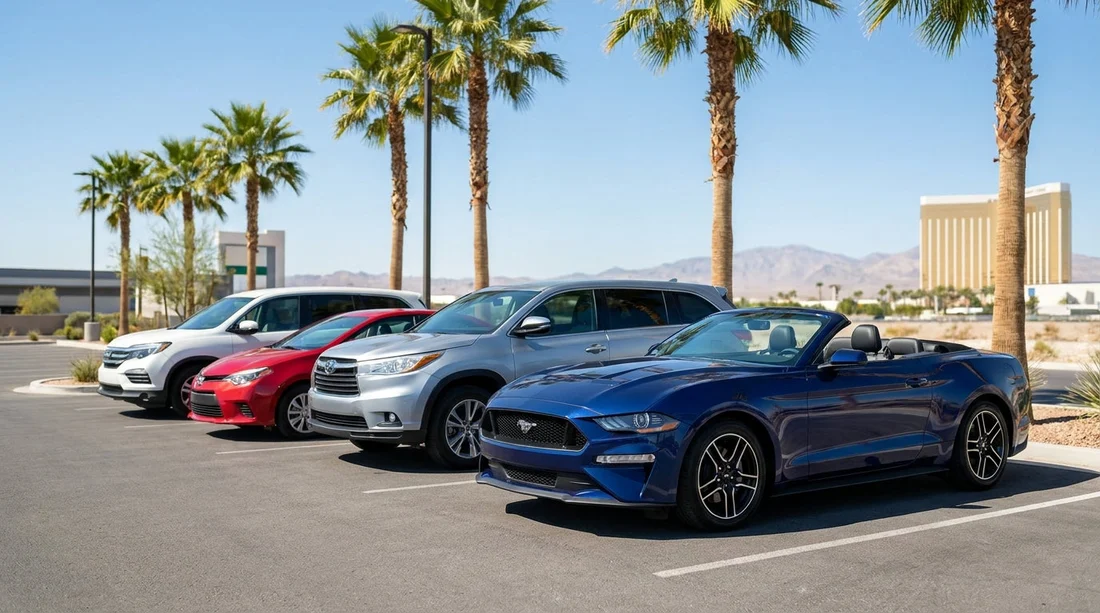
When you browse car hire in Las Vegas, you will often see a vehicle pictured with the words “or similar”. It is not a warning sign, it is simply how most rental fleets are sold. Rental companies organise vehicles into groups (sometimes called categories) based on broad characteristics, then allocate a car from that group when you collect it. The photo and model name are there to illustrate the type of vehicle you can expect, not to promise that exact car.
Understanding what “or similar” covers can save time at the counter and help you pick the right group for your trip, whether you are staying on the Strip, driving to Red Rock Canyon, or heading out for longer desert routes. If you are collecting at the airport, it is especially useful to know what is guaranteed and what can change based on availability at that moment. For location details and typical pick-up setups, see Las Vegas airport car rental.
What “or similar” actually means
“Or similar” means the supplier will provide a vehicle that matches the booked car group, not the exact make and model shown. The group is defined by a set of attributes such as size class (economy, compact, intermediate, full size), body style (saloon, hatchback, SUV), and sometimes transmission type. If you book an “Intermediate SUV or similar”, you should receive an intermediate SUV class vehicle, but it could be a different brand or model than the picture.
The key point is that the contract is for the group. This gives rental companies flexibility to manage fleet rotation, maintenance, returns, and seasonal demand. Las Vegas can be busy around major conventions and weekends, so allocation flexibility is part of how rental companies keep cars moving.
How car groups work in Las Vegas car hire
Car groups are intended to be consistent, but they are not identical across every supplier. Two different companies might label a group “Standard” yet stock slightly different vehicles. That is why it helps to compare the listed specifications rather than focusing on a specific model name.
Typical group signals include passenger count, number of doors, luggage capacity, and whether the car is automatic or manual. In the US, automatic is common, but it should still be confirmed on the listing. If your plans include longer drives beyond the city, such as to Hoover Dam or Valley of Fire, you may also care about comfort and luggage space more than the badge on the bonnet.
If you want to explore options across categories in one place, the local landing page for car hire in Las Vegas can be a useful starting point for comparing groups and inclusions.
What is usually guaranteed, and what is not
With “or similar”, you can generally expect the broad category and core specs shown on the booking page. What is not guaranteed is anything that depends on a particular model or trim level.
Usually tied to the group (more reliable): passenger capacity range, general vehicle size, body style, and transmission type as listed. Luggage icons are a guide, but still worth treating as approximate, especially if you travel with large suitcases, golf bags, or pushchairs.
Often not guaranteed: exact make and model, colour, infotainment brand, trim package, engine size, wheel size, interior materials, presence of built-in sat nav, and optional driver aids. Even within the same model name, different years and trims can have different features.
Never assume without confirmation: Apple CarPlay or Android Auto, heated seats, sunroof, third-row seating in an SUV, tow hitch, roof rails, USB-C ports, or a specific number of cup holders. These may appear in some cars in a group and not in others.
Common surprises at the counter, and how to avoid them
Most pick-up surprises happen when travellers assume the photo is the promise. The following checks reduce the risk of a mismatch between your expectations and the allocated vehicle.
1) Match the group to your real luggage and passenger needs. If you are four adults with four large cases, an “Intermediate” can feel tight. Consider moving up a category rather than relying on a specific model being roomy. For travellers wanting more space and ride height, see SUV rental in Nevada.
2) Confirm transmission and fuel policy. Automatic is typical in Las Vegas, but listings still vary. Fuel policy (full-to-full or other) affects cost and convenience, especially if you are returning early morning to the airport.
3) Check for included mileage, deposits, and credit card requirements. “Or similar” is about the car itself, but the bigger surprises are often deposit size, card acceptance, and what documents are needed. Read the rental terms and the included protections carefully so you are not making decisions under time pressure at the desk.
4) Be realistic about speciality features. If you require a feature for accessibility or driving confidence, it is safer to focus on what the supplier explicitly lists as included, rather than what you have had in a similar car before.
Does “or similar” affect SUVs, vans, and larger vehicles?
Yes, and the stakes can be higher because space and seating matter more. With SUVs, “or similar” might mean you get a two-row SUV instead of a specific model you assumed had a third row. With people carriers and vans, the difference between seating configurations can make or break a trip.
If your group needs a certain seating number, choose a category that explicitly states it, and consider moving up if you are on the edge. For larger groups, look at the dedicated page for van rental in Nevada to compare the kinds of vehicles and capacities commonly offered.
How to reduce risk when you care about a particular feature
If you care about a specific feature, treat it as a requirement to be confirmed, not a hope. Start by scanning the listing for written specifications and included equipment, then cross-check the terms. If a feature is not mentioned, assume it might not be present. This is especially relevant for sat nav expectations, because many travellers now use phone navigation, and built-in navigation is not consistently included.
Another practical approach is to choose a higher car group when comfort and space matter, for example if you expect long motorway stretches, full loads, or very hot summer temperatures. A larger group can reduce the chance of getting a vehicle that feels underpowered or cramped, even though “or similar” still applies.
What to do at pick-up if the car does not meet the group
First, compare the allocated vehicle to the group you booked, focusing on objective points: number of seats, doors, luggage space, and listed transmission type. If the car is clearly outside the booked group, raise it politely and ask for a vehicle that matches the category you reserved. Most issues are resolved quickly when you discuss the category rather than arguing about the photo.
If the car is within the group but you personally dislike it, you can ask whether alternatives are available, but availability may be limited at peak times. If you are collecting in Nevada beyond the city, planning your category choice ahead of time is often more effective than relying on a switch on the day. For a broader view of options across the state, see car hire in Nevada.
FAQ
What does “or similar” mean on a car hire listing in Las Vegas? It means you are reserving a car category, and you will receive a vehicle that matches that group’s core specifications, not necessarily the exact model shown.
Is the number of seats guaranteed if it is shown on the listing? Seat count is typically tied to the group and is more reliable than make and model, but it is still best to verify the group description and terms for the exact seating configuration.
Will I always get an automatic car in Las Vegas? Automatic is common in the US, but you should still check the listing’s transmission field, as “or similar” does not override what is specified in the booking details.
Can I insist on the exact car in the photo? Usually no, because the photo is illustrative. You can request a particular model at pick-up, but the supplier’s obligation is to provide a vehicle within the booked group.
How can I minimise surprises when booking car hire in Las Vegas? Focus on the written specifications, pick a group with comfortable space margins, confirm transmission and fuel policy, and avoid assuming premium features unless explicitly included.





























































































