


Quick Summary:
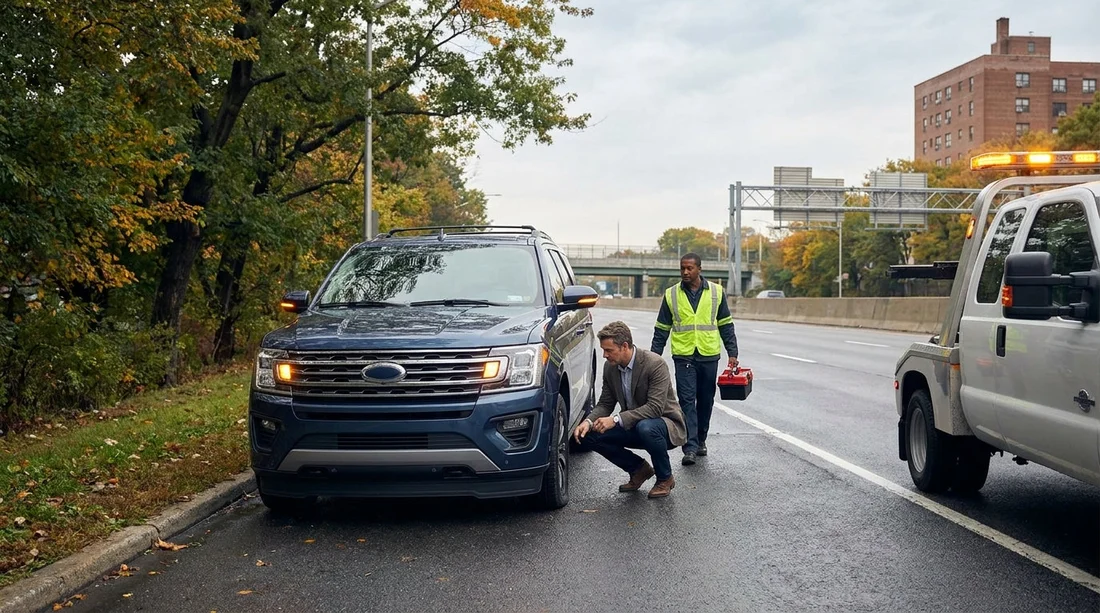
- Roadside assistance helps with tyres, lockouts, jump starts, and breakdown towing.
- Insurance waivers mainly cover damage and theft costs, not call-outs.
- Check what your credit card and auto policy already include.
- In New York, delays and service fees can add up quickly.
When arranging car hire in New York, you may be offered several add-ons at checkout or at the counter, including “roadside assistance” and “insurance waivers”. They sound similar because both reduce your stress when something goes wrong. In practice, they solve different problems. Roadside assistance is about getting you moving again after an everyday mishap. Insurance waivers are mainly about who pays if the car is damaged or stolen.
This article breaks down what roadside assistance typically includes, what waivers usually cover, and how to decide what makes sense before pick-up, especially around New York’s bridges, toll roads, and busy kerbside parking.
What “roadside assistance” usually covers on a rental
Roadside assistance is a service package designed for practical, on-the-spot issues. Coverage varies by supplier, but these items are the most common.
Flat tyre support: Help with changing a tyre, or towing to a shop if a replacement is needed or a spare is not usable. In New York, tyre trouble can be more than an inconvenience, because stopping safely is difficult on parkways and bridges.
Battery jump start: If the battery is drained, roadside assistance typically sends help to jump start the vehicle.
Lockout service: If keys are locked inside the car, roadside assistance may dispatch someone to open it, or arrange alternative access.
Emergency fuel delivery: Some plans deliver enough fuel to reach a station. The fuel itself may be charged, but the call-out fee is often covered under the plan.
Towing for a mechanical breakdown: If the car will not drive due to a mechanical issue, roadside assistance usually includes towing to a repair facility or to a location defined by the provider. This is different from towing after an accident, which can sit under separate rules.
Important detail: many rental contracts treat tyre and key incidents as renter responsibility unless you purchased a roadside package. That means roadside assistance is often less about the tow itself and more about avoiding call-out and service fees that can add up quickly.
What insurance waivers typically cover, and what they do not
At the counter you might see options described as damage waivers or theft protection, sometimes combined. Names differ, but the idea is similar: a waiver can reduce or remove how much you must pay if the rental car is damaged or stolen, as long as you follow the contract.
Collision Damage Waiver (CDW) or Loss Damage Waiver (LDW): Usually limits your financial responsibility for damage to the rental vehicle, and sometimes loss of use or administrative fees, depending on terms. It often has exclusions, such as prohibited driving areas or careless behaviour.
Theft protection: Typically addresses financial responsibility if the vehicle is stolen, subject to reporting rules and key security requirements.
Liability coverage: This is different from a waiver. It deals with third-party claims for injury or property damage. Minimum liability limits are often included by law, with optional upgrades.
What waivers usually do not cover is the practical cost of getting mobile again after a non-damage incident. A waiver might reduce your bill if the car is damaged in a collision, but it generally will not pay for a locksmith, a jump start, or tyre service.
If you are comparing options through Hola Car Rentals for New York area pick-ups, it helps to review the specific inclusions shown for your chosen location and supplier. For airport-area collections, you may be looking at nearby hubs such as car rental at New York JFK or New Jersey EWR airport car rental.
Why this distinction matters in New York
New York driving can turn a small inconvenience into a costly delay. A flat tyre on a busy approach road, a dead battery after extended parking, or a lockout during a quick kerbside stop can mean missed appointments and expensive rideshares while you wait.
There is also the logistics factor. If your car hire involves crossing between New York and New Jersey, confirm where assistance can be dispatched and whether there are any geographic constraints. Many travellers flying into the region compare options at car hire at Newark EWR and then drive into Manhattan.
Common scenarios, and which product helps
Scenario 1: You get a puncture from road debris. Roadside assistance is the add-on most likely to help quickly, especially if the tyre needs service rather than a simple swap. A damage waiver may not cover tyre replacement at all, depending on exclusions.
Scenario 2: You scrape a pillar in a garage. That is typically a damage waiver issue. Roadside assistance does not usually reduce your responsibility for body damage.
Scenario 3: The car will not start after you left the lights on. Roadside assistance is designed for this. Without it, you may pay for the dispatch.
Scenario 4: You lock the keys in the car while loading luggage. Roadside assistance is the relevant product. A waiver is unlikely to help unless damage occurs during entry, and even then you may still face service fees.
Scenario 5: The vehicle is stolen. Theft protection or a combined LDW package is the key protection, subject to reporting and key handling rules. Roadside assistance is not the main solution here.
Check what you already have before paying twice
Before you decide, review what is already covered by your existing arrangements, because duplication is common.
Your personal auto policy: Some policies extend coverage to rentals, but terms vary widely, especially for international visitors. Pay attention to deductibles, exclusions, and whether it applies out of state.
Your credit card benefits: Many cards offer rental damage coverage if you pay with the card and decline certain waivers. However, credit card coverage often focuses on damage and theft, not roadside events like tyres or lockouts. Also confirm whether the benefit is primary or secondary, and what paperwork is required.
Membership programmes: Some motorists have separate roadside cover through clubs or insurers. If you do, verify whether it applies to a rental vehicle and whether it covers the driver only or any vehicle you are in.
How to decide before pick-up: a simple checklist
To choose calmly, separate “damage risk” from “mobility risk”. Damage risk relates to scratches, dents, and theft, which waivers address. Mobility risk relates to being stranded or delayed by tyres, battery, keys, or minor breakdowns, which roadside assistance addresses.
Then estimate your likely exposure in New York. Heavy traffic, limited stopping areas, and frequent kerbside manoeuvres increase the value of a quick, covered dispatch. If you prefer to avoid surprise service charges and the hassle of sourcing help yourself, roadside assistance is often the more practical add-on.
If you are selecting a larger vehicle for comfort or luggage capacity, remember that tyre sizes and towing logistics can be different. People comparing bigger vehicles might browse options like SUV rental at Newark EWR.
FAQ
Is roadside assistance the same as a Collision Damage Waiver? No. Roadside assistance helps with services like tyres, lockouts, jump starts, and towing coordination. A damage waiver mainly limits what you pay for vehicle damage or theft.
Does a damage waiver cover flat tyres in New York? Often no, tyres are commonly excluded or treated separately. Read the specific terms, because roadside assistance is more likely to cover the call-out for a puncture.
If I have credit card rental cover, do I still need roadside assistance? Possibly. Credit card benefits typically focus on damage or theft reimbursement and may not include practical services like locksmiths or jump starts.
What should I do first if I break down in New York traffic? Get to a safe location if possible, follow the rental company’s emergency guidance, then call the number provided for roadside help. If you are in danger, contact emergency services.





























































































